
Korea Customs Service intercepts 280,733 fake products at the border during an August–September enforcement drive targeting intellectual property violations
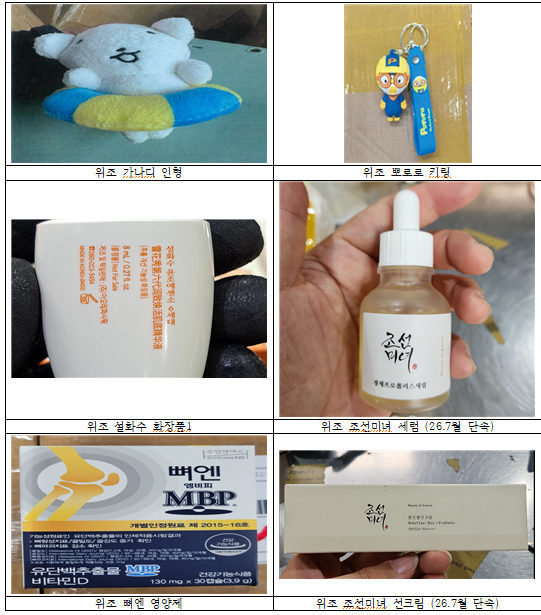
Many products bought cheaply through overseas direct-purchase platforms have turned out to be counterfeits — and some pose outright safety risks.
The Korea Customs Service said Wednesday it intercepted 280,733 counterfeit goods at the border during a two-month intensive crackdown on intellectual property violations conducted at 34 customs offices nationwide from Aug. 3 to Sept. 30.
The haul represents about a quarter — roughly 24 percent — of all counterfeits seized throughout 2025, which totaled about 1.17 million items. On average, approximately 4,700 fake goods were stopped at the border each day.
Beyond the brand violations, the bigger concern is safety. Genuine products must pass safety inspections and certification checks during customs clearance, but counterfeit goods are often smuggled in through illegal channels, meaning they frequently bypass those verification procedures entirely.
Beyond brand infringement: a threat to health and safety
The crackdown netted counterfeit versions of well-known cosmetics applied directly to the skin — including Sulwhasoo and Chanel — as well as home appliances and electronics from Samsung, Dyson and Apple, and health supplements such as probiotics and glucosamine.
Fake cosmetics, toys and clothing can contain carcinogenic substances — including lead, cadmium (a Group 1 carcinogen) and plasticizers — at levels exceeding safety limits. Counterfeit home appliances carry risks of fire and electric shock. Health supplements are of particular concern, as consuming fake versions can cause direct harm.
One in three seized items: toys and stationery
By product category, toys and stationery accounted for the largest share at 93,862 items, or 33.4 percent of the total. Personal accessories followed at 69,531 items (24.8 percent), then clothing at 34,789 items (12.4 percent), bags at 27,298 items (9.7 percent) and cosmetics at 5,596 items (2.0 percent).
Because toys and stationery are items children handle and use directly, parents are urged to exercise extra caution when purchasing products for their children.
K-brands in the crosshairs of counterfeiters
The vast majority of seized counterfeits — 271,162 items, or 96.6 percent — bore foreign brand names. But a notable trend was a sharp surge in violations targeting Korean brands.
Counterfeit K-brand goods totaled 9,571 items, more than double — a 102 percent increase — the 4,744 items seized during a special enforcement period in May and June. The main items seized included domestic cosmetics such as Sulwhasoo, d'Alba and AHC, along with K-pop idol merchandise tied to BTS and IVE.
As Korean cosmetics and K-pop merchandise gain global popularity, counterfeit imitations appear to be rising in tandem. Such fakes not only harm consumers but also erode the brand trust that Korean companies have built over years.
Counterfeits flooding in through overseas direct purchases
By entry channel, standard import cargo accounted for the largest share at 146,323 items (52.1 percent), but express courier and postal shipments came close behind at 129,627 items (46.2 percent). Goods carried by travelers made up 4,783 items (1.7 percent).
The figures show that counterfeit goods are flowing into the country in large volumes through overseas direct-purchase channels. Consumers are advised to carefully verify whether a product is genuine before buying anything sold online at prices far below market value.
"People easily buy counterfeit goods because they are cheap, but the price they pay could be the health and safety of their own families," said Park Jun-seong, head of the customs inspection division at the Korea Customs Service.
Park added that the agency would intensify its crackdown on intellectual property violations to protect public safety, defend the brand value of Korean companies and uphold fair market order.
kwonhl@heraldcorp.com





