
First bargaining session since union chief's third-term win ends without deal
Management raises base pay offer to 2.2%, bumps lump sum to 4.5 million won
Company adds special wage adjustment, holiday welfare points worth 400,000 won
Union acknowledges progress but says offer falls short of expectations
Third partial strike now back on the table after latest breakdown
![Posco's Pohang steelworks in Nam-gu, Pohang, North Gyeongsang Province, during the union's second partial strike on Sept. 16. [Yonhap]](https://wimg.heraldcorp.com/news/cms/2026/10/14/rcv.YNA.20260916.PYH2026091618690005300_P1.jpg)
Posco's management and union resumed wage negotiations after nearly a month apart but again failed to reach a deal. Management raised its base pay offer and added a lump-sum sweetener along with a special wage adjustment proposal, yet the union held firm, saying the package still falls short. The breakdown — the first full bargaining session since union chief Kim Sung-ho won a third term — has put a third partial strike back on the table.
The two sides met Wednesday afternoon at Posco's Pohang headquarters for roughly an hour and 20 minutes but left without a tentative agreement. It was the first formal bargaining session since talks broke down on Sept. 15. Before Wednesday's session, the parties held three rounds of working-level talks — on Oct. 7, Oct. 8 and Tuesday — but were unable to narrow differences on key sticking points.
The session was also the first formal bargaining round since Kim won re-election as the 21st union chairman on Oct. 2. Senior Vice Chairman Jo Yang-rae represented the union at the table.
![Posco's Pohang steelworks in Nam-gu, Pohang, North Gyeongsang Province, during the union's second partial strike on Sept. 16. [Yonhap]](https://wimg.heraldcorp.com/news/cms/2026/10/14/rcv.YNA.20260916.PYH2026091618440005300_P1.jpg)
Management tabled an improved offer Wednesday. It raised the base pay increase from 2.0 percent to 2.2 percent and bumped the lump-sum payment from 4 million won ($2,980) to 4.5 million won — a 500,000-won increase. The lump sum breaks down into a 3.5 million won performance incentive, a 500,000-won local gift certificate and a 500,000-won contract bonus.
As a morale measure, management also introduced a new special wage adjustment equivalent to one pay grade for employees on the payroll as of April 10 this year. The adjustment works out to about 26,210 won per month in fixed terms; the union estimates it amounts to roughly a 0.6 percent increase in base wages.
Management also raised the annual holiday welfare-point allowance from 300,000 won to 400,000 won, increased service-anniversary bonuses by 100,000 to 300,000 won depending on tenure bracket, and included welfare provisions covering expanded medical expense support, infertility treatment and support for children with disabilities, and improvements to the housing loan criteria.
Even so, the gap on base pay alone remains wide. Management is offering a 2.2 percent increase while the union is demanding 7.1 percent. The union is also seeking a 600 percent incentive bonus, 50 shares of employee stock and a 200 percent holiday bonus, leaving the two sides far apart on overall terms.
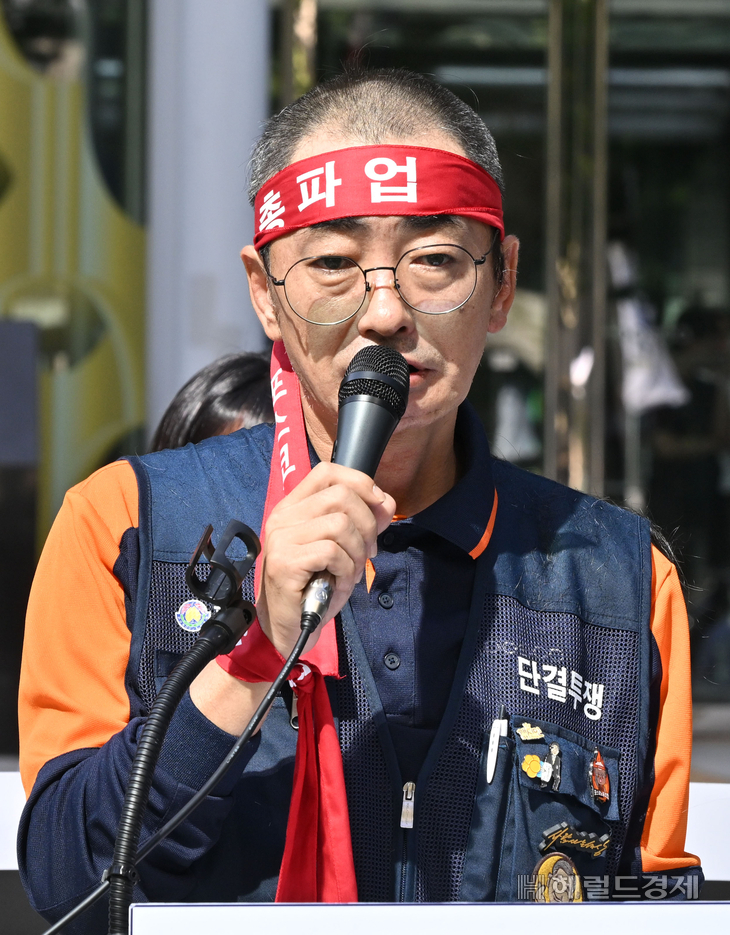
The union acknowledged that management's latest proposal represented some progress. Senior Vice Chairman Jo said at the bargaining table that he recognized the company had "taken a difficult step forward" with its morale package, but added that "this year, of all years, the offer must fully reflect the weight of workers' efforts on the floor and the sacrifices they have endured."
The union had already staged two rounds of partial strikes last month over the stalled negotiations — a 48-hour first strike followed by a 120-hour second strike. It then suspended both strike action and bargaining during the union leadership election before reconstituting its labor dispute committee after Kim's re-election.
The union has said it is prepared to launch a third partial strike — larger in scale than the previous two — if management fails to put forward a meaningful additional offer or drags its feet in negotiations. No date or target process has been set, but the risk of escalation has risen again after Wednesday's session ended without agreement.
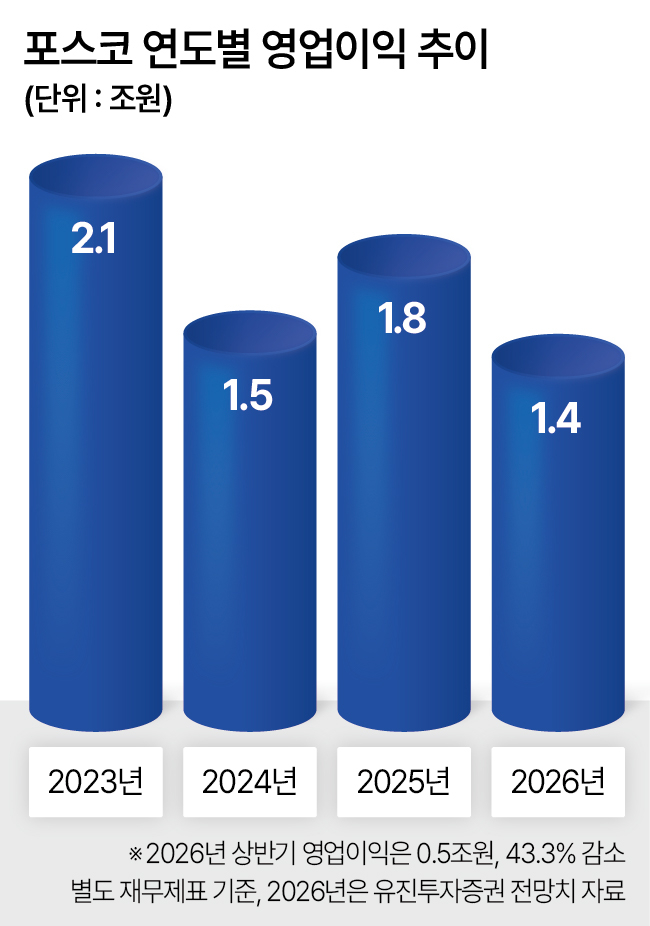
Management maintained that its offer represents the maximum it can absorb given current business conditions. "We have delivered an improved proposal in an environment of slowing global demand, Chinese oversupply and low-price competition," a Posco official said. "We will do our best to build common ground with the union and reach a reasonable agreement, regardless of whether that happens through working-level talks or formal bargaining sessions."
Jo said the pressure from the shop floor to move immediately to industrial action is mounting, but pledged to keep pursuing a negotiated settlement. "Delivering real results for our members is our responsibility, and we will do everything we can to reach a deal through dialogue," he said, adding a warning to management: "The company must not take this patience lightly."
kwater@heraldcorp.com





