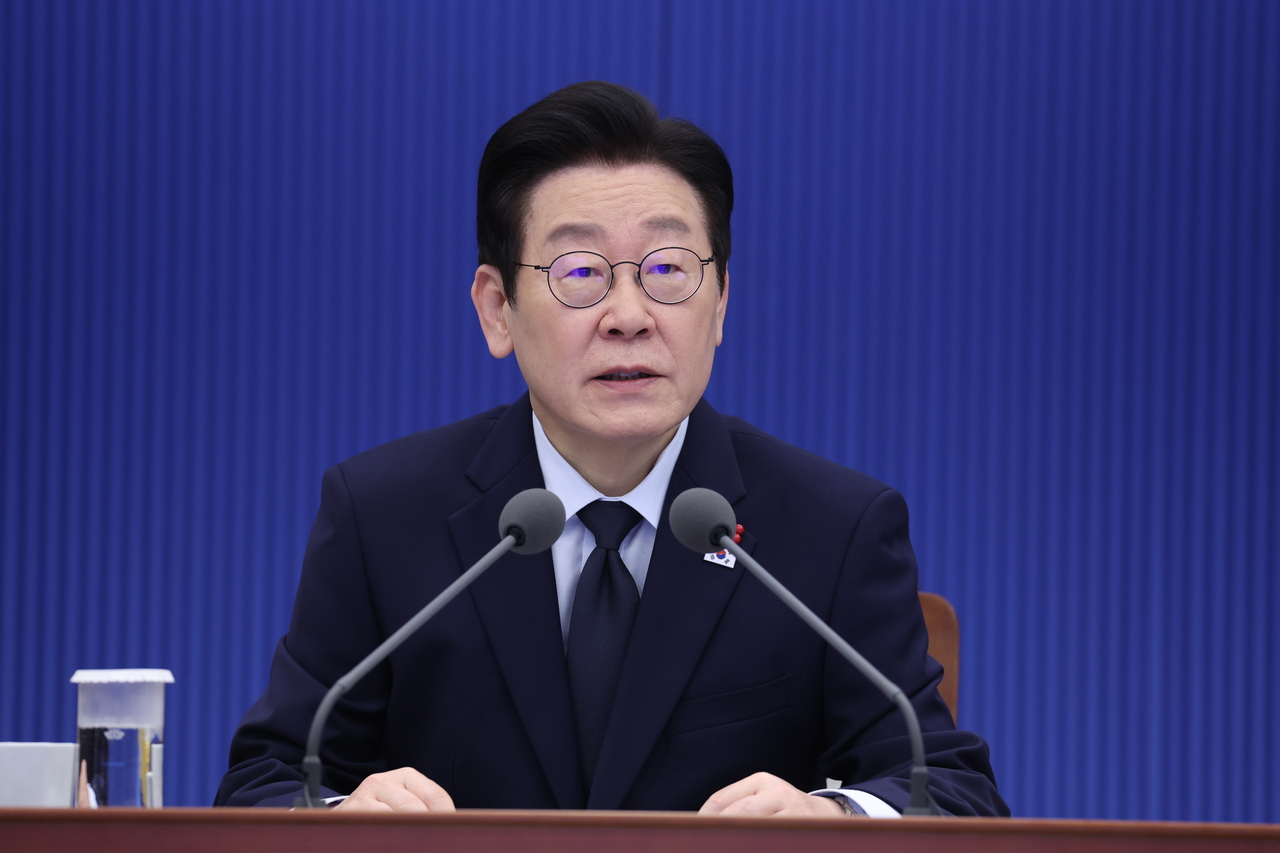
Seoul briefs on 20 years of housing supply policy
'Government urban project risks hobbling private redevelopment'
'Policy pushed without considering Seoul's 310,000-unit plan'
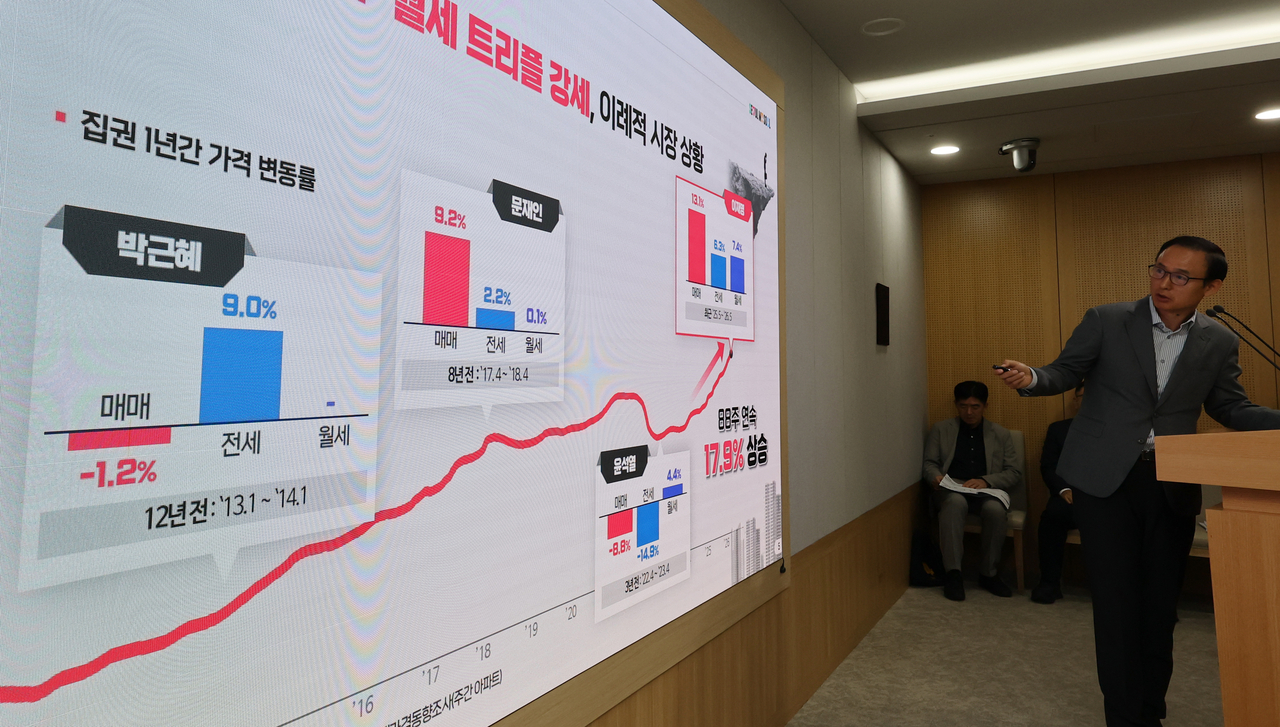
The Seoul Metropolitan Government warned Friday that the central government's urban public housing complex project "could hobble private redevelopment and worsen a future relocation crunch." With Seoul pressing ahead to break ground on 310,000 units by 2031, city officials said the policy risks concentrating relocation demand and straining the jeonse and monthly rent market.
Deputy Mayor for Administration Kim Sung-bo made the remarks at a forum titled "Twenty Years of Housing Supply Policy: Assessment and Reflection," held Friday at Seoul City Hall. He said the city is pushing to supply an average of 50,000 apartments per year through 2031 "to fill the 430,000-unit supply gap created by the abnormal cancellation of redevelopment zones under former Mayor Park Won-soon and to stabilize the sharp rise in home prices."
Kim said the central government "is fixated on the urban public housing complex project, which could worsen the relocation crunch, without considering Seoul's timeline." He argued that while a supply level of 30,000 to 40,000 units does not trigger a major relocation crisis, adding relocations from new urban complex projects on top of Seoul's already above-average pipeline would cause supply to pile up. He added that despite these foreseeable side effects, the central government has never expressed a willingness to discuss or cooperate with Seoul on the issue.
Because Seoul is targeting 310,000 groundbreakings by 2031, the city said the central government's policy would place additional pressure on the jeonse and monthly rent market. Myeong No-jun, acting head of the city's housing bureau, said at the same briefing that "the biggest problem is the concentration of relocations in specific autonomous districts and zones." He said the city would tighten its management by lowering the threshold for complexes subject to relocation-timing controls from the current 2,000 units or more to 1,000 units or more.
Myeong added that "according to our analysis, 80 percent of redevelopment zone residents relocate to multi-family and multi-unit housing, which means revitalizing the non-apartment sector must go hand in hand with any response." He said addressing the relocation crunch "is not a problem Seoul can solve on its own."
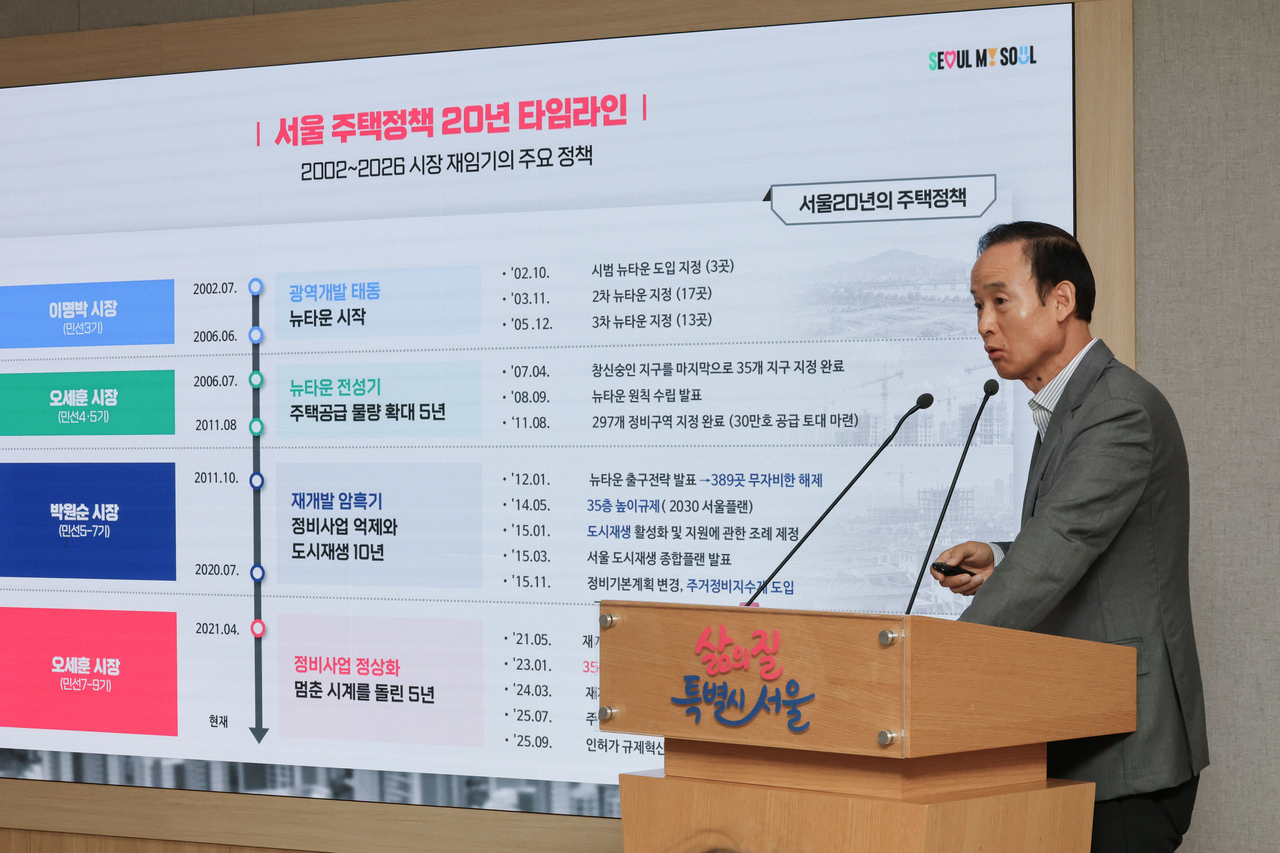
Seoul also warned Friday that even as deregulation accelerates project timelines, lack of cooperation from local governments could prevent redevelopment from proceeding smoothly.
Myeong addressed the prolonged delay in designating a project operator for the Changsin 9 and 10 district redevelopment project, which has met the legally required consent threshold. He said "the reality is that unreasonable project delays can occur depending on a district mayor's preferences," adding that "Seoul's supervisory authority has limits, making it difficult to find a practical alternative."
According to the white paper released Friday — titled "Twenty Years of Housing Supply Policy: Assessment and Reflection" — Seoul's housing supply base, which had expanded through the New Town projects of the 2000s, was scaled back under the Park Won-soon administration. Between 2012 and 2020, 389 of 683 redevelopment zones citywide were dissolved, removing roughly 57 percent of all designated zones from the redevelopment pipeline. The city said this contraction caused annual groundbreakings from redevelopment projects to fall from an average of 29,000 units per year between 2016 and 2020 to about 15,000 units per year between 2021 and 2025, creating a supply cliff.
Seoul said that since Mayor Oh Se-hoon took office, the city has continued to improve project viability, shorten permitting timelines and manage on-site progress across the eighth and ninth elected terms. During the eighth term, the city narrowed regional disparities in project viability by introducing a profitability adjustment coefficient, recognizing existing floor-area ratios and easing public-contribution requirements. In 2022, it introduced the Moa Housing and Moa Town schemes to allow aging low-rise residential areas unsuitable for large-scale redevelopment to undergo renewal.
Myeong said the number of newly designated redevelopment zones between 2021 and 2025 reached 172 — more than double the 77 designated in the preceding five years from 2016 to 2020. "We will mobilize all administrative resources to remove bottlenecks at each project stage and ensure groundbreakings and completions proceed without disruption toward the goal of 310,000 units by 2031," he said.
hope@heraldcorp.com