Gasoline capped at 1,784 won per liter, diesel at 1,773 won, kerosene at 1,380 won
Ministry cites Chuseok holiday, highway discounts for September fuel consumption rise
Refinery sector's export-limit relief request to be reviewed within supply stability bounds
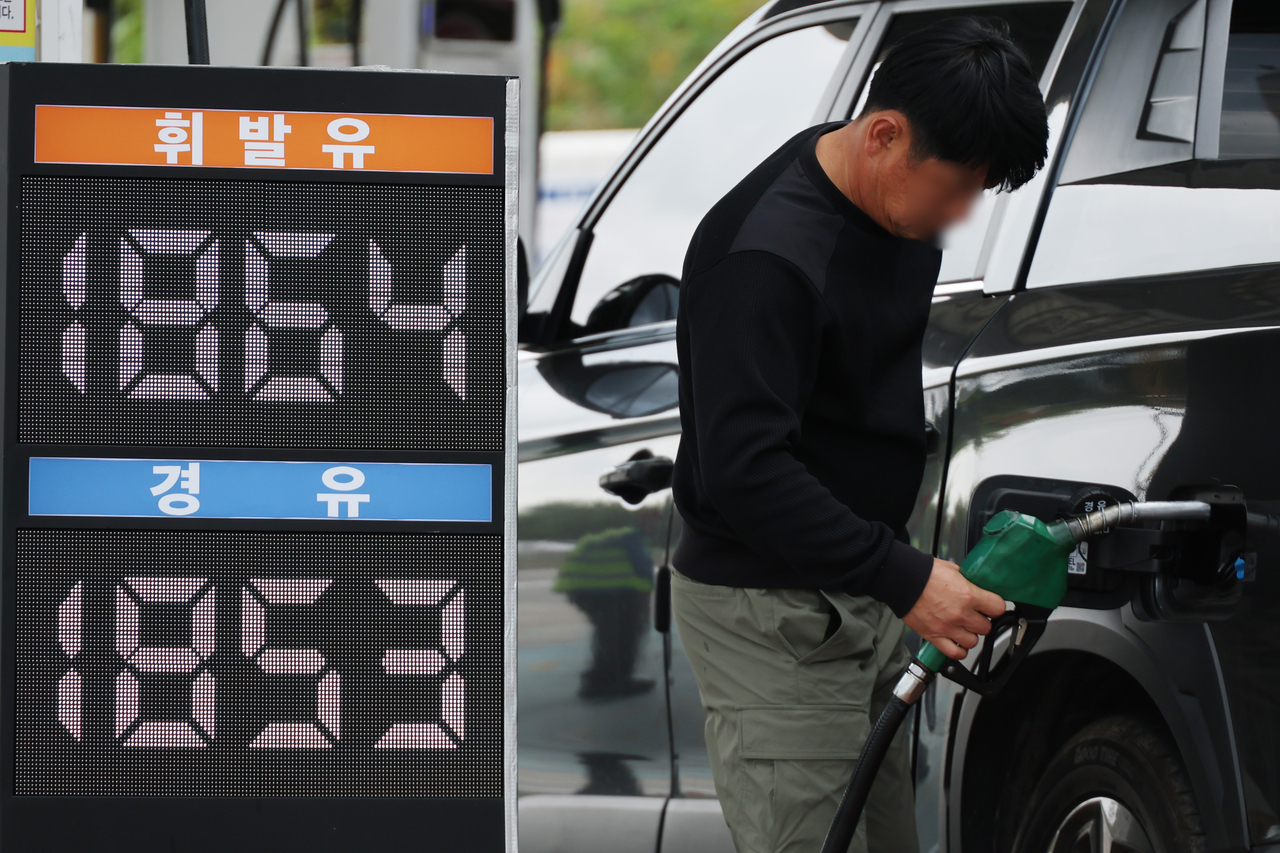
South Korea will hold its petroleum price caps at 1,784 won per liter for gasoline, 1,773 won for diesel and 1,380 won for kerosene for another four weeks. The caps have remained unchanged since the government cut them by 150 won per liter in the seventh round, following the US-Iran ceasefire agreement in late June.
The Ministry of Trade, Industry and Energy announced Friday that the 11th round of petroleum price caps, effective from midnight Saturday, would be frozen at the same levels as the 10th round.
The 11th-round caps thus match those of the seventh through 10th rounds. The decision takes into account the burden on ordinary households even as international crude prices remain above $100 per barrel.
Tensions in the Middle East have persisted following Iranian attacks on vessels transiting the Strait of Hormuz and Houthi rebel strikes on key Saudi Arabian facilities. As of Thursday, Brent crude stood at $105.9 per barrel, Dubai crude at $107.0 and West Texas Intermediate at $98.0. International refined product prices were $133 per barrel for gasoline and $170 for diesel.
The ministry said it decided to freeze the caps after closely monitoring global oil market conditions while weighing recent pressures on household living costs and the domestic supply-and-demand situation.
Although overall consumer price inflation slowed to 2.9 percent in September, petroleum product prices rose 14.8 percent year-on-year, deepening the strain from rising energy costs.
Some observers have argued that the government's price controls have actually spurred fuel consumption, pointing to a 3.0 percent year-on-year increase in gasoline sales at service stations in September.
The ministry pushed back on that reading, attributing the uptick to a temporary surge in demand during the Chuseok holiday and special discounts at highway service stations.
Of the roughly 36,000 kiloliters of additional gasoline consumed in September, about 29,000 kiloliters were concentrated in the fourth week of the month, when the Chuseok holiday fell.
The ministry added that sales in the first two weeks of October fell 5.5 percent, and that cumulative gasoline and diesel sales from the second week of March — when the price cap system took effect — through the second week of October were down 1.7 percent and 7.6 percent, respectively, compared with the same period a year earlier.
On the refining industry's request to ease restrictions on petroleum product exports, the ministry said it plans to "work with the industry to find ways to manage export volumes within a range that does not create problems for domestic supply and demand."
The government currently limits petroleum product exports to no more than 100 percent of the same month a year earlier as part of supply stabilization measures. Refiners that export diesel have complained the restrictions cap their earnings even as international diesel prices have surged.
oskymoon@heraldcorp.com