Oh says Lee Jae Myung administration's Oct. 15 real estate package has produced 'dismal' results one year on; cites city white paper showing 430,000 housing units lost under predecessor Park Won-soon
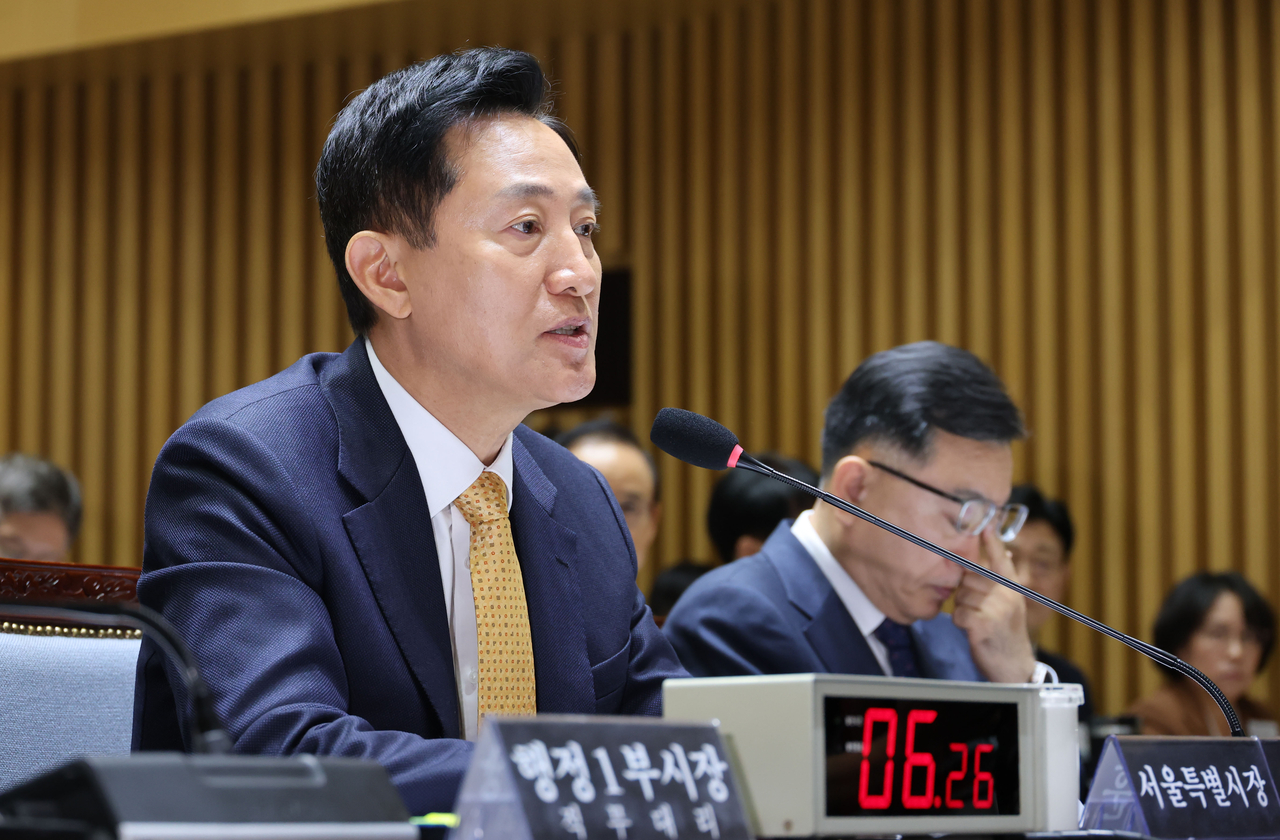
Seoul Mayor Oh Se-hoon on Sunday called on the government and the ruling party to acknowledge their housing policy failures and change course, citing a white paper on housing policy recently published by the Seoul Metropolitan Government. In a Facebook post, he also urged the government and the ruling Democratic Party to stop attacking him and instead focus on the lives of citizens crushed by soaring home prices.
Oh made the remarks in a post titled "Seoul City's letter of reflection — I recommend you read it," writing that exactly one year had passed since the Lee Jae Myung administration announced its Oct. 15 real estate package. "The report card is so dismal it is painful to even open," he wrote.
He said the government appeared to lack both the courage to reflect on the past and the will to face reality, and criticized the president and the Democratic Party for deflecting blame onto the sitting mayor for the current housing supply shortage.
Oh then highlighted a white paper released by the Seoul Metropolitan Government on Friday — titled "Twenty Years of Seoul's Housing Supply Policy: Assessment and Reflection" — describing it as "a candid, remorseful confession in which Seoul city officials looked back on the past themselves and laid bare the wounds left by misguided policies."
Drawing on the white paper, Oh leveled pointed criticism at the urban renewal policies pursued under his predecessor, former Mayor Park Won-soon. He argued that the cancellation of 389 redevelopment and reconstruction zones during Park's tenure had wiped out the opportunity to build 430,000 housing units. "It was a time when the construction sector was recovering from the aftermath of the financial crisis — a golden age of supply was within reach," he said.
He added that projects had been scrapped wholesale — including those where residents' committees had already been formed, cooperative establishment permits had been granted, and even project implementation approvals had been finalized. "As many as 159 zones, or 41 percent of the total, were dissolved even though work had already progressed significantly," he said.
Oh also described irregularities in how the cancellations were carried out, saying some zones were dissolved hastily through resident surveys that made use of the names of deceased individuals, others were canceled through arbitrary interpretations of local ordinances, and still others were dissolved by executive order despite opposition from residents and district offices.
He argued that the cancellations were rooted in a hostile view of redevelopment and reconstruction as speculation. "A wrong decision made 15 years ago has come back as the deletion of countless housing units that should have been supplied by now," he said.
Oh said he had distributed the white paper last week to the offices of lawmakers on the National Assembly's Land, Infrastructure and Transport Committee, and recommended that both ruling and opposition members read it. The committee's audit of the Seoul Metropolitan Government is scheduled for Monday morning at 10 a.m.
Directing his remarks particularly at Democratic Party lawmakers, Oh said the government and the ruling party must now follow the city's example of self-reflection and admit their failures. "Just as Seoul City has confessed and reflected on its past mistakes, the government and the ruling party must now acknowledge their failures and correct the direction of policy," he said.
He added that policy without reflection only repeats failure, and that the cost always falls on the public. "I hope that instead of devoting your time to attacking me, you will look first at the lives of citizens weighed down by housing prices," he said.
ken@heraldcorp.com