About 63,000 rental apartments in regulated zones face automatic deregistration
Stock market correction tied to global rate and semiconductor concerns
Virtual asset tax direction still under review
Sovereign wealth fund cooperation discussed with Saudi Arabia, Singapore
Deputy prime minister to personally oversee Yeongnam mega-project
Deputy Prime Minister and Minister of Economy and Finance Lee Hyung-il said he is considering additional capital gains tax breaks for owners of privately purchased rental apartments in regulated zones who sell to the public sector, including the Korea Land and Housing Corporation.
Acknowledging recent stock market volatility, Lee said the economy's fundamentals remain solid but pledged to stand ready to deploy market stabilization measures if needed.
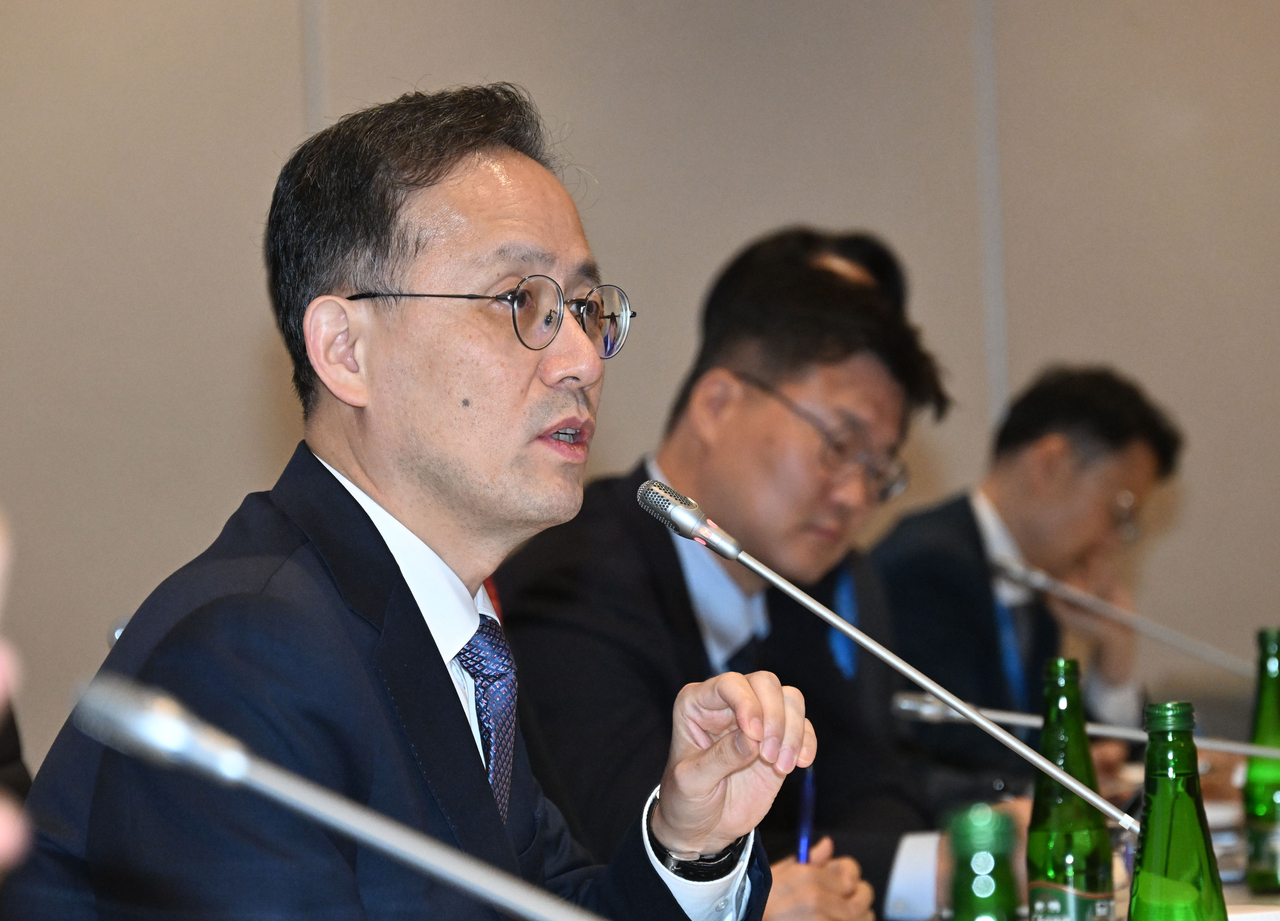
Speaking at a press briefing at the Queen Sirikit National Convention Center in Bangkok on Friday (local time), Lee said, "If rental apartments in regulated zones are sold to the public sector and used for public purposes, we are considering additional capital gains tax reductions." He added that while the exact scope of qualifying public-sector buyers requires further deliberation, the Korea Land and Housing Corporation is the most representative example.
The government had previously decided to apply an exemption from the heavier capital gains tax rate only when such apartments are sold by the end of 2027, with the benefit not applying to disposals after that date.
Lee said rental housing operators have reported difficulty finding buyers even when they want to sell, and that tenants in those units worry about instability in their jeonse and monthly rent arrangements. The plan is to stimulate transactions by offering additional tax incentives for sales to the public sector and to put the units to public use.
According to the Ministry of Economy and Finance, approximately 63,000 privately purchased rental apartments in regulated zones are subject to automatic deregistration between 2021 and 2026. Because units already disposed of are included in that figure, the actual policy target may differ. Only some of those units are expected to ultimately qualify for public purchase, depending on future acquisition terms and business models.
On proposed real estate tax reforms, Lee said he intends to review opinions raised during next month's deliberations by the tax subcommittee of the National Assembly's Finance and Economy Planning Committee. "If reasonable views are put forward, I am fully prepared to consider them," he said. "I expect things will be sorted out through the subcommittee process."
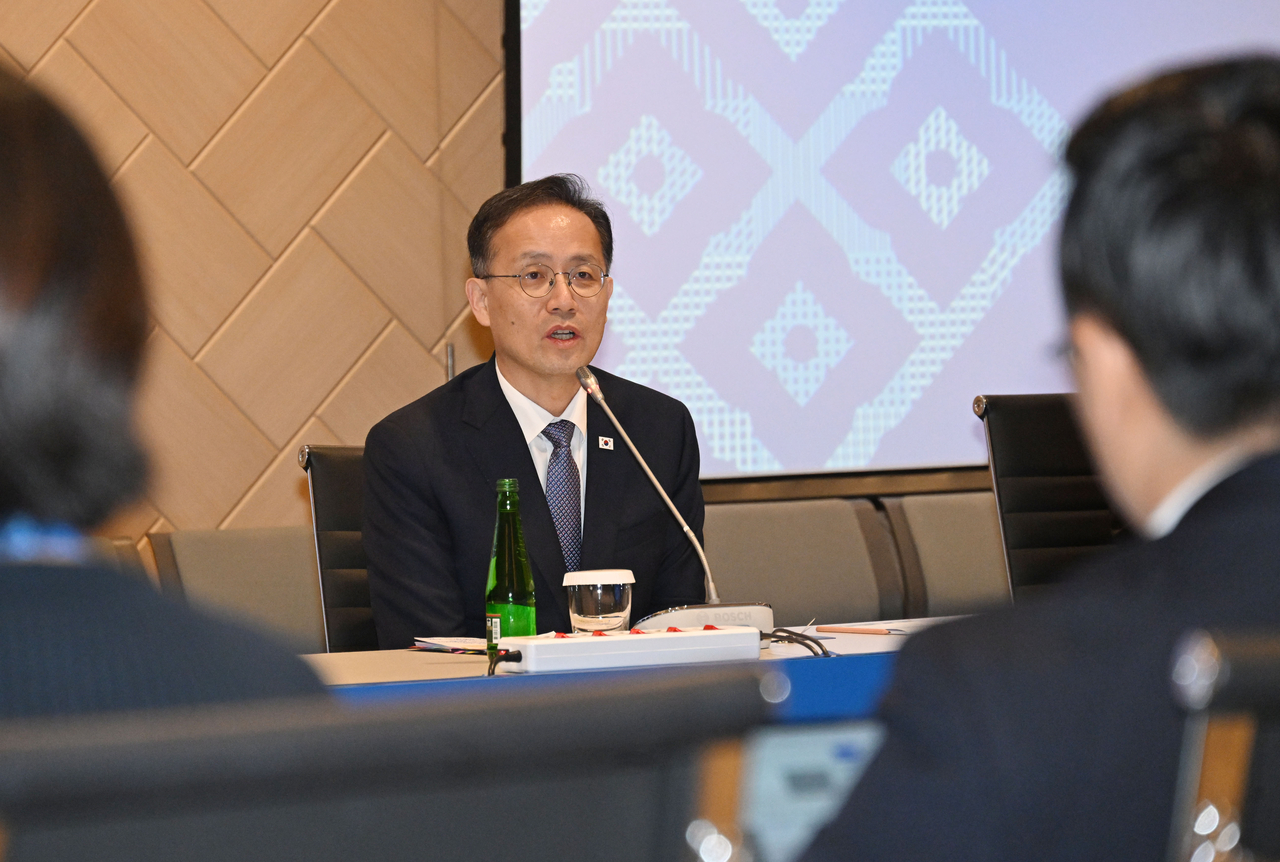
On recent stock market volatility, Lee identified concerns over rising global interest rates, questions about returns on AI and semiconductor investment, and geopolitical risks in the Middle East as the main drivers of the correction.
"Korea has a market with an exceptionally high weighting in semiconductors, so the impact has been relatively pronounced," Lee said, while adding that "taking into account the large current account surplus and other factors, I believe the fundamentals of our economy and stock market remain solid." He also projected that while investment is currently driving economic growth, that momentum will eventually spread to consumption as well.
To strengthen the stock market's competitiveness, Lee outlined plans to cultivate new growth engines beyond semiconductors — including seven strategic seed industries, a Korean green transition initiative and the service sector — while continuing to improve the structural health of capital markets. He also cited the productive-finance ISA proposal submitted to the National Assembly and the Child Independence Fund included in next year's budget as policies that would bolster market conditions.
Asked whether the government might activate a stock market stabilization fund or temporarily suspend short selling if volatility worsens, Lee said, "We are always monitoring market conditions and are prepared to deploy the market stabilization measures at our disposal if necessary."
He added that the choice of specific measures would depend on circumstances, and that announcing them in advance could dilute their effectiveness. "From a market management standpoint, we will communicate at the most opportune moment," he said.
On the question of taxing virtual assets, Lee said the government is continuing to gather opinions. "I would like people to understand that we are currently in a listening phase, collecting views in order to make a comprehensive judgment," he said, without indicating a specific policy direction on whether to delay the tax.
Lee said the government decided to maintain the petroleum price ceiling, citing the prolonged war in the Middle East, volatility in international oil prices and the burden on household finances. "The key issue going forward is still the Middle East war — including how passage through the Strait of Hormuz will unfold," he said. "I think there is still much to watch before we can make a judgment."
On the establishment of a sovereign wealth fund, Lee said he discussed potential cooperation with Saudi Arabia and Singapore, both of which already operate sovereign wealth funds. "I met with the finance ministers of Saudi Arabia and Singapore, heard about how they run their sovereign wealth funds, and told them we would like to work together once the legislation passes — and received very positive responses," he said.
He explained that foreign sovereign wealth funds want to invest in Korea but find it difficult to navigate the market on their own, and are looking for a co-anchor. "When our sovereign wealth fund eventually goes abroad, we could go together, so we want to build a framework for mutual cooperation," he said.
Asked whether a regular consultative body might be established, Lee said, "I think that is possible if needed," adding that there was agreement to maintain ongoing dialogue at the government and finance ministry level.
Lee also announced plans to personally oversee the Yeongnam region component of the government's three major regional industry mega-projects. Currently, the Ministry of Economy and Finance leads the Yeongnam project, while the Ministry of Trade, Industry and Energy oversees the southwestern and Chungcheong region projects.
"We plan to restructure the Yeongnam mega-project task force so that it is chaired by the deputy prime minister, and to continue driving it forward," Lee said. "We will identify key tasks, coordinate where necessary and resolve related issues swiftly."
Lee also said the government will step up on-site consultations for the electric vehicle industry. "The National Assembly has asked for more input not only on virtual assets but also on electric vehicles," he said, adding that he plans to visit industry sites in early November to hear directly from stakeholders.
Lee attended the G20 finance ministers' meeting and the IMF-World Bank Annual Meetings held in Bangkok from Thursday through Saturday, marking his first multilateral diplomatic engagement since taking office. Over three days, he carried out a total of 25 official engagements, including five multilateral meetings, 19 bilateral talks and one interview with foreign media.
y2k@heraldcorp.com