Lee advocates 'multi-hub mega-regional economy'; says jobs are 'just a report card' of regional competitiveness
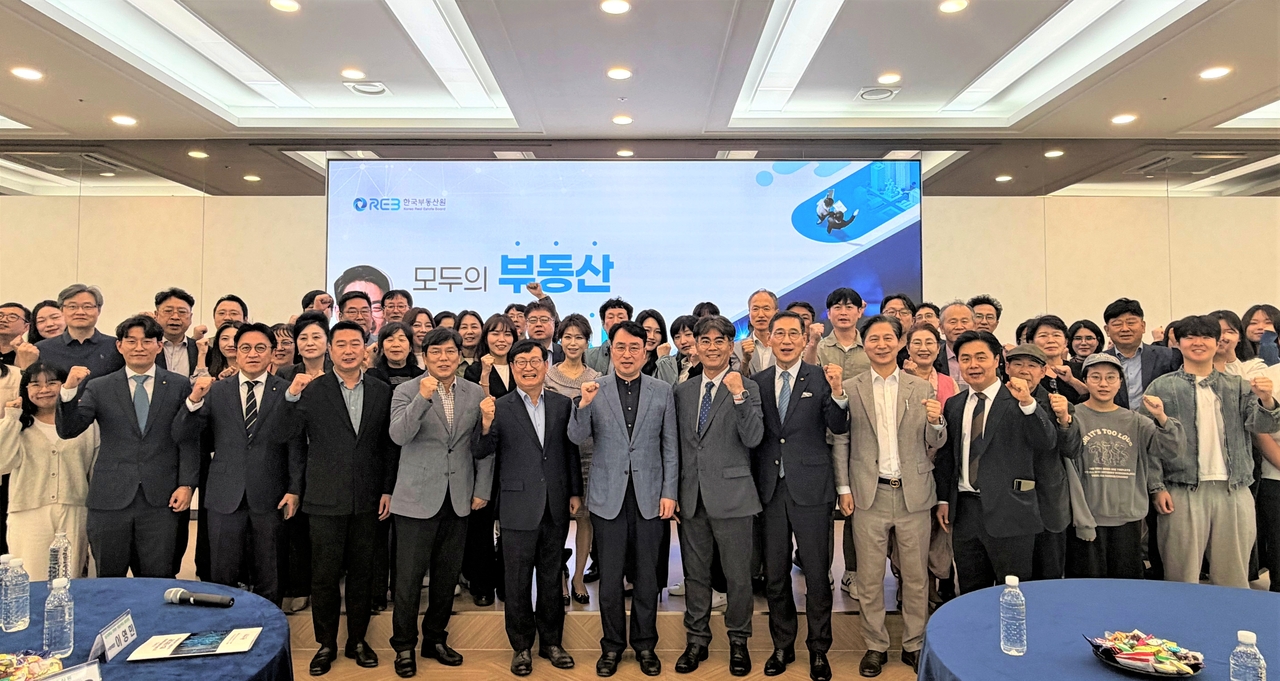
Korea Real Estate Board President Lee Heon-wook said building knowledge networks and a talent ecosystem must take priority over simply increasing the number of jobs if regions are to achieve sustainable growth.
Lee made the remarks Saturday at a guest lecture hosted by Daegu University's graduate real estate program at the university's Sungsan Hall. Speaking under the theme "Real Estate for All, Great Cities," he outlined his vision for future cities and the direction of national spatial development.
"Jobs are just a report card showing a region's competitiveness," Lee said. "National competitiveness comes from the quality of cities themselves and the connectivity between them." He added that a sustainable talent ecosystem requires universities, research institutions and businesses to be closely linked so that knowledge and people can circulate freely, supported by living conditions — including education, transportation, healthcare and culture — that make regions attractive places to stay.
Lee also called for a fundamental shift in national spatial strategy. He said the country needs to reorganize its territory around living zones and economic zones rather than administrative boundaries, and identified the creation of a "multi-hub mega-regional economy" — a dense network of hub cities capable of attracting talent and businesses — as a core priority.
"Hub cities should not be mere industrial clusters but world-class knowledge hubs where universities, research institutions, companies and talent come together to generate new knowledge and innovation," Lee said. "Only when these hubs are connected on a broad regional scale can non-metropolitan areas become a genuine alternative to the greater Seoul area."
He said the essence of balanced national development lies not in distributing jobs by region but in creating an environment where talent and businesses can choose regions on their own. "Regional policy must shift its focus from job numbers to an ecosystem where people and knowledge converge," he said.
Lee added that the Korea Real Estate Board would closely monitor regional growth conditions and spatial changes to support efforts to strengthen regional competitiveness and promote balanced development.
Meanwhile, the Korea Real Estate Board recently became the first agency under the Ministry of Land, Infrastructure and Transport to obtain certification under the international AI management system standard ISO/IEC 42001.
hwshin@heraldcorp.com