Jeon Hyun-hee: 'Only complaint tallies tracked — entry routes, root causes must be recorded'
FSS chief says special civil investigation unit created partly to prevent evidence destruction
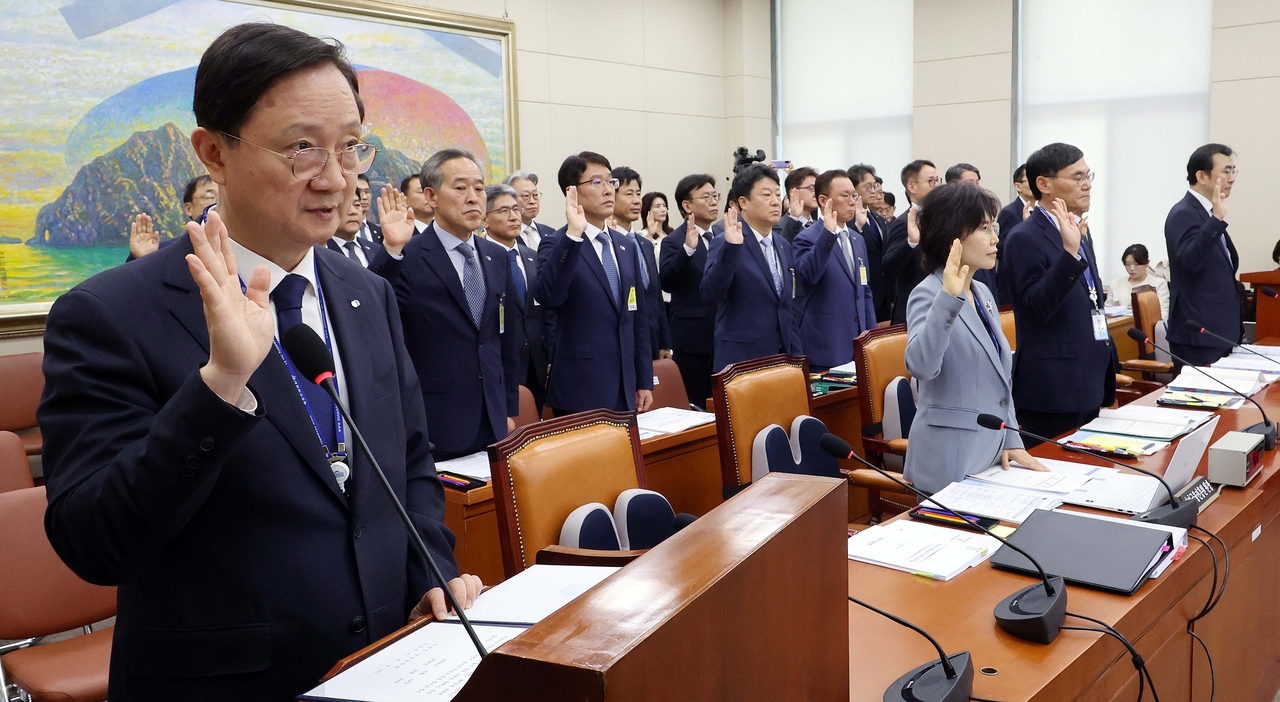
Financial Supervisory Service chief Lee Chan-jin said Monday that the agency would investigate the causes of illegal private lending harm during victim consultations — going beyond after-the-fact responses to build a data record of how victims fall into illegal lending and why, with the aim of developing preventive measures.
Lee made the pledge at the National Assembly's audit of the FSS by the Political Affairs Committee, after Democratic Party of Korea lawmaker Jeon Hyun-hee called for improvements to the agency's system for tracking illegal lending complaints and consultations. "When conducting consultations on harm, we will also investigate the causes in parallel," Lee said.
Jeon cited cases including one in which a 500,000-won ($372) debt ballooned to 15 million won under an annualized interest rate of 578 percent, calling illegal private lending "a serious crime that goes beyond simple financial harm to threaten the daily lives of debtors and their families." She added that criminal methods are growing increasingly sophisticated, with perpetrators leaking debtors' personal information and photos as leverage and targeting family members and coworkers with illegal debt collection.
An analysis of FSS data by Jeon's office found that harm reports filed with the FSS's Illegal Private Lending Victim Reporting Center in the first half of this year rose sharply compared with previous years. The total number of complaints and consultations this year alone reached 17,538.
"The FSS only analyzes the volume of reports and consultations — it does not systematically investigate or hold data on how people end up in illegal lending, including entry routes and the causes of harm," Jeon said. "To mount a preemptive response, data that can identify root causes must be accumulated." She also said the Korea Inclusive Finance Agency similarly tracks only the usage of policy loans, and the agency's chief agreed that the statistical framework needs improvement.
Jeon also raised concerns that when the FSS sends a warning to an illegal lender after receiving a complaint — requesting that collection stop and the transaction be closed — the lender may realize a report has been filed and destroy evidence. Lee said that concern was a major reason behind the launch of a special civil investigation unit. "Because there is a risk of evidence destruction and flight the moment a complaint is received, strengthening investigative authority and securing prosecutorial powers are essential to preserving evidence," he said.
won@heraldcorp.com