A single photo identifies items from more than 156 categories and handles fees, payment and pickup requests — cutting a 15-to-20-minute process down to about one minute
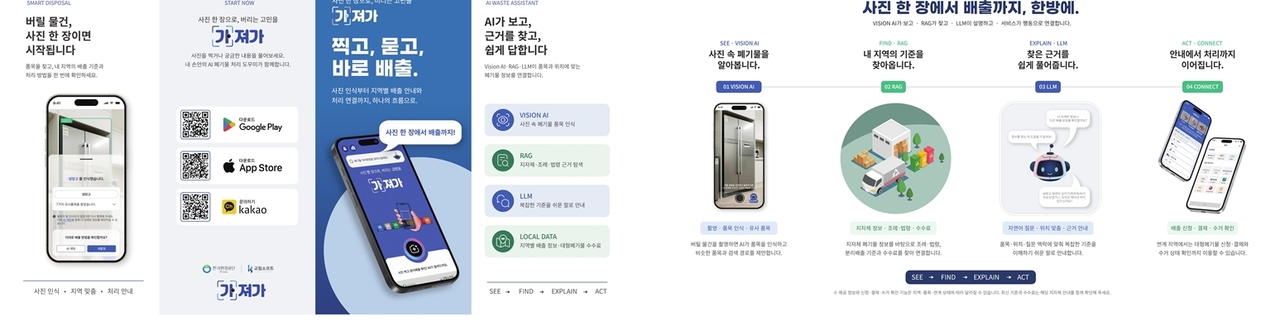
Seoul's Eunpyeong-gu said it will become the first district in the country to pilot "Gajyeoga" ("Take It Away"), an AI-based smartphone app that lets residents request bulk waste pickups.
The app allows users to photograph a bulky item, automatically identifies it, and then handles fee information, payment and pickup scheduling in a single session. The pilot runs through late December.
Under the previous system, residents had to look up an item's category and size themselves before selecting it from a list. With Gajyeoga, a photo is all that is needed: the app identifies the item and provides the applicable fee, eligible pickup days and drop-off location. Residents can complete the entire process — including a simplified identity check and payment — without creating an account.
Eunpyeong-gu handles more than 220,000 bulk waste disposal requests a year. About 29 percent of those — roughly 65,000 — are still filed in person at community service centers. Even online submissions required residents to select items manually, and mismatches between what was reported and what was actually left out sometimes delayed collection or forced residents to refile.
Gajyeoga addresses those problems using AI image-recognition technology. The app can identify more than 156 categories of waste and analyzes the position, shape and material of objects in a photo to classify them automatically. It can also recognize multiple items in a single image.
The service was developed as part of the "Public AI Grand Transformation Project," supported by the Ministry of Science and ICT and the National IT Industry Promotion Agency. Korea Environment Corporation proposed improvements to the bulk waste disposal process, and Gyorim Soft handled development. Eunpyeong-gu is participating as the first district to apply the app's request and payment functions to live administrative operations.
The app is also expected to improve collection efficiency. Requests submitted by residents are forwarded to waste collection companies, and drivers can check registered photos to confirm what has been left out. A notification is sent to the resident once collection is complete, and the app can also generate optimized pickup routes based on request locations.
Eunpyeong-gu expects the app to cut the time needed to file a bulk waste disposal request from roughly 15 to 20 minutes to about one minute, and to significantly reduce misreported items and routine inquiries. The existing in-person and online filing options will remain available for residents who have difficulty using digital devices.
"We expect this service to make bulk waste disposal much easier and more convenient for residents," Eunpyeong-gu District Mayor Kim Mi-kyung said. "We will continue to actively apply digital technologies such as AI to administrative services to reduce the everyday inconveniences our residents face."
seouldream01@heraldcorp.com