Cumulative third-quarter toll of 366 marks all-time low; construction deaths down 28.6%
Manufacturing fatalities rise 10.9%; fire and explosion deaths surge 46.2%
Foreign worker deaths up 33.3% in manufacturing, widening industry safety gap
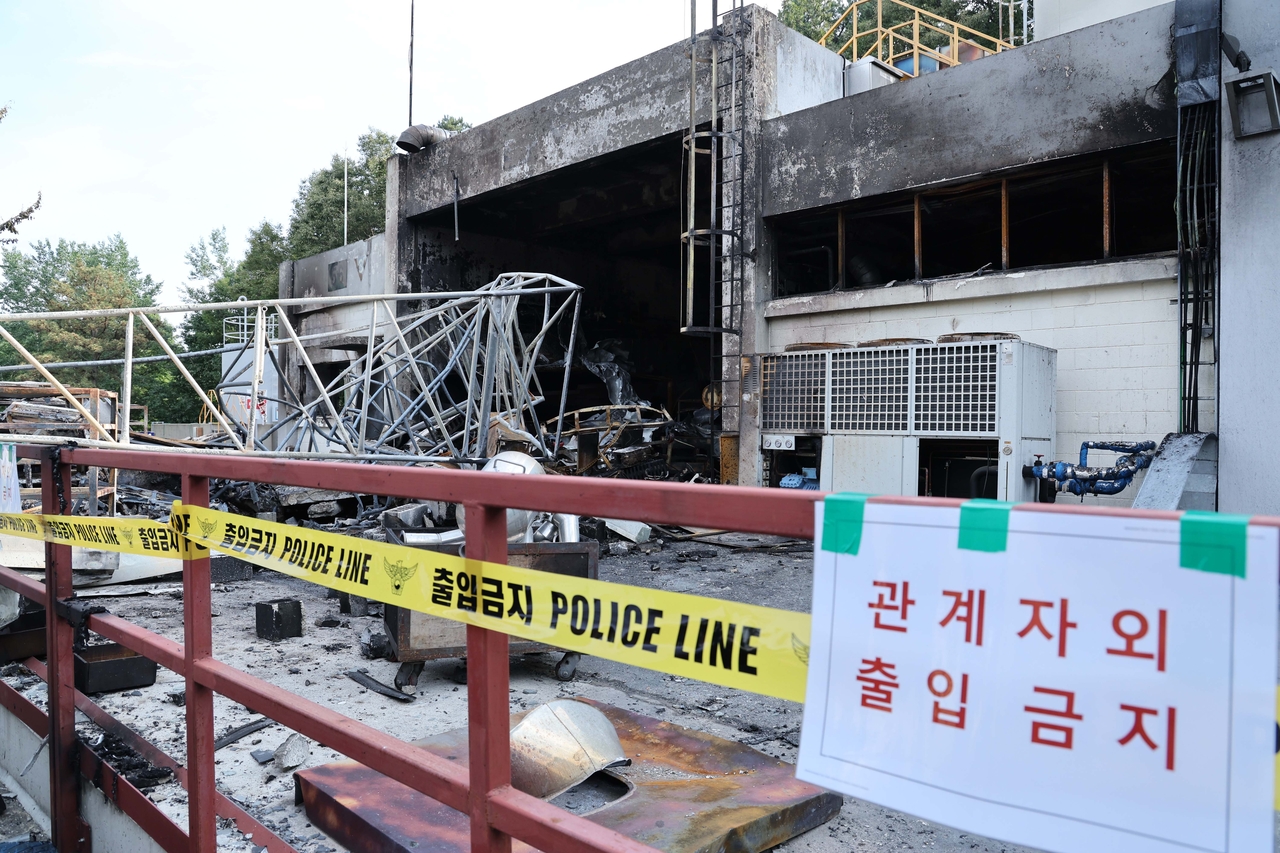
Fatal workplace accidents fell nearly 20 percent through the third quarter of this year compared with the same period last year, hitting the lowest level since records began — driven by sharp declines in construction and other industries. Manufacturing, however, moved in the opposite direction, with fatalities rising overall and deaths at manufacturing workplaces with 50 or more employees surging more than 30 percent. Fire and explosion incidents fell in number, but a string of large-scale disasters pushed the death toll sharply higher.
The Ministry of Employment and Labor released data Tuesday on fatal workplace accidents subject to disaster investigation in the third quarter of 2026, showing 366 workers died in accidents from January through September — 91 fewer, or 19.9 percent less, than the 457 recorded in the same period last year. The number of fatal accident cases also dropped 22.3 percent, from 440 to 342. It is the first time since the ministry began compiling the statistics in 2022 that the cumulative third-quarter death toll has fallen below 400.
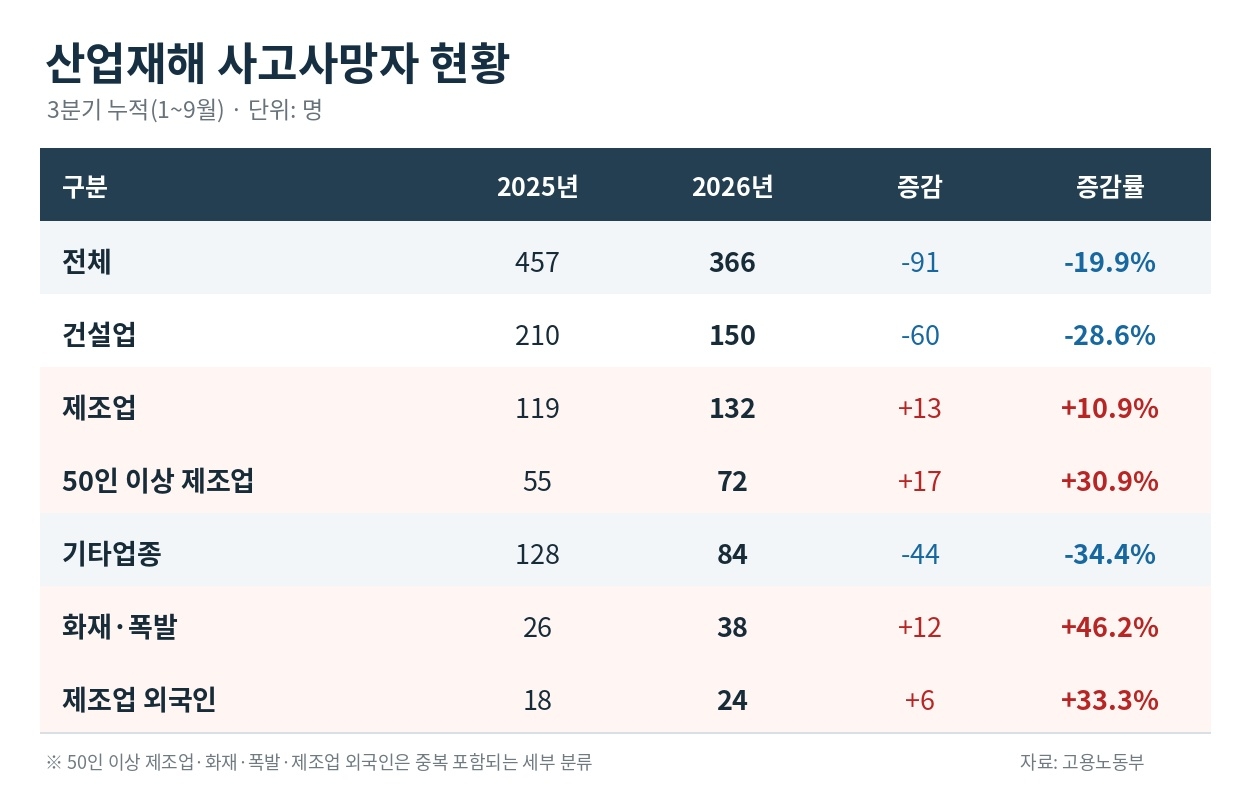
By industry, construction fatalities fell from 210 last year to 150 this year, a drop of 60 deaths, or 28.6 percent. Other industries also saw a decline, from 128 to 84, down 44 deaths or 34.4 percent. Ryu Hyeon-cheol, head of the ministry's Industrial Safety and Health Bureau, said the construction decline could not be explained by the sector's slowdown alone, noting that while the number of construction workers had fallen 4 to 5 percent, the number of active construction sites had actually increased.
Manufacturing moved in the opposite direction, with fatalities rising from 119 to 132 — an increase of 13 deaths, or 10.9 percent. The increase was concentrated at larger workplaces: manufacturing sites with 50 or more employees recorded 72 deaths, up from 55, a jump of 17 deaths or 30.9 percent. Over the same period, manufacturing sites with fewer than 50 employees saw fatalities edge down from 64 to 60, a decrease of 6.3 percent.
Large-scale fire and explosion accidents were a major factor. A fire at Daejeon Anjeon Industrial in March killed 14 people, and an explosion at Hanwha Aerospace's Daejeon plant in June claimed five more lives. In August, a fire at an animal fat manufacturing factory killed three workers. Although the number of fire and explosion incidents fell 19.0 percent — from 21 last year to 17 this year — deaths from such accidents rose 46.2 percent, from 26 to 38. The average number of deaths per incident climbed from 1.24 to 2.24.
Foreign worker fatalities also increased in manufacturing alone. Overall, deaths among foreign workers fell 20.0 percent, from 60 last year to 48 this year, but in manufacturing the figure rose 33.3 percent, from 18 to 24. Foreign workers' share of all manufacturing fatalities also grew, from 15.1 percent to 18.2 percent.
Ryu said foreign workers are often assigned to small, high-risk workplaces and face language barriers, and pledged to raise their level of protection by expanding basic safety and health training and making greater use of foreign worker safety leaders.
By accident type, falls accounted for the largest decline, dropping from 199 deaths last year to 124 this year — a reduction of 75, or 37.7 percent — representing 82.4 percent of the total 91-death decrease. Deaths from being struck by objects also fell, from 56 to 35. By contrast, deaths from being caught under or overturned by objects rose 36.7 percent, from 30 to 41, while entrapment deaths increased 8.1 percent, from 37 to 40.
The ministry attributed the overall decline in fatalities partly to intensified inspections of high-risk workplaces and collaboration with local governments and private organizations to reduce safety blind spots at smaller sites — measures introduced following the release of a comprehensive workplace safety plan in September last year. Targeted prevention efforts for high-risk tasks such as roofing, suspended scaffolding and logging helped cut forestry fatalities from nine last year to three this year.
To prevent fire and explosion accidents that result in mass casualties, the government plans to launch a joint intensive inspection next month involving the Ministry of Interior and Safety, the National Fire Agency and local governments. Next year, it plans to commit 40.1 billion won ($29.9 million) to support safety facilities and equipment for fire and explosion prevention at small and mid-sized workplaces. Ryu said there is still much work to be done "to make the downward trend in fatalities not a temporary change but a structural and irreversible one."
On the separate issue of allegations that DN Automotive concealed workers' exposure to lead, Ryu said he felt "a deep sense of responsibility" for delays in follow-up action. He said an emergency health examination order had been issued but had yet to be carried out, and that the ministry would also pursue inspections of some 150 lead-handling workplaces nationwide.
fact0514@heraldcorp.com