MOU signed to prepare for EU Carbon Border Adjustment Mechanism
Regulation set to expand to some auto parts in 2028
Pilot work with suppliers underway since July
Initiative covers data collection, verification and certificate cost management
KG Mobility (KGM) is building a carbon emissions management system covering its parts supply chain to prepare for the European Union's Carbon Border Adjustment Mechanism (CBAM). The automaker plans to secure relevant data ahead of a possible expansion of the regulation to automotive components and manage the associated carbon costs.
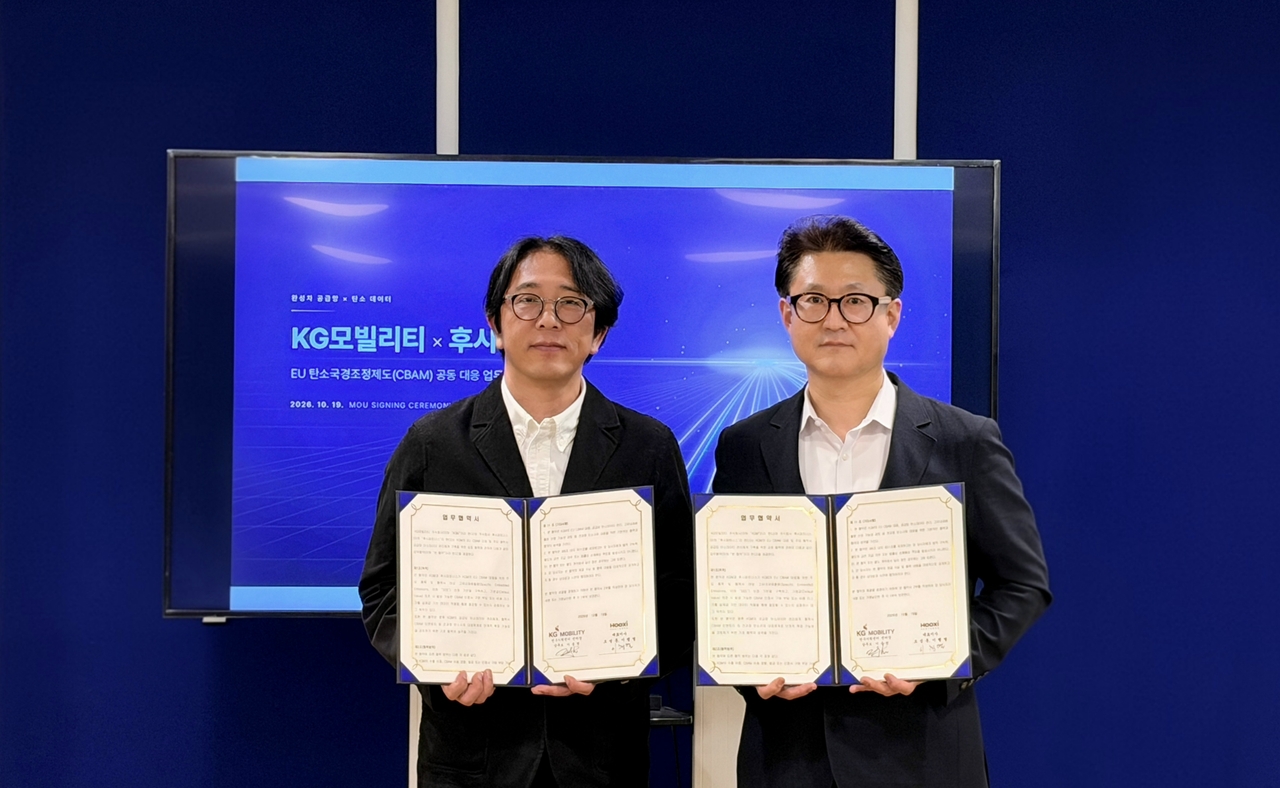
KGM announced Tuesday that it signed an MOU with carbon management firm Hooshi Partners in Yeongdeungpo-gu, Seoul, on Monday. KGM Research Planning Center Executive Director Lee Yong-heon and Hooshi Partners CEO Lee Haeng-yeol attended the signing ceremony.
Under the agreement, the two companies will establish a framework for calculating carbon emissions by automotive component and build a foundation for collecting and verifying production-related data from suppliers. They plan to extend this system to cover CBAM certificate cost management as part of their broader response to European carbon regulations.
CBAM levies charges on carbon emissions generated during the manufacturing of products imported into the EU. The EU began fully implementing the mechanism this year across six product categories: steel, aluminum, cement, fertilizers, electricity and hydrogen.
The EU is currently pursuing an expansion of the regulation's scope from 2028 to cover some processed goods — including automotive components that use large amounts of steel and aluminum. The list of covered products is subject to finalization through legislative procedures.
Securing documentation that can verify actual carbon emissions has become particularly important. Companies that cannot provide emissions data for their products will be subject to default values set by the EU. For steel and aluminum, the surcharge applied to those default values is set to rise from 10 percent this year to 20 percent in 2027 and 30 percent from 2028, potentially increasing the cost burden significantly.
The European Parliament adopted an amended proposal on Sept. 15 to expand CBAM coverage to some processed goods made with steel and aluminum. As EU-level legislative discussions on broadening the scope continue, the importance of supply chain carbon management is growing for South Korea's automotive and parts industries.
Ahead of the MOU, KGM had been conducting pilot work with Hooshi Partners since July. The company gathered data on raw material inputs, energy consumption in production processes and origin documentation from key suppliers producing steel and aluminum used in vehicle models exported to Europe.
Using the collected information, the two companies also calculated embedded emissions — the carbon emissions generated during the production process — for individual products in line with EU regulations.
KGM plans to expand the scope of this pilot work to other components and suppliers. The company said it aims to manage carbon data systematically across the entire supply chain — not just for individual parts — to reduce the regulatory burden that could arise from its European export operations.
"This agreement marks a meaningful first step toward proactively responding to European carbon regulations together with our suppliers," Lee Yong-heon said. "Going forward, we will expand the calculation framework developed through the pilot to the broader supply chain to strengthen our export competitiveness."
Meanwhile, KGM has also been actively pursuing cooperative management initiatives, recently holding a meeting with Pyeongtaek city officials at its headquarters in Pyeongtaek to discuss ways to strengthen corporate competitiveness and pursue shared growth with the local community.
kwater@heraldcorp.com