New investigative agency expected to focus on corporate crimes amid push for political neutrality
Seoul office's financial and antitrust units far larger than their predecessors
Separation of investigation and prosecution means more agencies to navigate, lawyers say
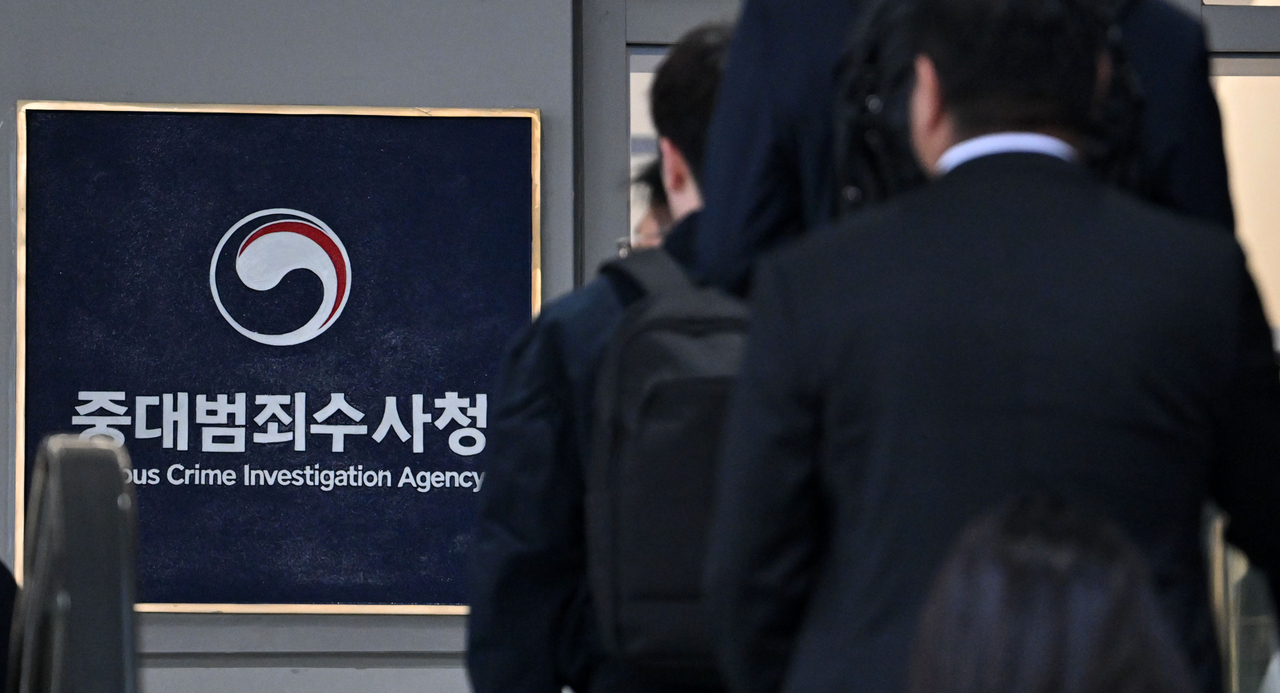
The dismantling of South Korea's prosecution service after 78 years and the creation of the Serious Crimes Investigation Agency and the Public Prosecution Service have brought sweeping changes to how corporate crimes are investigated and tried. Because investigations targeting founders, major shareholders or senior executives can shake an entire company, the business community is watching closely to see how the new system unfolds. With the agency repeatedly stressing its political neutrality, observers say it may direct its early investigative firepower at corporate cases to establish its presence — a prospect that has put companies on edge.
The agency held an inauguration ceremony for its first director, Kim Ji-yong, Tuesday afternoon in the lobby of its headquarters in Jung-gu, Seoul. On Monday, his first public appearance since taking office, Kim told reporters on his way into work that he would pursue the "eradication of politicized investigations" and emphasized fairness, neutrality and procedural justice. He was expected to reiterate those themes at Tuesday's ceremony.
Because the agency is a product of the ruling camp's prosecution-reform drive — and because Kim and other senior officials have consistently stressed political neutrality since the agency's launch — analysts expect it to focus first on serious corporate crimes. Under the law establishing the agency, it has jurisdiction over seven categories of offenses, including economic crimes. Those cover a broad range of cases under the Capital Markets Act — stock price manipulation, use of undisclosed information and fraudulent trading — as well as fraud, extortion, embezzlement and breach of fiduciary duty under the criminal code.
Within and around the agency, antitrust violations are seen as the area companies should watch most closely. The former Seoul Central District Prosecutors' Office, the largest in the country, had made antitrust enforcement a priority right up until the prosecution service was abolished, and President Lee Jae Myung had unusually praised that investigative work. The office's antitrust division — now the Fourth Serious Crimes Indictment Division of the Seoul Central District Public Prosecution Service — led probes into flour and fuel price-fixing, among others. Just before the prosecution service was dissolved, it identified the total value of a petrochemical product price-fixing case at 16.4 trillion won ($12.3 billion) and referred key corporate executives for trial.
In terms of staffing, the antitrust unit has grown roughly sixfold — from about 20 prosecutors and investigators in the former Seoul Central District Prosecutors' Office antitrust division to 120 staff across four sections in the Seoul Serious Crimes Investigation Agency's antitrust bureau. Na Hee-seok, the former head of the antitrust division who now leads the Fourth Serious Crimes Indictment Division, spoke at a briefing on the petrochemical price-fixing case on Oct. 1, the prosecution service's final day. The antitrust unit had 20 people while the new agency has six times that, he said. "Efficiency may have dropped, but the organization has grown bigger," he said. "The prosecutors and investigators have moved over too, so I think case handling should be fine."
How the new system will handle leniency — the program that reduces penalties for companies that voluntarily report cartel activity — is another issue to watch. Under Supreme Prosecutors' Office guidelines introduced in 2020, prosecutors who coordinated with the office could decline to indict the first company to cooperate and seek a sentence half the normal length for the second. In the petrochemical price-fixing case, one of the companies under investigation was excluded from indictment through the leniency program.
With the agency now up and running, it has yet to be decided whether the agency or the Public Prosecution Service will administer the leniency program. A Public Prosecution Service official said the office is reviewing amendments to the relevant rules. There are competing arguments: some say the agency should run it because leniency affects investigations, while others say the prosecution service should, since it handles sentencing recommendations.
Yoon Byung-jun, a lawyer at law firm Infinity and a former head of the criminal division at the Seoul High Prosecutors' Office who helped design the leniency program, said the arrangement had worked because prosecutors previously handled both investigation and indictment. "It was possible because the same prosecutor did both," he said. "It would be awkward for the investigative agency to run it independently, but it could also seem strange for the prosecution service to hold it."
Staffing changes have also hit the unit that investigates violations of the Capital Markets Act and other financial and securities crimes. The Seoul Southern District Prosecutors' Office joint financial and securities crimes investigation unit — long known in Yeouido as the "angel of death" — was dissolved along with the prosecution service. Gone with it was a team that had brought together prosecutors, investigators and personnel from the Financial Services Commission, the Financial Supervisory Service, the Korea Exchange and the National Tax Service.
The joint investigation function has been taken over by the Seoul Serious Crimes Investigation Agency's financial crimes joint investigation division. Whether it can replicate the old unit's capabilities remains to be seen, since prosecutors who could apply directly for warrants are no longer part of the team. In terms of headcount, however, the new financial crimes investigation bureau at the Seoul agency has grown to 150 staff from about 45 in the former Southern District office's financial investigation unit.
While police will handle most criminal investigations following the abolition of the prosecution service, analysts expect the agency to take charge of economic crimes — particularly those involving major corporations. The law establishing the agency includes a provision requiring other investigative bodies to comply with transfer requests from the agency when their cases overlap with agency jurisdiction, unless there is a legitimate reason not to.
The separation of investigation and prosecution — the centerpiece of the overhaul — is also expected to affect corporate trials. In effect, companies now have one more institution to deal with in criminal proceedings. Dan Seong-han, a lawyer and former head of the Seoul Southern District Prosecutors' Office securities crimes joint investigation unit, said the new financial crimes joint investigation division lacks the essential element the old system had. "Financial cases are complex, and unlike in the old prosecution era, the number of agencies companies have to deal with has increased," he said.
Procedures are also expected to take considerably longer than before. Because prosecutors who receive a case after transfer have no investigative authority, any request for supplementary investigation will create back-and-forth between agencies. Analysts also warn that even after indictment, the absence of prosecutorial investigative powers could weaken the ability to secure evidence needed during trial.
bell@heraldcorp.com