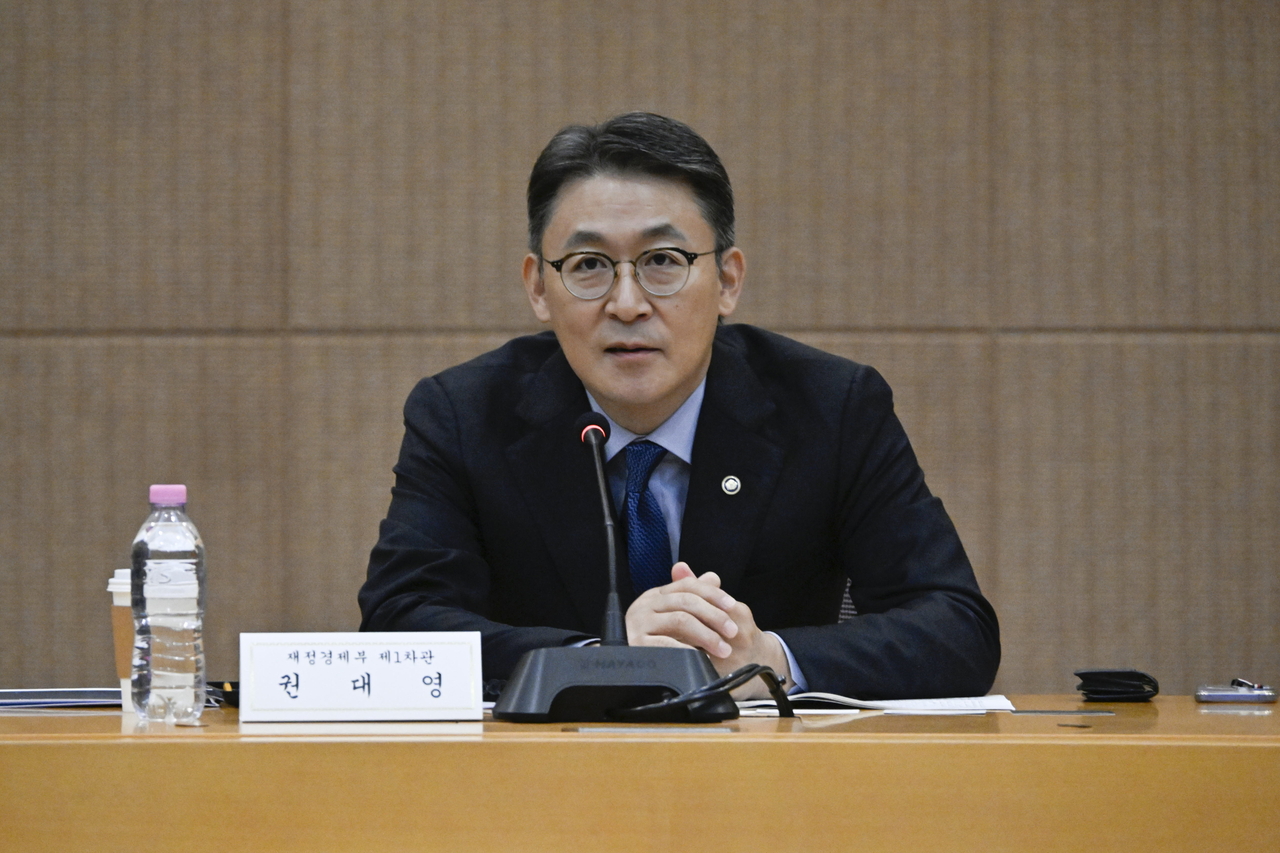
Vice Minister Kwon Dae-young holds field consultation with virtual asset industry and experts
Discussions cover tax data reporting burden, equity concerns over overseas exchange users
The government has begun gathering opinions from industry players and experts ahead of the planned introduction of a virtual asset capital gains tax in January next year. With trading methods diversifying and the use of overseas exchanges growing, officials are reviewing ways to sharpen the clarity of tax standards and reduce uncertainty for taxpayers and businesses.
The Ministry of Economy and Finance said First Vice Minister Kwon Dae-young hosted a field consultation Tuesday with virtual asset industry representatives and experts at the Seoul Regional Office of the Public Procurement Service.
The meeting was organized to hear from those on the ground ahead of the virtual asset tax regime set to take effect Jan. 1, 2027, and to collect views on how to ensure its smooth implementation and adoption.
Attendees included representatives from Dunamu, Bithumb, DigitalX, Coinone, Streami, DAXA and Tiger Research, along with Park Hoon, a professor at the University of Seoul; Choi Seung-jae, a professor at Sejong University; Ahn Seong-hee, a professor at Catholic University of Korea; and Han Seo-hee, an attorney at law firm Bae, Kim & Lee.
"New types of transactions and services are emerging rapidly as technology advances, and cross-border trading is becoming increasingly active," Kwon said. "The tax regime also needs to be carefully designed and operated with full consideration of market changes and the characteristics of each transaction, alongside the fundamental principles of taxation."
Park, the University of Seoul professor, delivered the keynote presentation on major issues in virtual asset income taxation, outlining tax trends in major countries including the United States, the United Kingdom and Japan, as well as considerations for Korea ahead of its own rollout.
"Major countries such as the US, UK and Japan are already taxing virtual assets, but Korea has delayed implementation three times since establishing its tax regime in 2020," Park said. "We need to think carefully about a comprehensive roadmap for implementing and embedding a rational tax system."
Industry representatives called for clear tax standards as trading methods grow more varied and complex. They particularly asked the government to allow sufficient preparation time for businesses to build and verify systems for submitting tax data, and to address equity concerns for users of overseas exchanges.
Experts said it was important to establish fair and rational tax standards that taxpayers could understand and accept. They noted that market and regulatory conditions had changed significantly since the virtual asset tax regime was legislated in late 2020, and said the ongoing discussions around enacting a basic digital assets law should also be factored into any system revisions.
They also proposed clarifying tax standards for specific transaction types such as staking, and called for complementary measures including loss carryforward deductions and improvements to filing convenience.
"The principle that income should be taxed must be respected, and for that principle to take proper root in the market, the tax infrastructure and market regulatory framework must be built up together," Kwon said. He added that the government would conduct a comprehensive review of readiness, covering conditions for cross-border information exchange, transaction-specific tax standards and filing convenience.
The government said it would review the opinions raised Tuesday and continue consultations with related ministries.
fact0514@heraldcorp.com