Legal experts: senior civil servant appointment would restrict securities acquisition work
Employment approval and business-handling review are separate hurdles; scope of management authority is key
Restrictions on what the next Sh Suhyup Bank president can actually do have emerged as a pivotal variable as the search for a new chief drags on.
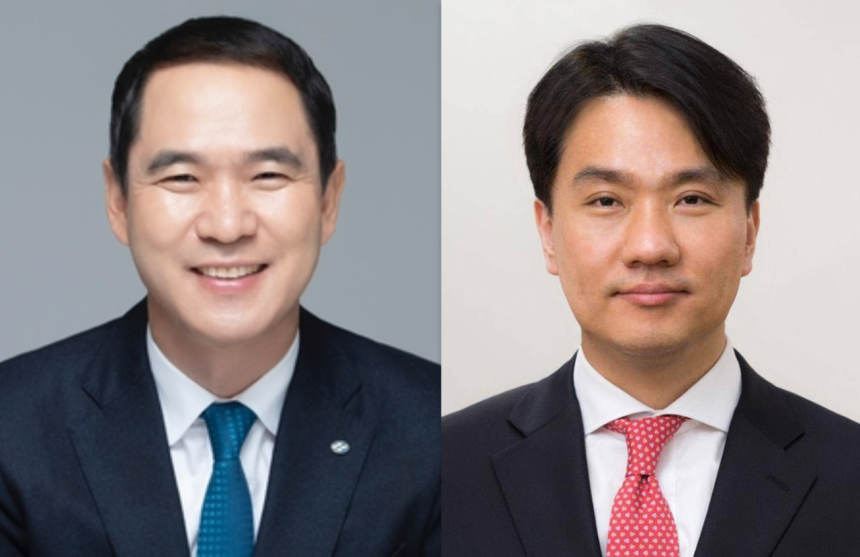
A legal review has found that Lee Hyeong-ju, head of the Korea Financial Intelligence Unit (KoFIU), would be barred from handling securities acquisition work for two years after leaving public office — even if appointed to the post. The finding puts Suhyup Bank, which is pushing to build a financial holding company structure, in a position where it must weigh not only whether a candidate can clear an employment screening but also how much of the non-banking expansion agenda the new president could realistically lead.
According to a legal opinion from a major law firm obtained Tuesday through the office of People Power Party lawmaker Song Eon-seog of the National Assembly's Political Affairs Committee, Lee would be barred from handling securities acquisition work for two years from his retirement date if appointed as Suhyup Bank president. The bank's presidential recommendation committee has held two meetings but has yet to settle on a final candidate, as neither incumbent President Shin Hak-gi nor Lee has secured the approval of at least four of the committee's five members.
With the selection deadlocked, restrictions on a candidate's scope of work have become the central issue. Lee, a member of the Senior Executive Service, is subject to a three-year post-retirement employment restriction and must undergo an employment screening — but even clearing that hurdle may not be enough, as concerns have grown that he could face limits on carrying out core duties after taking office.
Article 18-2 of the Public Service Ethics Act prohibits officials subject to employment screening on an institutional-business basis from handling, for two years after retirement, certain work that their former agency processes in relation to the institution they join. Restricted activities include approvals, permits, authorizations and direct supervision based on statutes.
Those restrictions clash directly with Suhyup Bank's strategy to expand beyond banking. Suhyup Central Association and Suhyup Bank are pursuing the acquisition of a securities firm and entry into the capital finance business as part of a plan to establish a financial holding company structure by 2030.
The legal opinion cited the fact that Lee worked at the Financial Services Commission within two years before his retirement as the basis for the acquisition restriction. Lee served as director-general of the FSC's financial industry bureau and financial policy bureau, and as a standing commissioner, before taking office as KoFIU head in October last year. Because Suhyup Bank is subject to employment screening and any securities acquisition requires FSC approval under Article 31 of the Act on Corporate Governance of Financial Companies, the opinion concluded that acquisition-related work falls within the scope of restricted activities.
If the restriction applies, the bank would need to set up a separate decision-making and accountability structure — for instance, delegating acquisition work to another executive. That prospect has raised concern that a president brought in to lead the non-banking expansion could end up sidelined from the very deals at the heart of that strategy. However, if public interest and procedural fairness are recognized, a separate work-handling approval may be sought from the relevant public service ethics committee.
Lee was directly involved in three FSC decisions related to sanctions against Suhyup Bank. While serving as a standing FSC commissioner, he participated in a May 2024 decision imposing a fine of 1.52 billion won ($1.14 million) for the sale of derivatives and trust products by unqualified personnel, and a September 2025 decision imposing a fine of 60 million won following a special inspection. In March this year, acting as KoFIU head, he personally approved a fine of 1 billion won for violations of customer due diligence obligations.
Legal experts have also noted that the scope of restricted work could become an issue in responding to financial supervisory inspections, not just acquisitions. If a future inspection covers matters under KoFIU's jurisdiction or sanctions that Lee handled directly, it would need to be separately confirmed whether receiving reports and deciding on a response strategy also fall within the restricted scope.
Lee has maintained that there is no procedural problem with applying for the bank presidency while still a serving senior civil servant. At the FSC's national audit on Oct. 8, he said there had been recent cases of applicants who had not yet retired from the Ministry of Finance and Economy when they applied. FSC Chairman Lee Eok-won also said he understood that a serving civil servant applying to a private institution "does not violate the law."
Meanwhile, the presidential recommendation committee plans to hold additional consultations later this month with the existing pool of candidates, without opening a new round of applications. The committee aims to complete the re-deliberation and follow-up procedures before Nov. 17, when incumbent President Shin's term expires.
forest@heraldcorp.com