Districts where monthly rent leads jeonse jump from 4 to 13 in a year
Owner-occupancy shift, lease renewals squeeze jeonse supply
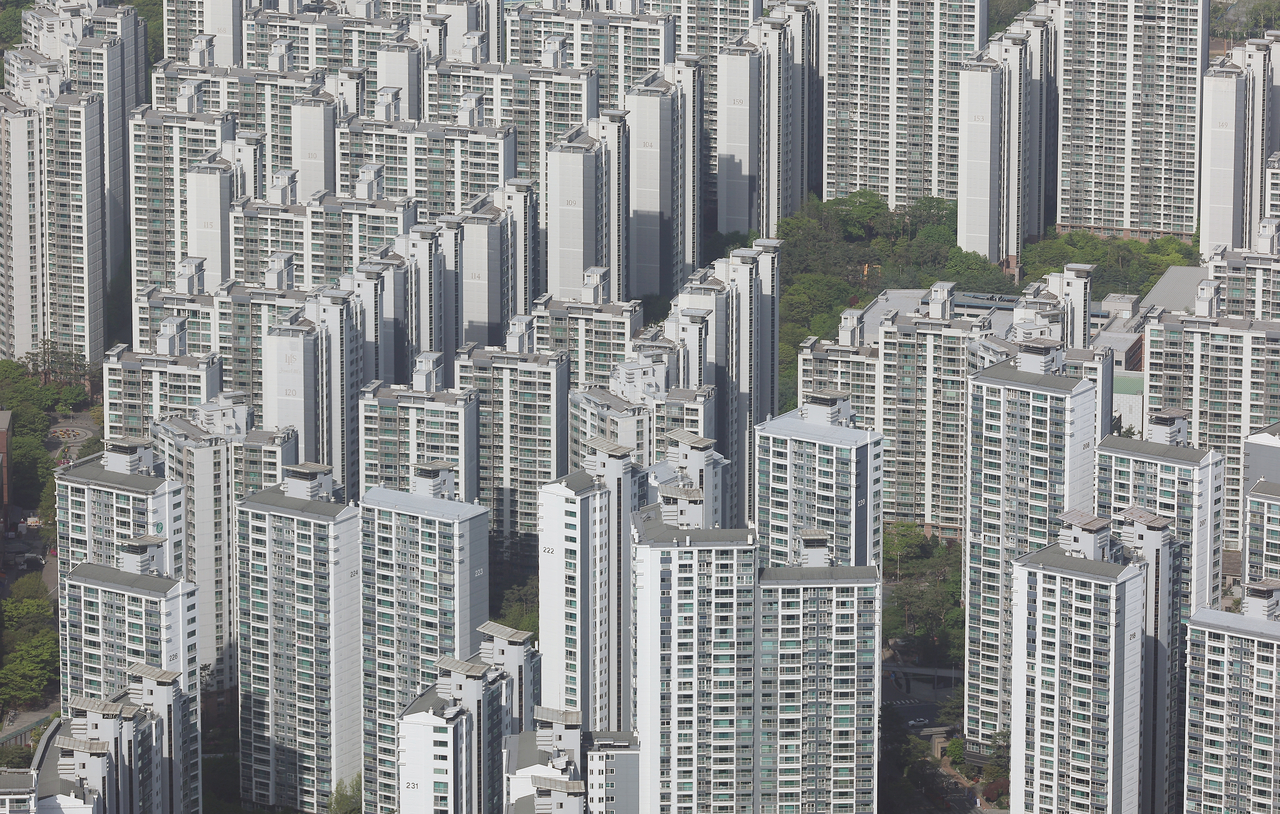
Monthly rent has surpassed jeonse for the first time in Seoul's apartment lease market this year. Analysts say a tightening jeonse shortage — driven by the government's owner-occupancy housing policy and stricter lending regulations — has accelerated the shift from jeonse to monthly rent arrangements. The number of districts where monthly rent transactions outnumber jeonse deals jumped from four to 13 in the span of a year.
Jeonse deals plunge 27.5%, monthly rent set to overtake for first time this year
According to apartment transaction data from the Seoul Real Estate Information Plaza, monthly rent deals in Seoul totaled 87,740 from January through September, accounting for 51.0 percent of all jeonse and monthly rent transactions (172,027). Jeonse deals over the same period came to 84,287 — 3,453 fewer than monthly rent.
The monthly rent share rose 7.3 percentage points over the year. In the same period last year, monthly rent transactions stood at 90,310 and jeonse at 116,272, giving monthly rent a 43.7 percent share.
The shift reflects a sharp drop in jeonse transactions. While monthly rent deals fell 2.8 percent from a year earlier, jeonse transactions plunged 27.5 percent. Analysts attribute the decline to a combination of tighter jeonse loan regulations, a shortage of jeonse listings and a growing number of existing tenants renewing their contracts.
KB Financial's management research institute, in its KB Housing Market Review, said the jeonse supply shortage is persisting due to a decline in new move-in units and an increase in lease renewals by existing tenants. It also found that the jeonse supply-demand index last month hit its highest level since the three lease laws took effect in 2020, driven by more landlords converting to owner-occupancy following tax reforms and a lack of new supply.
The institute said jeonse loan balances have been shrinking despite rising jeonse prices, as stricter lending rules and falling jeonse transaction volumes weigh on borrowing. It also noted that Seoul's designation as a land transaction permit zone last October has further constrained jeonse supply by imposing owner-occupancy requirements.
If the trend continues, monthly rent transactions are on track to exceed jeonse for the first time since the Seoul Real Estate Information Plaza began compiling statistics in 2011.
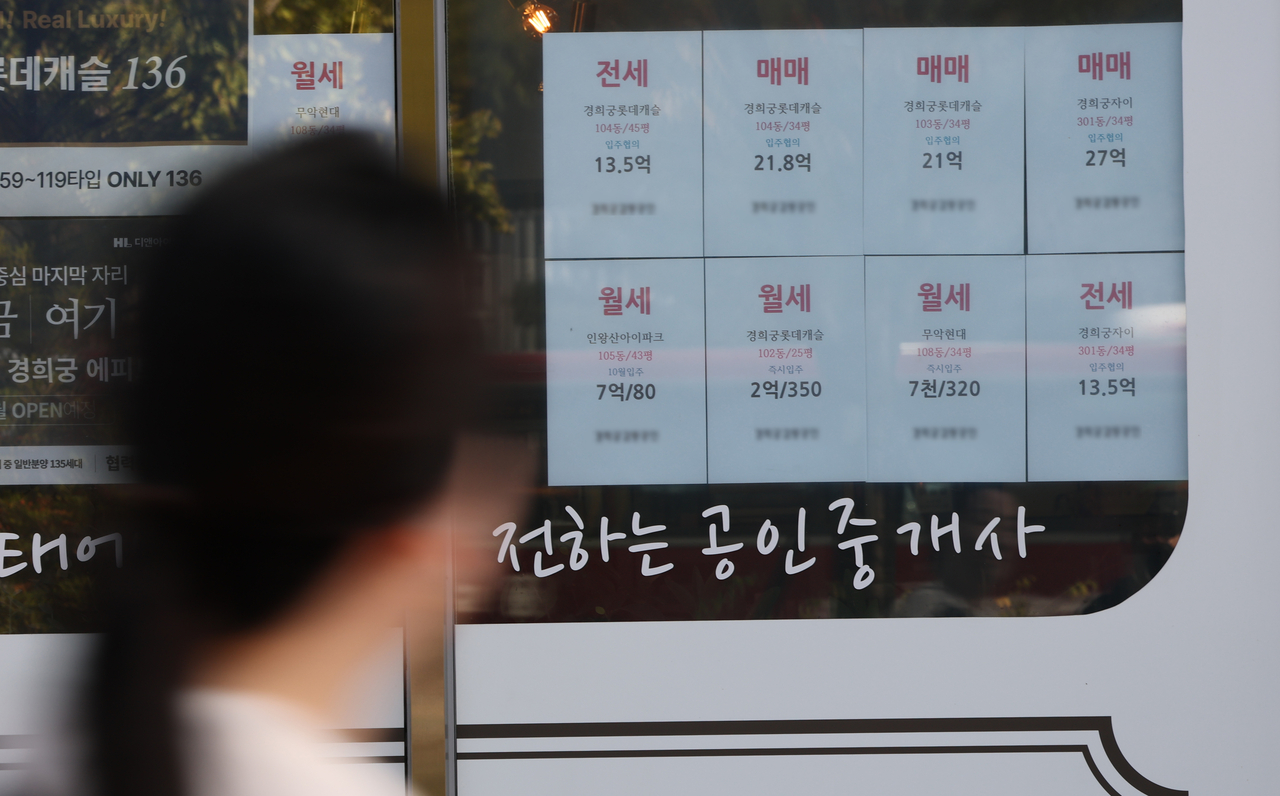
Average monthly rent hits 1.66 million won; Jongno-gu leads at 65.6%
The dominance of monthly rent over jeonse is spreading across Seoul. In the first nine months of this year, 13 of the city's 25 districts recorded more monthly rent transactions than jeonse deals.
In the same period last year, only four districts — Geumcheon-gu, Jongno-gu, Jung-gu and Guro-gu — saw monthly rent outnumber jeonse. This year, nine more joined the list: Gangnam-gu, Gangbuk-gu, Gwanak-gu, Gwangjin-gu, Dongdaemun-gu, Mapo-gu, Yeongdeungpo-gu, Yongsan-gu and Jungnang-gu.
Among individual districts, Jongno-gu had the highest monthly rent share at 65.6 percent, followed by Jungnang-gu (64.9 percent), Guro-gu (63.1 percent), Jung-gu (59.6 percent), Geumcheon-gu (58.7 percent), Yongsan-gu (56.9 percent), Dongdaemun-gu (56.7 percent), Gwanak-gu (56.1 percent), Mapo-gu (54.1 percent), Gangnam-gu (54.0 percent), Gangbuk-gu (53.0 percent), Gwangjin-gu (52.6 percent) and Yeongdeungpo-gu (50.2 percent).
Jungnang-gu saw the steepest rise among all 25 districts, with its monthly rent share climbing 20.3 percentage points — from 44.6 percent in the same period last year to 64.9 percent this year.
Monthly rent transactions in Jungnang-gu surged 91.6 percent, from 2,166 in the first nine months of last year to 4,151 this year, while jeonse deals fell 16.5 percent from 2,687 to 2,244. Song Seung-hyeon, head of Urban and Economy, said jeonse listings have shrunk under owner-occupancy-focused policies, pushing some tenants toward monthly rent. "As buying interest concentrated in more affordable outer Seoul neighborhoods and drove up home prices, monthly rents followed suit," he said.
Gangnam-gu also crossed the threshold, with 8,406 monthly rent transactions outpacing 7,170 jeonse deals, lifting its monthly rent share from 48.6 percent last year to 54.0 percent this year.
At the other end of the spectrum, Yangcheon-gu had the lowest monthly rent share among all 25 districts at 42.1 percent. Seongbuk-gu and Dobong-gu (both 44.7 percent), Gangseo-gu (45.6 percent) and Dongjak-gu (46.0 percent) also recorded more jeonse transactions than monthly rent.
As monthly rent's share grows, rising rent levels are adding to the financial burden on ordinary residents. According to the Korea Real Estate Board's national housing price trend survey, the average monthly rent for Seoul apartments in September reached 1.66 million won ($1,250), up 218,000 won from the same month last year (1.44 million won). The median monthly rent also rose over the same period, from 1.2 million won to 1.4 million won.
The apartment transaction figures from the Seoul Real Estate Information Plaza are compiled on a contract-date basis from real estate transaction reports and are provided for reference only; they are subject to revision as additional reports are filed or contracts are canceled.
lucky@heraldcorp.com