Two daytime routes, one nighttime route in operation
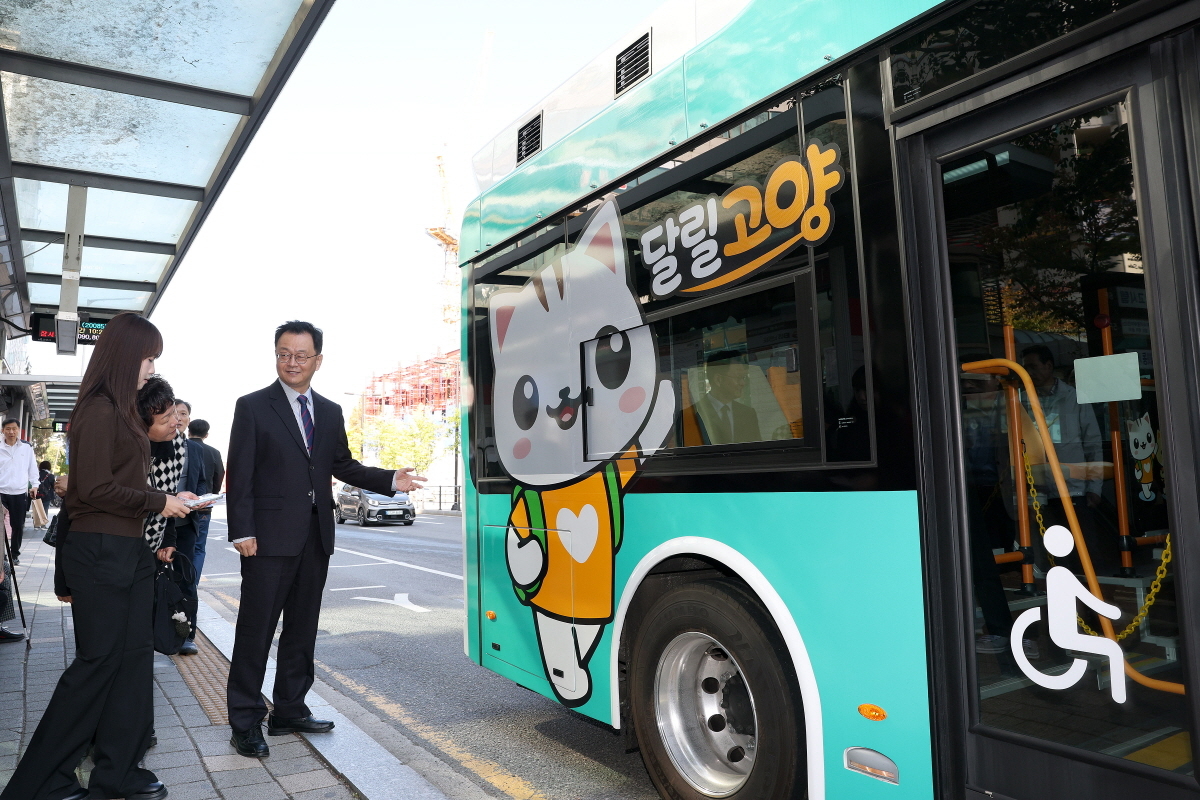
Goyang Special City held an inauguration ceremony Tuesday at the Daehwa Station bus stop to officially launch "Dalril Goyang," its autonomous bus service, beginning regular daytime and nighttime operations.
Goyang Special City Mayor Min Kyung-sun attended the ceremony alongside the director of the urban housing policy office, the head of the smart city division, Joonbu University Professor Ha Seong-yong, Korean Society of Automotive Safety Vice Chairman Hong Seung-jun, and members of the public. Attendees boarded the first daytime Route 2 bus following the ceremony, with both daytime and nighttime routes entering regular service that day.
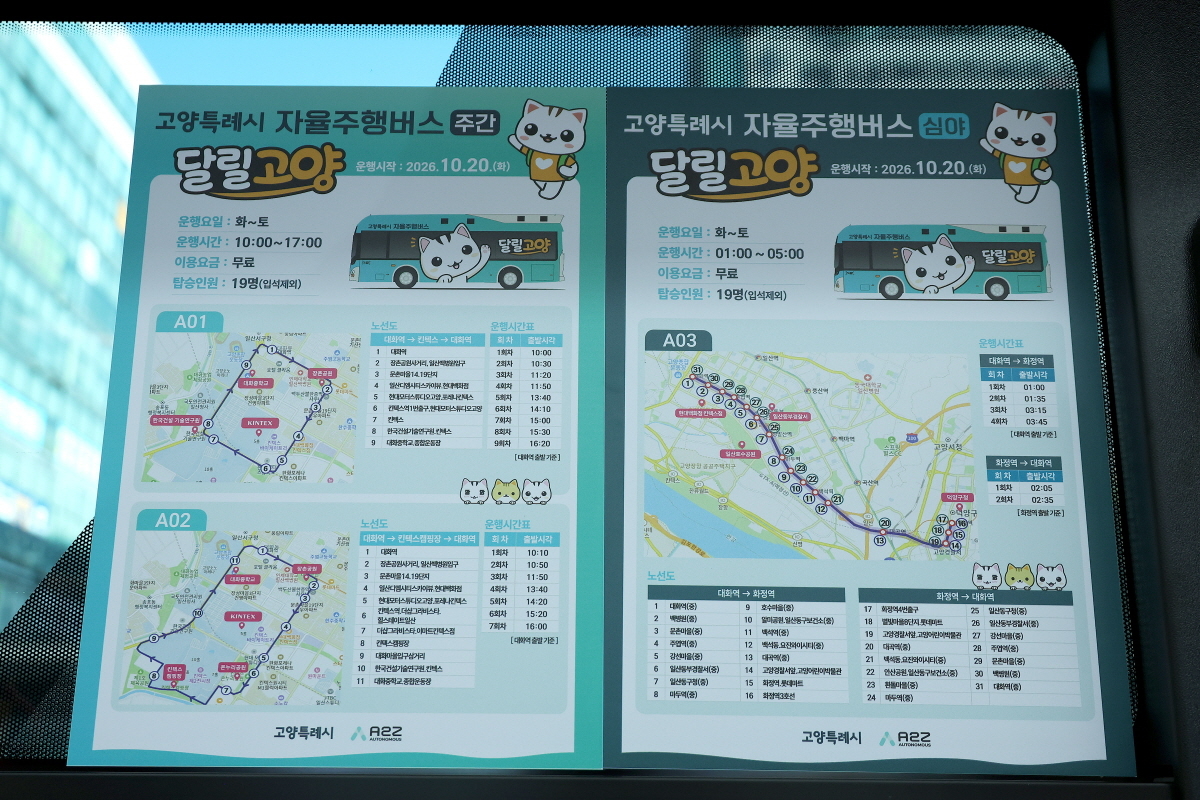
Dalril Goyang had been running a pilot service on daytime Route 1 since June 15, and the official launch expanded operations to two daytime routes and one nighttime route.
Daytime Route 1 is a circular loop of about 4 kilometers connecting Daehwa Station, Kintex and the Comprehensive Sports Complex before returning to Daehwa Station. Daytime Route 2 covers a roughly 6-kilometer loop linking Daehwa Station, Kintex Station and the Kintex Campground. The nighttime route runs as a round-trip service connecting Daehwa Station, Baekseok Station, Daegok Station and Hwajung Station, spanning about 11 kilometers one way.
The city plans to operate two autonomous buses across the daytime and nighttime schedules, establishing a system for regular vehicle inspections and emergency response to ensure safe operations. It will also strengthen safety management by deploying trained autonomous-driving operators, conducting safety education and preparing emergency response manuals.
Real-time vehicle location, operating status and passenger boarding and alighting data will be managed systematically through integration with the city's traffic control system. The city also plans to improve service quality through passenger satisfaction surveys and operational analysis, and will submit performance data to the Ministry of Land, Infrastructure and Transport in connection with its autonomous vehicle pilot zone designation.
"The most important thing in operating autonomous buses is the safety of our citizens," Mayor Min said. "We will ensure residents can ride with confidence through thorough vehicle management, regular operational checks and a robust emergency response system."
"We will continue to expand autonomous driving demonstrations and strategically develop future transportation industries — including urban air mobility — to deliver convenient transport services that citizens can feel in their daily lives," he added.
Through the formal launch of the autonomous bus service, Goyang aims to broaden the application of autonomous driving technology in public transit and lay the groundwork for residents to experience future transportation in their everyday lives.
pjh@heraldcorp.com