National Library of Korea unveils 9 new collections
Open API launched; 8 more collections set for November

The National Library of Korea on Wednesday unveiled nine new collections on Korean Memory, its digital archive platform dedicated to Korean history, culture and lifestyle.
In addition, the library opened an application programming interface to allow anyone to access and use the platform's digital content resources.
The new collections cover a range of subjects: the Jeju haenyeo (female divers) culture, a UNESCO Intangible Cultural Heritage of Humanity; "naebang gasa," lyric poetry composed by women of the Joseon era listed on the UNESCO Memory of the World Register for the Asia-Pacific region; the Taegukgi, South Korea's national flag; the history and culture of the port city of Busan; and international sporting events hosted by Korea.
Two collections examine social history through everyday objects and media — one traces the spirit of the times through newspaper and magazine advertisements from the port-opening era through liberation, while another explores shifts in Korean daily life through bus ticket books.
Two further collections look at birth culture — from pregnancy through the postpartum period — and at traditional monsters from classical literature, offering a window into Korean lifestyle and imagination.
The topics were selected based on a user-preference survey on Korean cultural and social history subjects deemed worthy of preservation and transmission.
The library plans to add eight more collections in November, covering Korean ramyun, Korean gardens and landscape design, mother-of-pearl lacquerware and inlay crafts, seasonal customs and solar terms, ondol (underfloor heating) culture, the goat in the Chinese zodiac, the fortress walls of Hanyang and foreign missionaries in Korea.
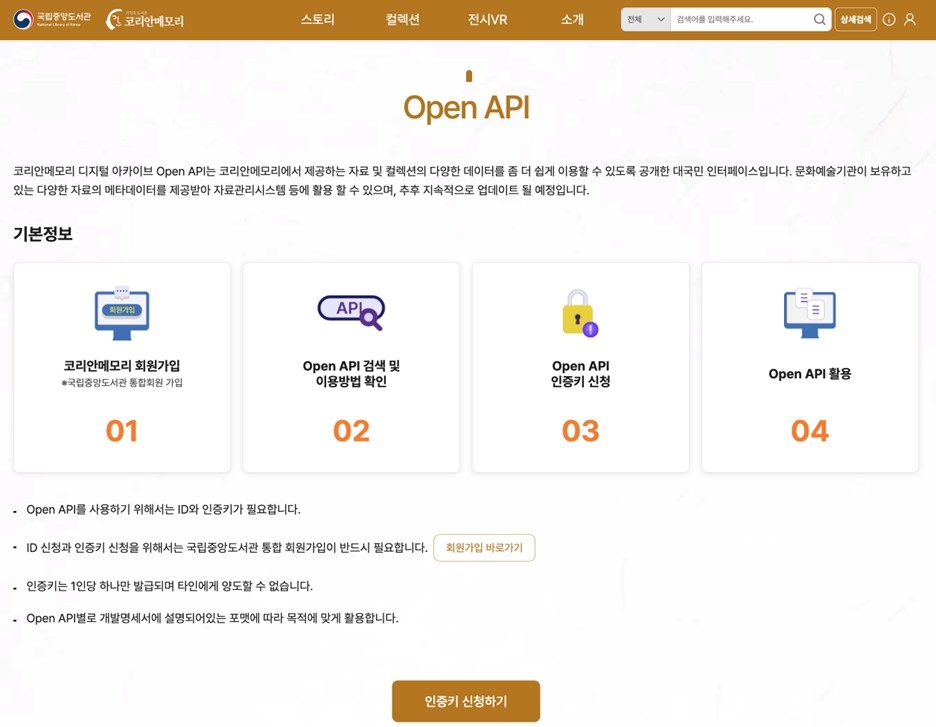
Through the newly opened API, developers and researchers can pull Korean Memory content and metadata into external services. Available fields include title, content category, data provider, subject and copyright information, all delivered in JSON format.
Korean Memory, which launched in June 2024, now offers a total of 462 collections including those unveiled Wednesday, according to the library.
Lee Hyun-ju, head of the library's Digital Information Planning Division, said the library would "continue to discover valuable knowledge and cultural resources" and added that the open API would help Korean Memory grow "beyond a platform for browsing content into a hub of Korean cultural data used in education, research and industry."
pink@heraldcorp.com