Samsung Electro-Mechanics' MLCC lead time stretches to 52 weeks this month
Strong AI demand pushes supply crunch beyond premium products to commodity lines
Substrate shortage deepens as long-term supply agreements spread to the segment
Rising pricing power expected to lift margins as sellers gain upper hand
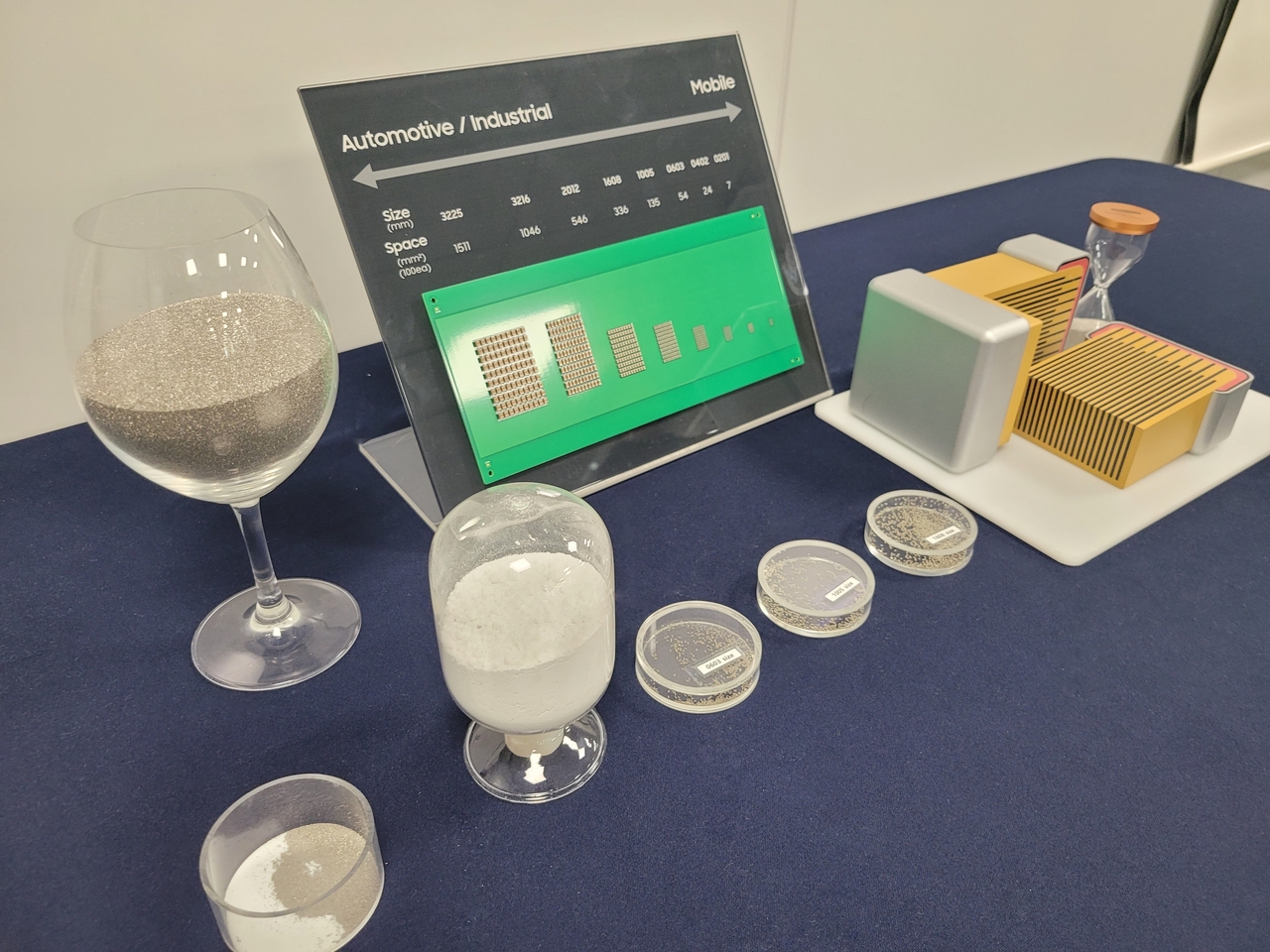
A surge in AI demand has pushed the broader electronics components industry into a boom cycle that rivals the memory chip market, with supply shortages and lengthening delivery times spreading from premium products to commodity lines.
According to industry sources, the lead time for Samsung Electro-Mechanics' multilayer ceramic capacitors — the time between placing an order and receiving the finished product — has stretched to 52 weeks this month. Customers placing orders today must wait a full year before taking delivery.
Often called the "rice of the electronics industry," MLCCs act as a kind of dam, storing electrical charge and releasing it in stable, measured amounts as needed. Demand for the components spans smartphones and PCs all the way to AI servers and data centers, where reliable power delivery is critical.
AI servers require more than 10 times as many MLCCs as conventional servers. Orders for high-performance MLCCs have flooded in as big tech companies ramp up investment in AI data centers, yet only two suppliers — Samsung Electro-Mechanics and Japan's Murata — are capable of meeting that demand.
Because the combined output of the two companies cannot keep pace with incoming orders, delivery delays and shortages are intensifying. Major global customers are rushing to lock in supply contracts covering next year's full allocation of Samsung Electro-Mechanics MLCCs before stocks run out.
The value of MLCC-related supply contracts Samsung Electro-Mechanics has disclosed this year alone has reached about 2.4 trillion won ($1.81 billion). Industry observers expect the shortage to persist, noting that extended lead times are now appearing not only in high-capacity, high-performance MLCCs but also in low-capacity and automotive-grade products.
Samsung Electro-Mechanics' component division, which manufactures MLCCs, ran at a capacity utilization rate of 91 percent in the first half of this year — in effect full operation. The company is expanding its factory in the Philippines to meet rising demand, but mass production there is not expected until 2027 or later, making a near-term supply shortage unavoidable.
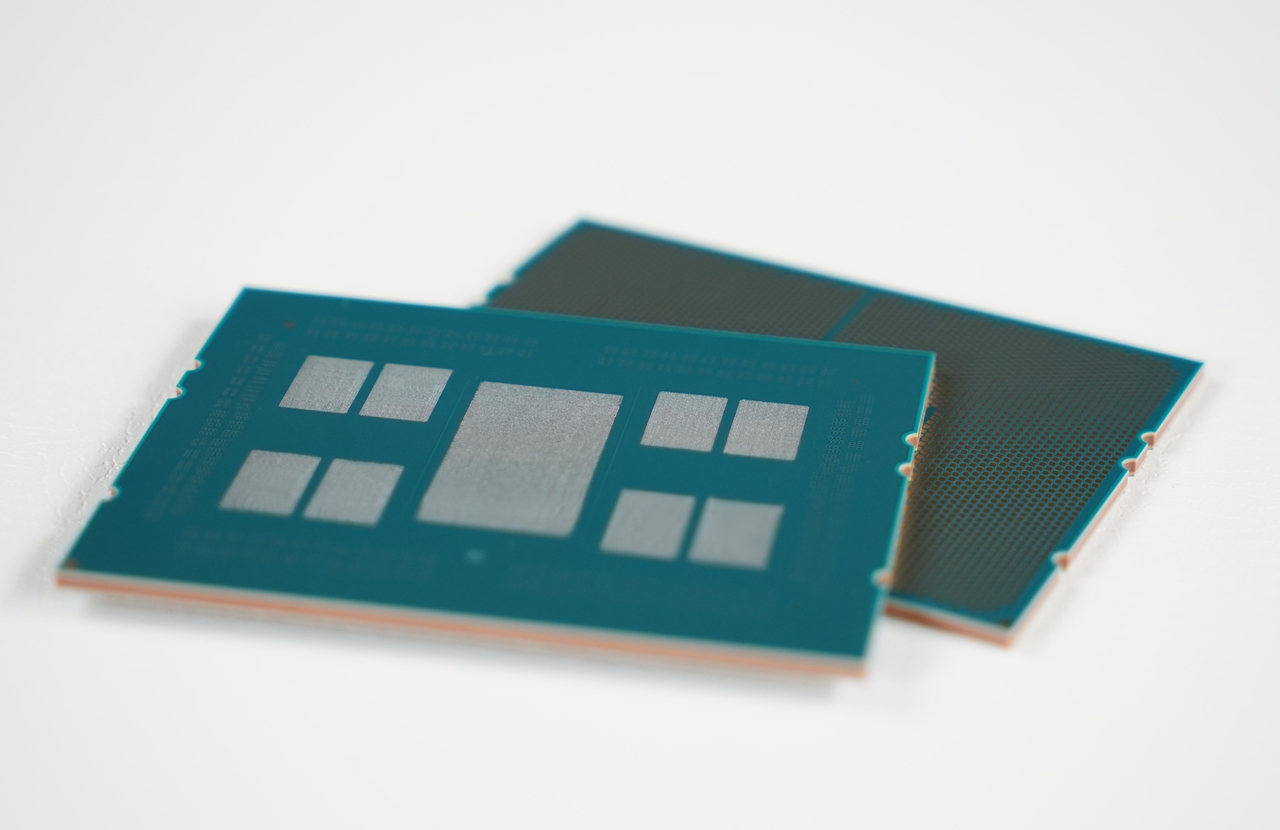
The supply crunch is now spreading beyond MLCCs and silicon capacitors to semiconductor substrates, as long-term supply agreements — previously concentrated in capacitor products — extend into that segment.
Samsung Electro-Mechanics signed a long-term supply agreement Monday with a global memory company for package substrates used in memory semiconductors, valued at 360.5 billion won. Under the deal, the company will supply high-performance substrates for next-generation memory chips for one year starting next year. It is the first substrate long-term agreement Samsung Electro-Mechanics has disclosed this year.
Securities analysts believe the contract centers on ball grid array, or BGA, substrates for memory applications, likely bundled with flip-chip ball grid array, or FC-BGA, substrates used in high-performance chips. BGA substrates are package substrates that electrically connect memory semiconductors such as DRAM and NAND flash to a motherboard.
The shortage has reached even commodity-grade BGA substrates made from bismaleimide triazine, or BT, material — used in standard memory chips — as Taiwanese and Japanese substrate makers have concentrated their capacity expansion investment on higher-value ABF (Ajinomoto build-up film) substrates.
"The disclosure of a supply contract in the BT-based substrate segment for the first time confirms the shift to a seller's market," said Yang Seung-su, a researcher at Meritz Securities, adding that supply-demand imbalances are deepening because major players are maintaining a conservative stance on capacity expansion.
Samsung Electro-Mechanics' growing pricing power is also expected to translate into higher selling prices and improved margins. Industry estimates put the company's FC-BGA operating profit margin at around 30 percent and its BGA substrate margin at about 8 percent, with analysts projecting those figures will rise to roughly 40 percent and 10 percent, respectively, next year.
With MLCC and substrate businesses growing in tandem, full-year earnings expectations are rising. Samsung Electro-Mechanics posted sales of 3.46 trillion won and operating profit of 440.4 billion won in the second quarter. Analyst consensus estimates point to sales of 3.83 trillion won and operating profit of 645.4 billion won for the third quarter.
On an annual basis, operating profit is expected to exceed 2 trillion won. "If MLCC unit price increases are factored in, operating profit will come in above previous forecasts," said Kim Un-ho, a researcher at IBK Investment Securities. "Next year, operating profit is projected to reach 4.4 trillion won as tight supply makes the effect of price increases even more pronounced."
joze@heraldcorp.com
jeongwan@heraldcorp.com