North signals military buildup near border; South vows to assert DMZ control
Experts say UN Command must step in to manage armistice
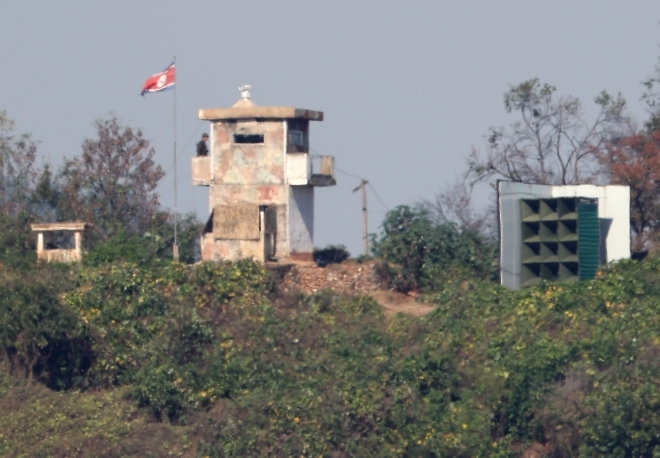
Exactly one month has passed since South Korean soldiers were wounded by North Korean-planted land mines, yet Pyongyang has only escalated its rhetoric, dismissing the incident as a "fabrication" by the South and pressing ahead with threats. With Seoul's military vowing a firm response to any further provocation, analysts say the risk of an accidental armed clash can no longer be ruled out.
Lee Kwan-se, director of Kyungnam University's Institute for Far Eastern Studies and a former vice minister of unification, said UN Command must take the lead. "It needs to investigate what actually happened and take steps to prevent a recurrence," he said. As the body responsible for managing the Armistice Agreement, UN Command should drive the effort to establish the facts and hold discussions on preventing further incidents, he argued.
Particularly worrying, experts say, is that unlike in 2015 — when North Korea planted wooden box mines near the DMZ — all inter-Korean communication channels are now completely severed, raising the possibility that an accidental clash could escalate into a serious armed conflict. North Korea has already signaled a military buildup near the border through a statement by Kim Yo-jong, head of the Korean Workers' Party's General Affairs Department, while South Korea's military has publicly pledged a resolute response and announced plans to strengthen its operational control over the Demilitarized Zone.
Lee said he expects North Korea to hold back from a direct clash as long as the South does not take aggressive action, but cautioned that "if any action is taken here, North Korea will not back down either." While it is possible to distinguish between North Korea's threatening words and actual military moves, he warned that once actions become entangled on both sides, neither may find it easy to retreat.
Yang Uk, a senior research fellow at the Asan Policy Institute, said the Defense Ministry and the Ministry of Unification need to speak with one voice.
"The government needs to sort out its thinking on what it can do and what it should do, unify its message and make its direction clear," Yang said. "Otherwise, it will keep being pushed around by North Korea."
He added that it is uncertain whether North Korea will comply with UN Command's guidelines, and that even if North Korea-US talks resume, the land mine issue is unlikely to be treated as a priority — making the South Korean government's own direction and strategy all the more critical.
On Tuesday, the Defense Ministry's response to Kim Yo-jong's statement stressed "resolute punishment," while the Ministry of Unification emphasized "a communication framework for peaceful management" — underscoring the divergence in messaging between the two ministries.
youknow@heraldcorp.com
rimsclub@heraldcorp.com