Joint research with University of Oxford
Vehicle driving data combined with drivers' physiological responses
Eye tracking, psychological assessments and interviews incorporated
Study examines link between vehicle performance and driver experience
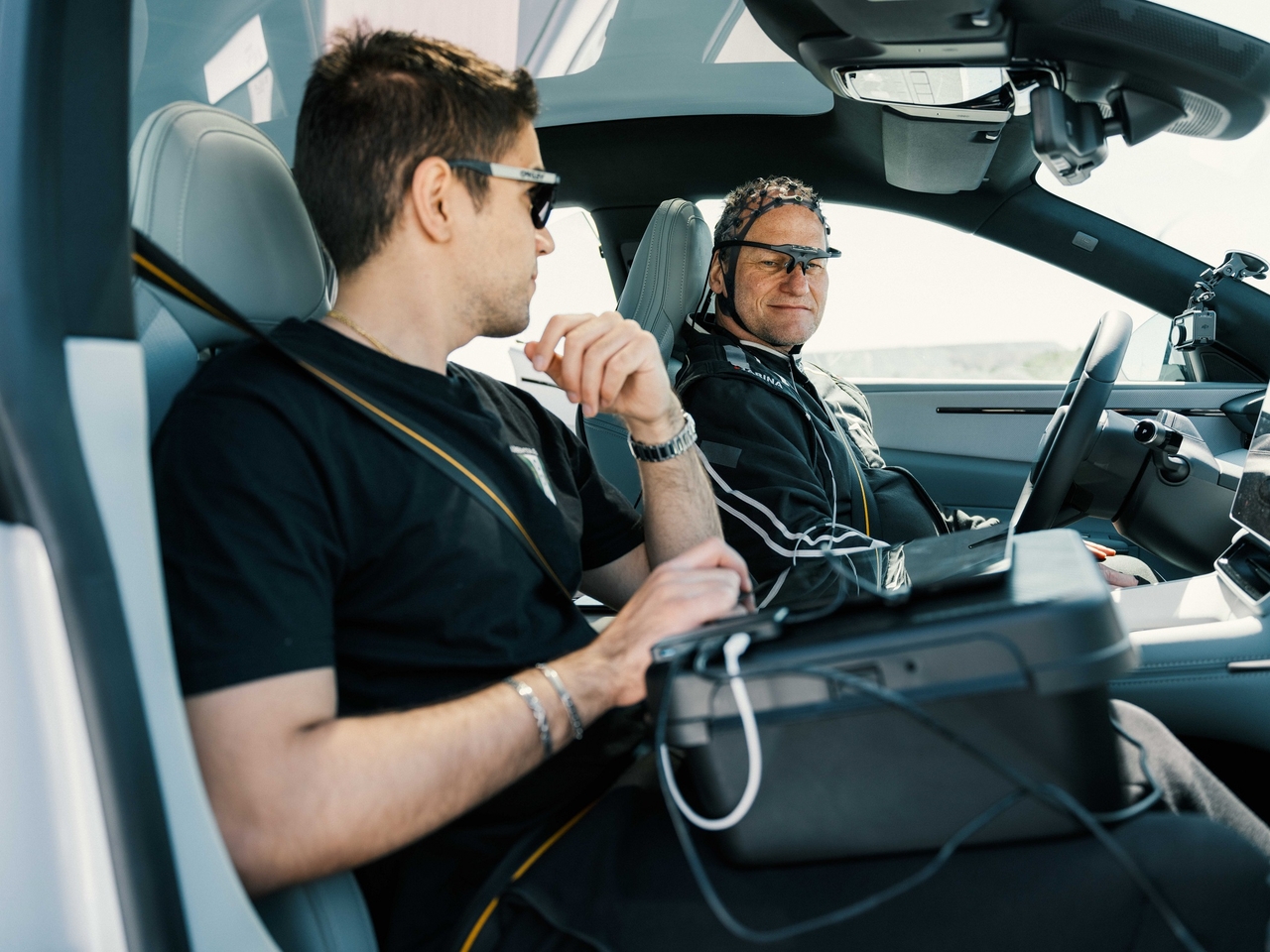
Swedish premium electric vehicle brand Polestar said Wednesday it conducted a pilot study with researchers from the University of Oxford's SDG Impact Lab to measure how drivers perceive vehicle performance.
Automotive performance has traditionally been evaluated through numerical metrics — horsepower, acceleration, cornering g-forces and lap times. But as advances in electric vehicles narrow the performance gap between models, a new question is emerging: how do you measure the driving performance a driver actually feels?
The study represents a first step toward answering that question, combining vehicle driving data with heart rate measurements, eye tracking, psychological assessments and interviews to examine the relationship between a vehicle's movements and driver responses.
Twelve drivers tested the Polestar 4 rear-motor and performance trims under both everyday and dynamic driving conditions at the Gotland Ring circuit in Sweden.
The research found that during dynamic driving, participants blinked less frequently, their pupils dilated and they held their gaze for longer — patterns consistent with heightened focus and engagement. The study also identified correlations between vehicle driving data and drivers' physiological responses, allowing researchers to analyze how a vehicle's movements affect the person behind the wheel.
The two trims delivered performance in noticeably different ways. Compared under high-speed conditions with nearly identical lap times, the Polestar 4 Performance — rated at a maximum 544 horsepower — recorded peak acceleration 32 percent higher than the rear-motor trim and required 15 percent less steering effort. It also generated greater lateral load in corners and produced strong acceleration more frequently.
Drivers' subjective assessments reflected those differences as well. On a performance and driving dynamics scale, the Polestar 4 Performance scored 89.2 out of 100, against 67.7 for the rear-motor trim. Overall driving experience ratings came in at 93.0 and 77.9, respectively, with most drivers rating the performance trim higher on both measures.
The study also revealed that the performance experience drivers feel cannot be explained by intense physical stimulation alone. Researchers described it as a combination of heightened physical response, trust in the vehicle, a sense of control and deep engagement — with many participants likening the experience to a "controllable roller coaster."
Researchers noted that drivers of the Polestar 4 Performance showed a more pronounced tendency to experience excitement, trust and a sense of control simultaneously. One participant put it plainly: "The Polestar 4 makes me feel like I'm driving better than I actually am."
"As electric vehicles redefine what performance means, Polestar wanted to understand the driver experience in ways that a spec sheet alone cannot capture," said Kristian Samson, Polestar's head of product attribute. "Our collaboration with the University of Oxford allowed us to connect vehicle engineering with driver experience and examine performance from a new perspective."
Max Klapow, a doctoral researcher at the University of Oxford's SDG Impact Lab, said performance is not simply about going faster. "It is about giving drivers confidence and a sense of control through predictable vehicle responses," he said. "This study marks a first step toward measuring driver-perceived performance by analyzing vehicle movements and driver responses together."
Meanwhile, Polestar has been expanding its customer brand touchpoints through a range of marketing activities, including serving as the main sponsor of the 2026 Tongyeong Gran Fondo held recently in the Tongyeong area of South Gyeongsang Province.
likehyo85@heraldcorp.com