Bank of Korea releases 2025 corporate management analysis
Large firms' margins rise to 6.7%; stark divide by company size
Sales growth slows to 2.4%; record 42.9% of firms fail to cover interest costs
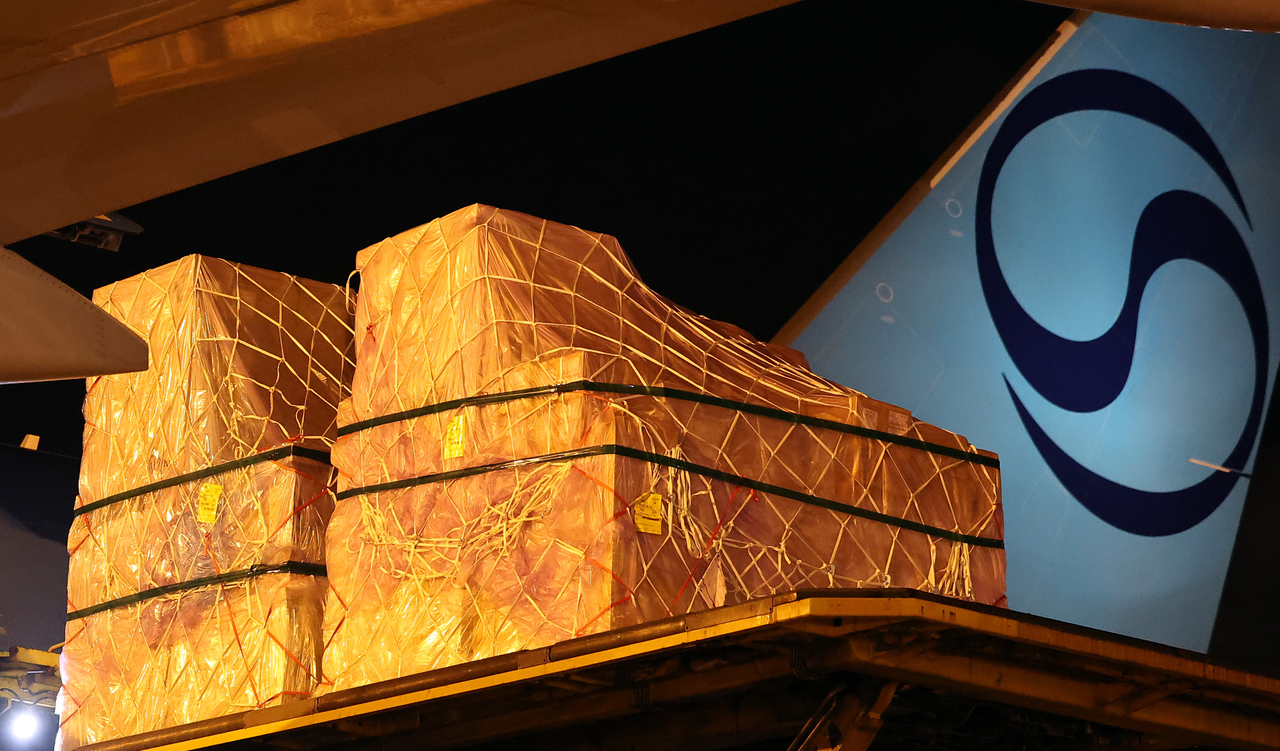
South Korean companies posted their highest operating profit margins in four years last year, buoyed by a boom in the semiconductor and shipbuilding industries. Large companies saw profitability improve, but small and medium-sized enterprises recorded their worst margins since the data series began — underscoring a sharp divide between the country's biggest firms and the rest.
According to the Bank of Korea's 2025 Corporate Management Analysis, released Wednesday, the operating profit margin across all industries — covering 982,767 companies — rose to 5.2 percent last year from 4.6 percent the year before, a gain of 0.6 percentage points. The pre-tax net profit margin also climbed 0.9 percentage points to 5.2 percent. The operating profit margin was the highest since 2021, when it stood at 5.6 percent.
By sector, the manufacturing operating profit margin rose from 5.1 percent to 6.3 percent, while the non-manufacturing margin edged up from 4.1 percent to 4.3 percent. Within manufacturing, the electronics, video and communications equipment segment surged from 8.3 percent to 14 percent, and the shipbuilding and other transport equipment segment jumped from 6.4 percent to 11.6 percent. The gains reflected stronger sales of high-value-added semiconductor products and broader revenue recognition from high-value-added vessels.
The picture diverged sharply by company size. Large companies' operating profit margins rose from 5.6 percent to 6.7 percent, the highest since 2021, when they reached 7 percent. Small and medium-sized enterprises, however, saw their margins slip from 3 percent to 2.8 percent — the lowest since the data series began in 2009.
"Industries with weak business conditions may be somewhat more concentrated among mid-sized companies, and overall profitability improvements appear to be more concentrated among large firms," said Lee Mi-ju, head of the Bank of Korea's corporate statistics team. The Bank of Korea added, however, that the profitability gains were driven mainly by sectors where large companies dominate, and that small and medium-sized enterprises' profitability is also improving this year — making it difficult to characterize the gap as a deepening polarization.
Financial stability indicators improved. The overall debt-to-equity ratio fell to 116.2 percent last year from 119.9 percent the year before, and the borrowing dependency ratio declined to 30.4 percent from 31 percent. The debt-to-equity ratio was the lowest since 2019, when it stood at 115.6 percent.
Growth, however, slowed. The sales growth rate fell to 2.4 percent last year from 3.7 percent the year before, a drop of 1.3 percentage points. Manufacturing sales growth slowed from 4.6 percent to 2.4 percent, largely because falling international oil prices pushed down petroleum product prices, dragging the coke and refined petroleum products segment's sales growth rate from 1.4 percent to minus 7.6 percent.
Non-manufacturing sales growth also eased, from 2.9 percent to 2.3 percent. The transportation and warehousing sector slowed sharply — from 11.6 percent to 2.6 percent — as falling maritime freight rates dampened shipping revenue growth. Construction deteriorated further, with its sales growth rate dropping from minus 2.8 percent to minus 7.6 percent amid a prolonged industry downturn. Sales growth rates for large companies and small and medium-sized enterprises also declined, falling from 3.4 percent to 2 percent and from 4.1 percent to 3 percent, respectively.
The Bank of Korea noted that a base effect was at work, pointing out that the relatively strong 2024 growth followed a contraction of minus 1.5 percent in 2023.
The interest coverage ratio for all companies rose to 292.7 percent last year from 244.1 percent the year before. The ratio measures whether a company can cover its financial costs with operating profit. Even so, the share of companies with an interest coverage ratio below 100 percent edged up to 42.9 percent from 42.8 percent — the highest since the data series began in 2009. A ratio below 100 percent means a company's annual earnings fall short of its interest and other financial obligations.
"When calculating the share of companies with an interest coverage ratio below 100 percent, we exclude companies with no interest expenses," Lee said. "Rather than viewing this as an overall deterioration in profitability and stability, it is more accurate to see it as a slight increase in that share among companies that do carry an interest burden."
Lee added that corporate management data for the first and second quarters of this year show small and medium-sized enterprises' profitability improving alongside that of large companies. "Overall, there is a possibility that the trend of a rising share of companies below the 100 percent threshold will not continue," she said.
The Bank of Korea said it had not separately calculated the contribution of large semiconductor companies to overall corporate profitability and growth indicators. It noted, however, that even when Samsung Electronics and SK hynix are excluded from the calculations, the direction of the indicators for growth, profitability and stability across all industries remains unchanged.

kimstar@heraldcorp.com