1st UNESCO kimjang heritage gala held in Namyangju
Fewer households making kimchi as Chinese imports surge
Event reaffirms kimjang's power to bring people together
In the 1990s, kimjang — the annual tradition of making large batches of kimchi before winter — was a village-wide event. Big rubber tubs overflowed with red filling, and rows of salted cabbage were stacked nearby. Children would crowd around, mouths watering, watching the adults work. When a grown-up tore off a fresh cabbage leaf, smeared it with seasoning and popped it into a child's mouth, nothing tasted better.
That everyday scene now lives only in memory. Kimjang is fading fast, eroded by declining kimchi consumption and the breakdown of community life. A survey by the Korea Rural Economic Institute found that the number of cabbages a four-person household intended to buy for kimjang fell from 21.9 in 2020 to 18.3 in 2025 — a drop of about 16.4 percent in five years. Many young Koreans have never made kimchi at all. For the next generation, kimjang may disappear entirely.
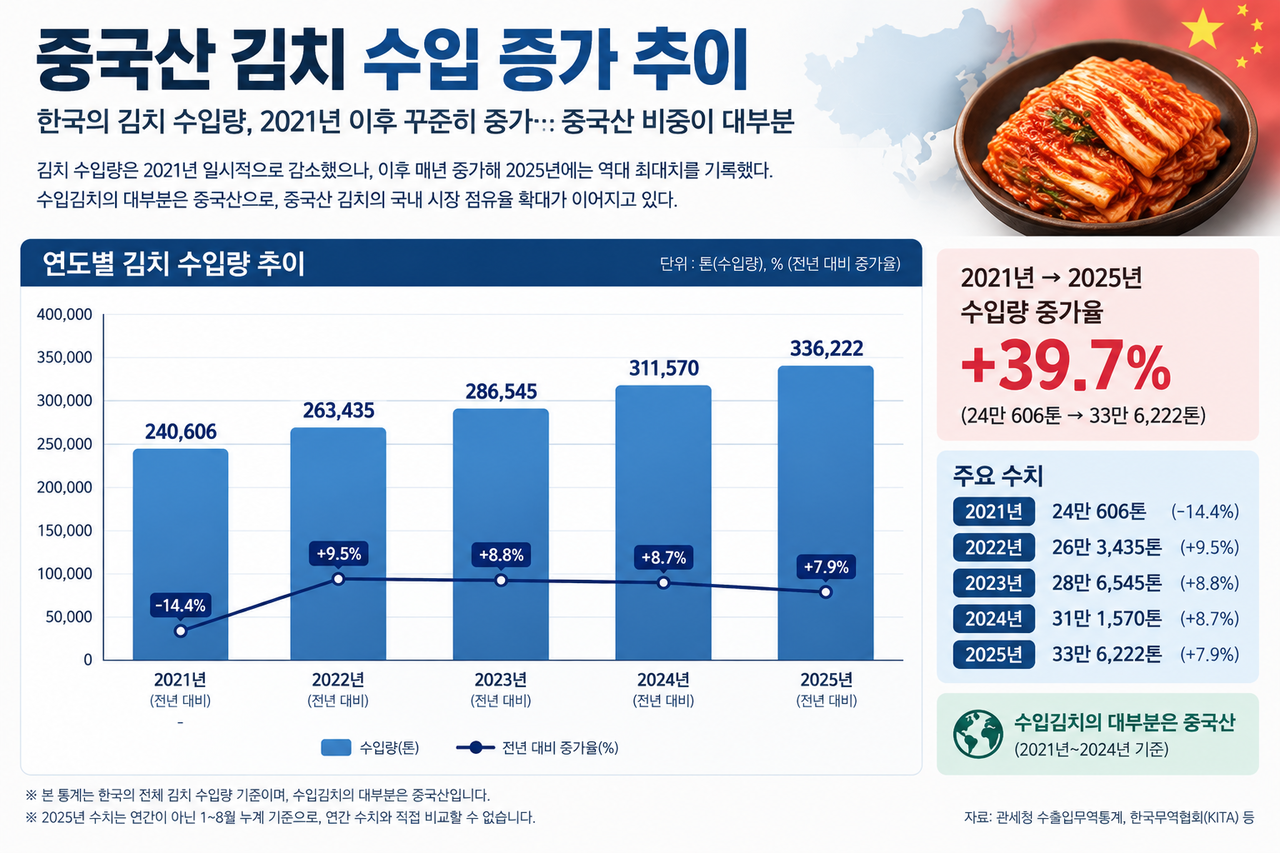
Into that void, cheap Chinese-made kimchi has moved in. Imports of Chinese kimchi rose about 40 percent, from 240,000 tons in 2021 to 336,000 tons in 2025. The trend continued this year: imports from January through August were up 2 percent from the same period a year earlier, setting a record for that stretch. Priced two to three times lower than domestic kimchi, Chinese kimchi has become a near-mandatory choice for the restaurant industry.
The controversy surrounding kimchi goes beyond price and imports. In 2021, a prominent Chinese influencer posted a video of making kimchi while using a hashtag meaning "Chinese food," sparking an outcry. Critics warned the clip could mislead viewers into thinking kimchi was a Chinese dish.
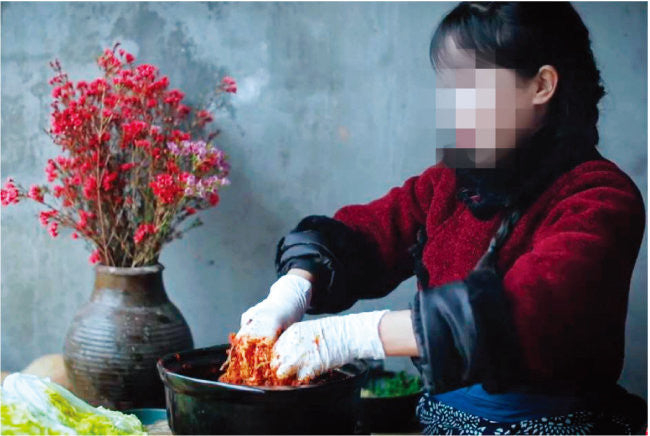
Chinese state media have added fuel to the dispute. When China's pickled vegetable dish paocai received an ISO international standard in 2020, the state-run Global Times framed the development as China taking the lead in setting international standards for the kimchi industry — a characterization widely disputed in South Korea.
The episode has deepened fears that kimchi could be claimed by China. Master kimchi artisan Lee Ha-yeon said in an interview that "there is no country in the world where the representative food of the originating nation depends on imports from abroad." Chinese media and online content have repeatedly sought to portray kimchi as part of Chinese culture, and the Global Times report on the paocai ISO standard was seen as part of that pattern.
A celebration reaffirming kimjang's power to unite
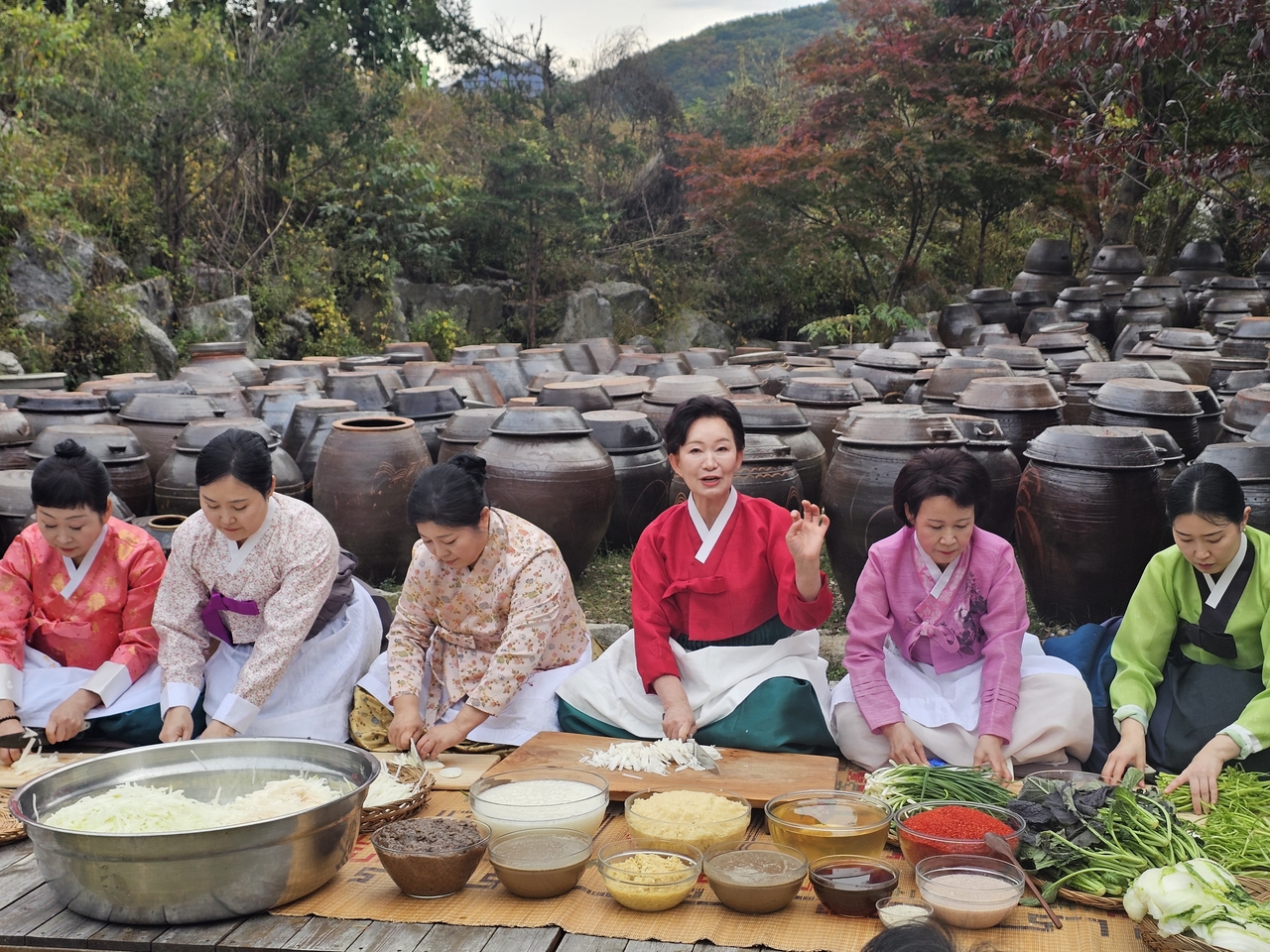
Hope, however, has not been extinguished. People from all walks of life gathered to reaffirm the value of kimchi and kimjang culture.
On Tuesday, the Lee Ha-yeon Kimchi Culture Center in Namyangju, Gyeonggi Province, hosted the first UNESCO Kimjang Culture Heritage Commemoration Gala. About 150 attendees joined the event, including Lee Ha-yeon — a former chair of the Korea Kimchi Association and a government-designated master artisan — her students, Seoul city council members and university professors.
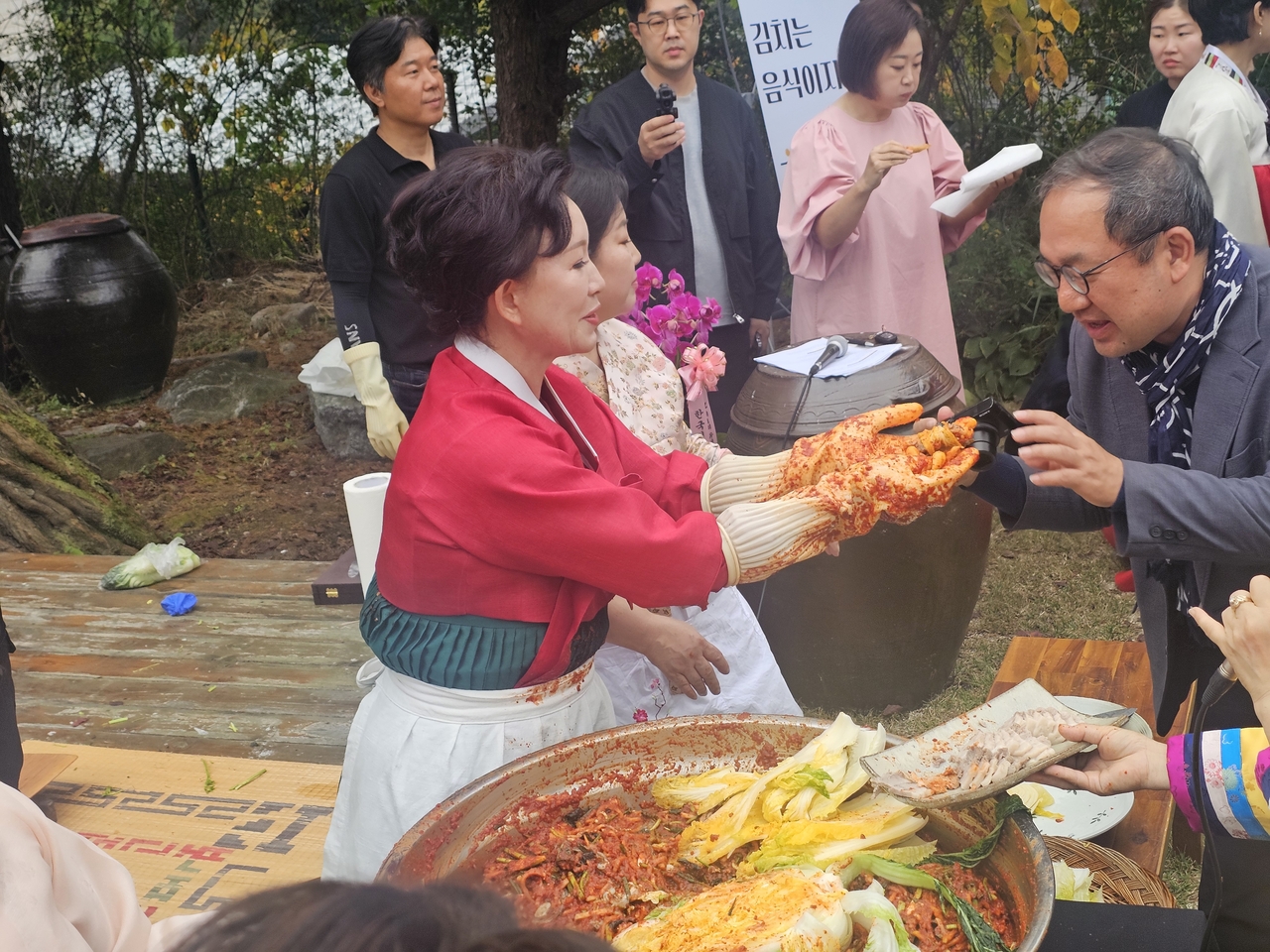
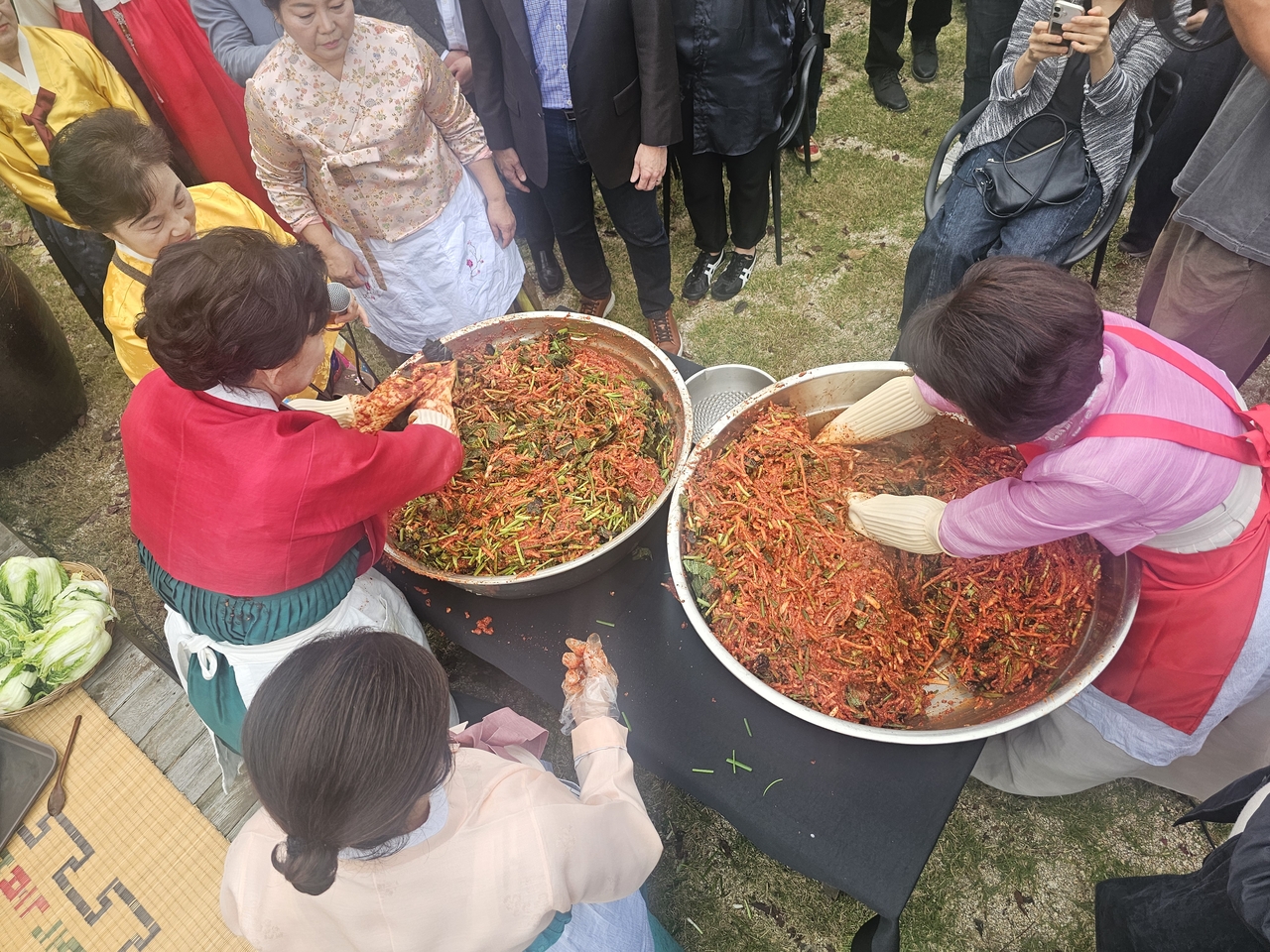
The highlight of the day was a live demonstration of making 500 kilograms of kimchi. Lee had grown the 2,500 heads of cabbage herself, planting them in a kitchen garden from scratch. She and her students sliced radishes and pears, mixed the seasoning and turned out hundreds of heads of kimchi in what seemed like no time at all.
Freshly boiled pork was wrapped in fresh kimchi and shared with the crowd. Koreans, Japanese and Americans alike beamed as they received pieces of kimchi with bare hands. Kimjang, the moment made clear, is not simply cooking — it is something everyone does and enjoys together.
As the sun dipped low and the smell of burning firewood drifted from the hearth, the feast began in earnest. Guests gathered around tables laden with kimchi, rice cakes, makgeolli and boiled pork, laughing and drawing closer to one another. Pansori singer Lee Jang-hak and Lee Ha-yeon's students filled the air with traditional Korean music.
Different languages, different professions — none of it seemed to matter. Some guests shared memories; others described tasting Korean food culture for the first time. As they made and ate kimchi together, strangers became something like a single community.
That was the value of kimjang on display. It is practical labor — preparing enough kimchi to last through winter — but it is also a communal ritual: a reason to call the neighbors over and ask how they are doing. It is precisely this culture of making and sharing kimchi together, not the food itself, that UNESCO recognized as an Intangible Cultural Heritage of Humanity.
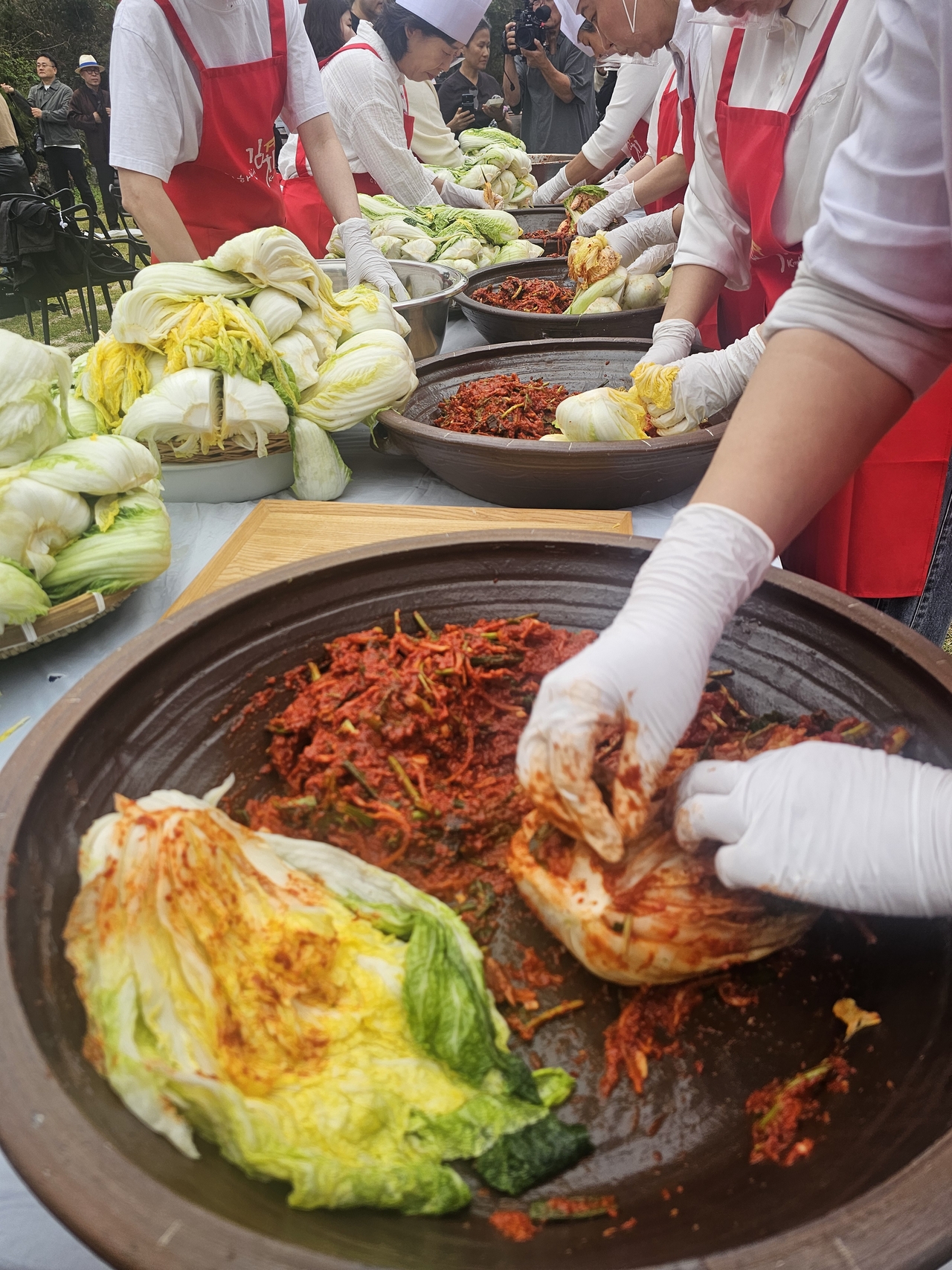
"Kimjang stands apart because it embeds a community culture in which neighbors come together to make something," said Park Chae-rin, director at the World Institute of Kimchi. "At a time when fewer households are making kimchi at home and the tradition of kimjang with neighbors is gradually disappearing, holding a kimjang festival like this — one that brings together people from all walks of life — carries great meaning."
Fewer and fewer homes still practice kimjang. But the people who gathered Tuesday showed that kimjang culture need not be left to the past. The reason to keep it alive is not only the taste of kimchi. It may lie in something deeper — the warmth that connects one person to another.
123@heraldcorp.com