Interview with CEO Kim Sung-yeop
Overseas sales up 70% since he took the helm; company plans to expand from solar inverters into EPC
'In the AI era, inverters are core infrastructure for national power grids'
R&D push toward integrated energy solutions
There are countless companies in the world — what do they all do? Some split, some merge, some rebrand. Some launch new ventures; others wind down businesses they have run for years. This series delivers the dynamic stories behind industries and companies through on-the-ground reporting and data analysis.
"The key to B2B sales is going to the customer. We will take that hands-on service approach and use it to expand our stage to the global market."
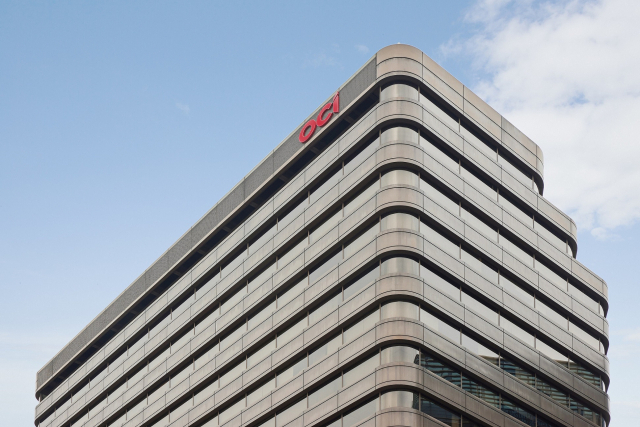
OCI Power CEO Kim Sung-yeop made the remarks in an interview at OCI's headquarters in Jung-gu, Seoul on Oct. 12. OCI Power, which has until now focused on the domestic market, is preparing to go global in line with the AI era's explosive growth in power demand.
From polysilicon to power conversion: where OCI Power fits in the solar value chain
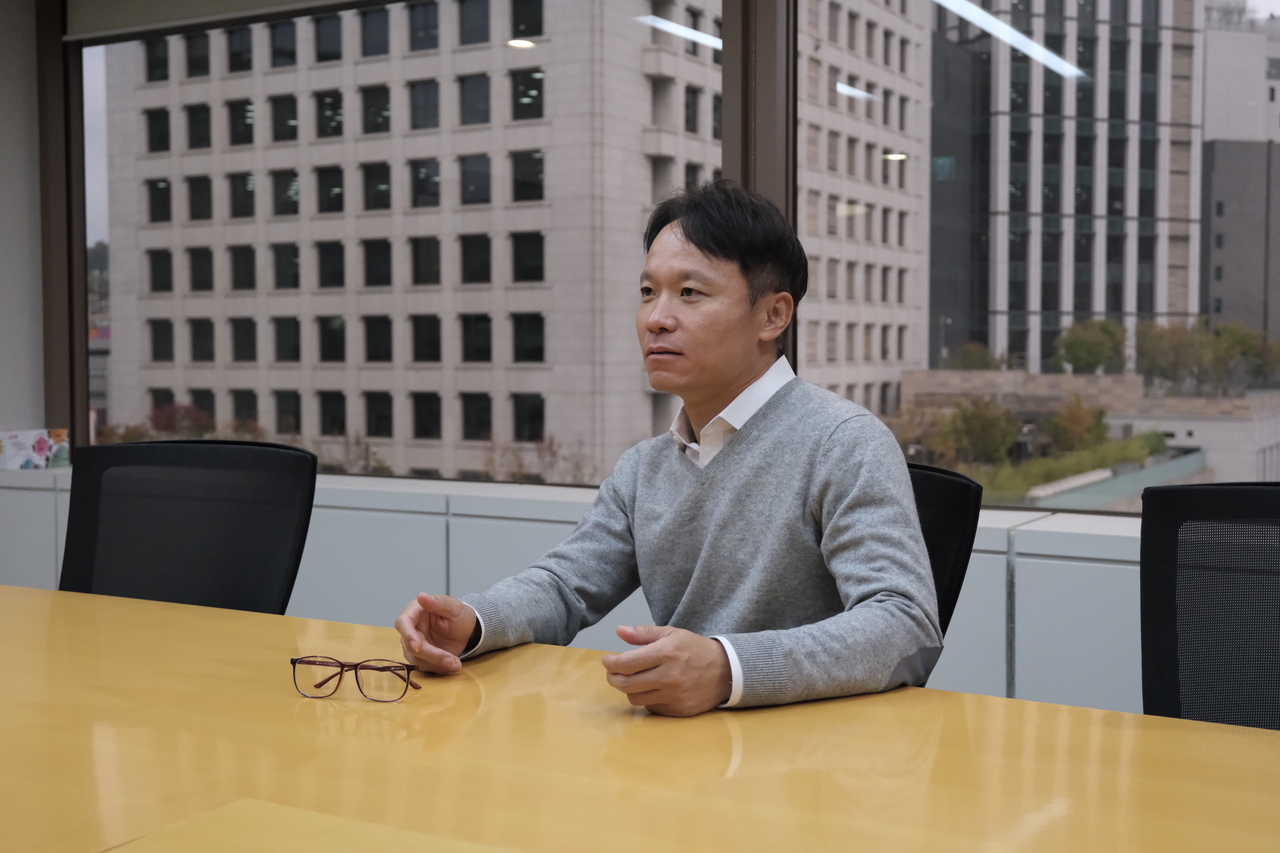
OCI Power traces its origins to the Korean subsidiary of KACO, a German inverter manufacturer. As the global solar industry fell into difficulty, Siemens acquired KACO's global operations — but the Korean business was carved out separately and acquired by OCI Group in 2019, giving rise to the company in its current form.
Within OCI Group, a conglomerate specializing in semiconductor and solar chemical materials, OCI Power occupies a distinctive position. The group's core subsidiary OCI Holdings produces polysilicon, the raw material for solar cells, placing it at the very beginning of the solar value chain.
OCI Power, by contrast, sits at the other end — handling equipment. Its flagship product is the solar inverter, a critical piece of hardware that converts the electricity generated from sunlight into a form usable in homes and factories. The company also produces power conversion systems, or PCS, for energy storage systems, or ESS, which have drawn growing attention as a means of ensuring stable power supply.
Pivoting to B2B: overseas sales up 70% in two years
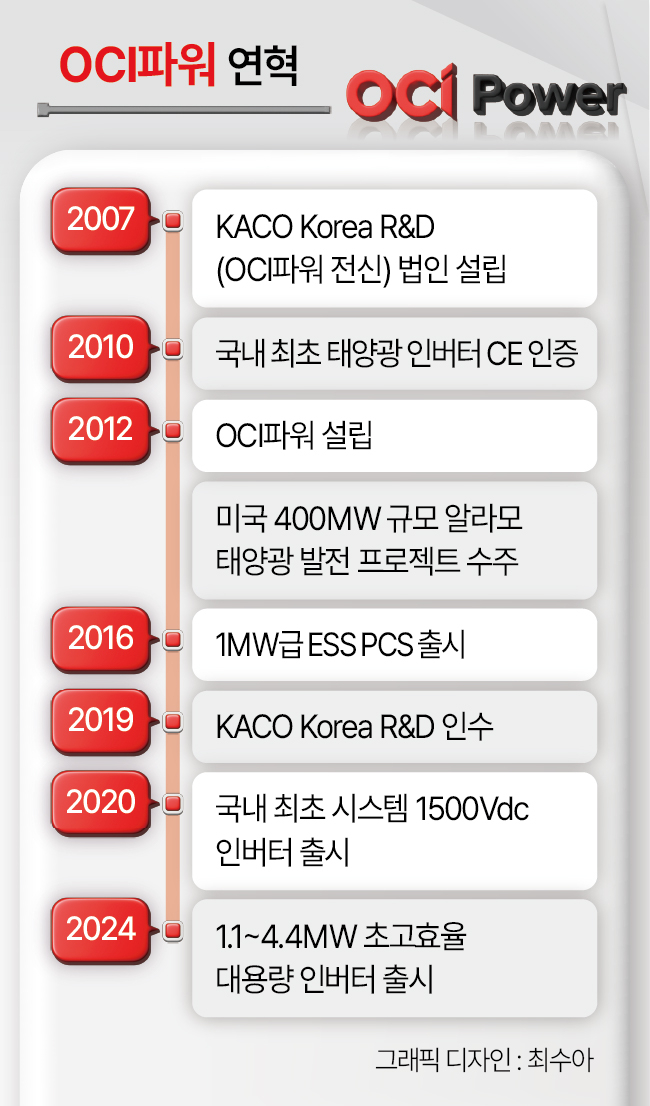
Kim joined OCI Power in March last year to help set a clear strategic direction after the company's official launch following the KACO acquisition. The core goal he set out was a fundamental shift toward becoming a B2B company.
Kim began his career at IBM in 1999 and went on to serve as chief executive of Danfoss Korea, an energy solutions firm, and as president of Vertiv Korea, a data center infrastructure company, building deep expertise in the data center sector along the way.
"Chemicals are a capital-intensive, plant-based industry driven largely by government projects, but equipment is 100 percent B2B," Kim said. "Understanding where the market is headed and actively promoting ourselves was the most important challenge."
That context explains why Kim's first move after taking the helm was to rebuild OCI Power's network in the United States. Most of the American customer relationships that KACO had built were effectively severed after the OCI acquisition. Kim responded by dispatching sales staff to the US to reconnect with former clients.
"We tracked down customers who had been using KACO inverters a decade ago and started by offering maintenance and repair services for their existing equipment," Kim said. "In the process, we introduced them to the new products OCI Power has developed, and we are now in the middle of restoring that network."
The revived solar farm maintenance business has put OCI Power on track for overseas sales growth of more than 70 percent this year compared with the previous year. Kim believes that adding full product exports and project contracts on top of that will drive even steeper earnings growth.
AI investment and US-China tensions put Korean solar in the spotlight
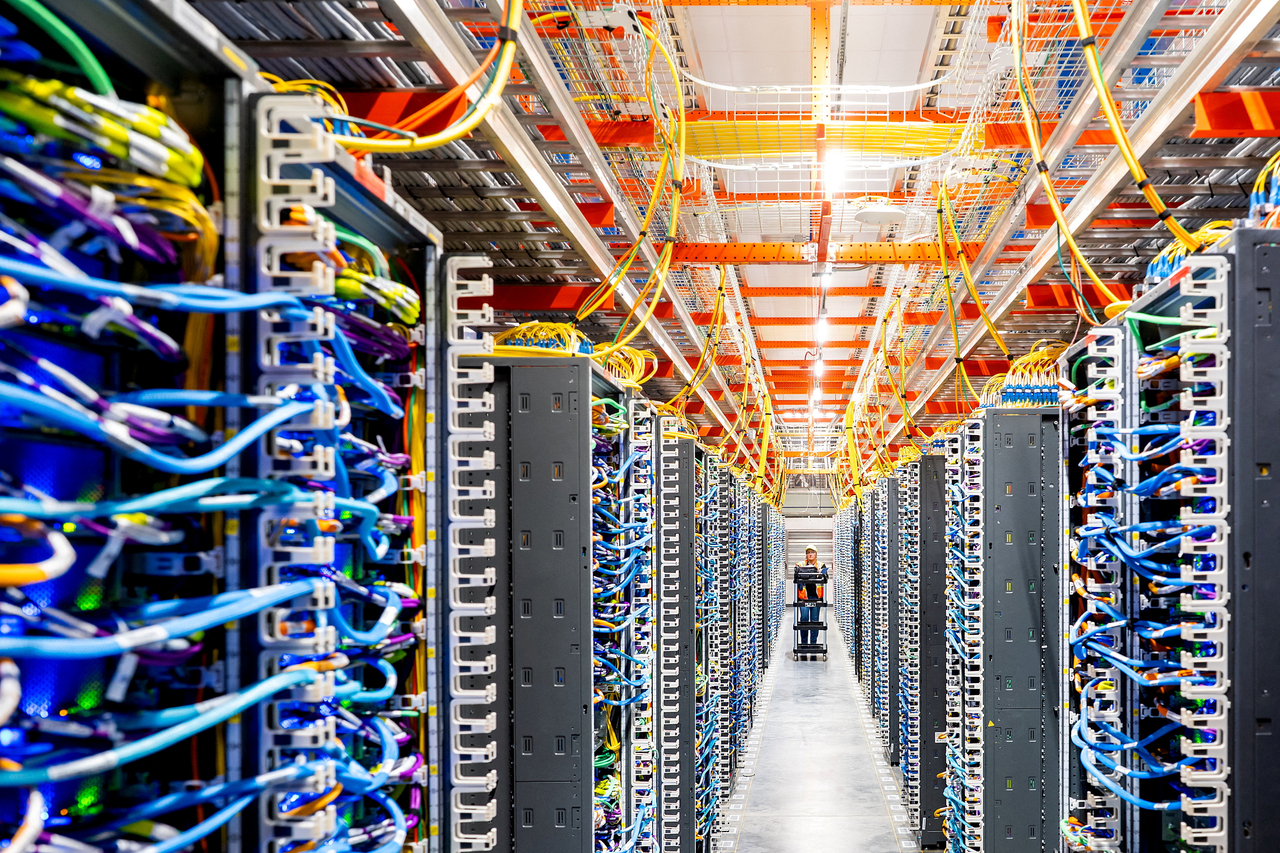
The combination of surging AI investment and US-China tensions is steadily raising the profile of Korean solar on the global stage. Solar power has emerged as a leading option for meeting the enormous electricity demand required to run AI services.
Solar is the cheapest source of power among renewable energy options and relatively straightforward to deploy at scale — reasons why global technology giants are pouring large-scale investment not only into data centers but also into solar farms. Google is a prime example, currently building a 2.5 GW solar farm with a target completion date of 2029.
"As global data center operators expand their use of renewable energy, demand will grow for stable power supply models that link solar generation with battery energy storage systems, or BESS," Kim said.
The US push to exclude Chinese solar products on security grounds also shows no sign of abating. "If price competitiveness was once the most important factor in the solar inverter market, what matters now is supply chain reliability, security and long-term maintenance capability," Kim said. "Inverters are no longer simply devices that convert current — they are core infrastructure connecting power plants to national grids and controlling the quality and stability of electricity."
OCI Power plans to develop its products specifically for the US market. "We will start by reducing dependence on Chinese components and then pursue product certification in the United States," Kim said.
The company also plans to build out local production and supply capabilities in response to US demands for domestic investment, and to gradually expand its maintenance and technical support capacity.
Beyond the US, OCI Power is also eyeing Japan and Southeast Asia. Japan established an ESS market as early as the 2010s, ahead of Korea. Southeast Asia, where large-scale power grids have yet to be built, represents a blue-ocean market well suited to early entry.
"In Japan and Malaysia, we are building cooperative relationships with local EPC — engineering, procurement and construction — power specialists, and we are looking for opportunities to enter those markets through joint project development," Kim said.
Expanding into solar EPC — with domestic results already in hand
Over the longer term, OCI Power plans to move beyond equipment supply and expand into EPC. "AI data centers see power consumption fluctuate extremely rapidly depending on computational load, making stability a persistent vulnerability," Kim said. "Going forward, the ability to precisely control voltage, frequency and power quality — not just securing a stable supply — will become increasingly important."
Unlike conventional data centers, which maintained relatively steady power consumption, AI data centers continuously draw massive amounts of electricity within seconds and then cut back sharply, repeating the cycle without pause. Solar farms supplying power to such facilities must be designed not only to generate electricity but also to absorb and manage those sudden swings.
Kim said OCI Power's solar inverter technology provides a natural foundation for expanding into EPC. "Inverter technology is the most technically demanding element in a solar farm — the rest is comparatively straightforward," he said. "We are broadening our R&D direction beyond simple equipment supply toward becoming an integrated energy solutions company that organically combines solar generation, BESS and PCS."
'We will become a comprehensive energy solutions partner'
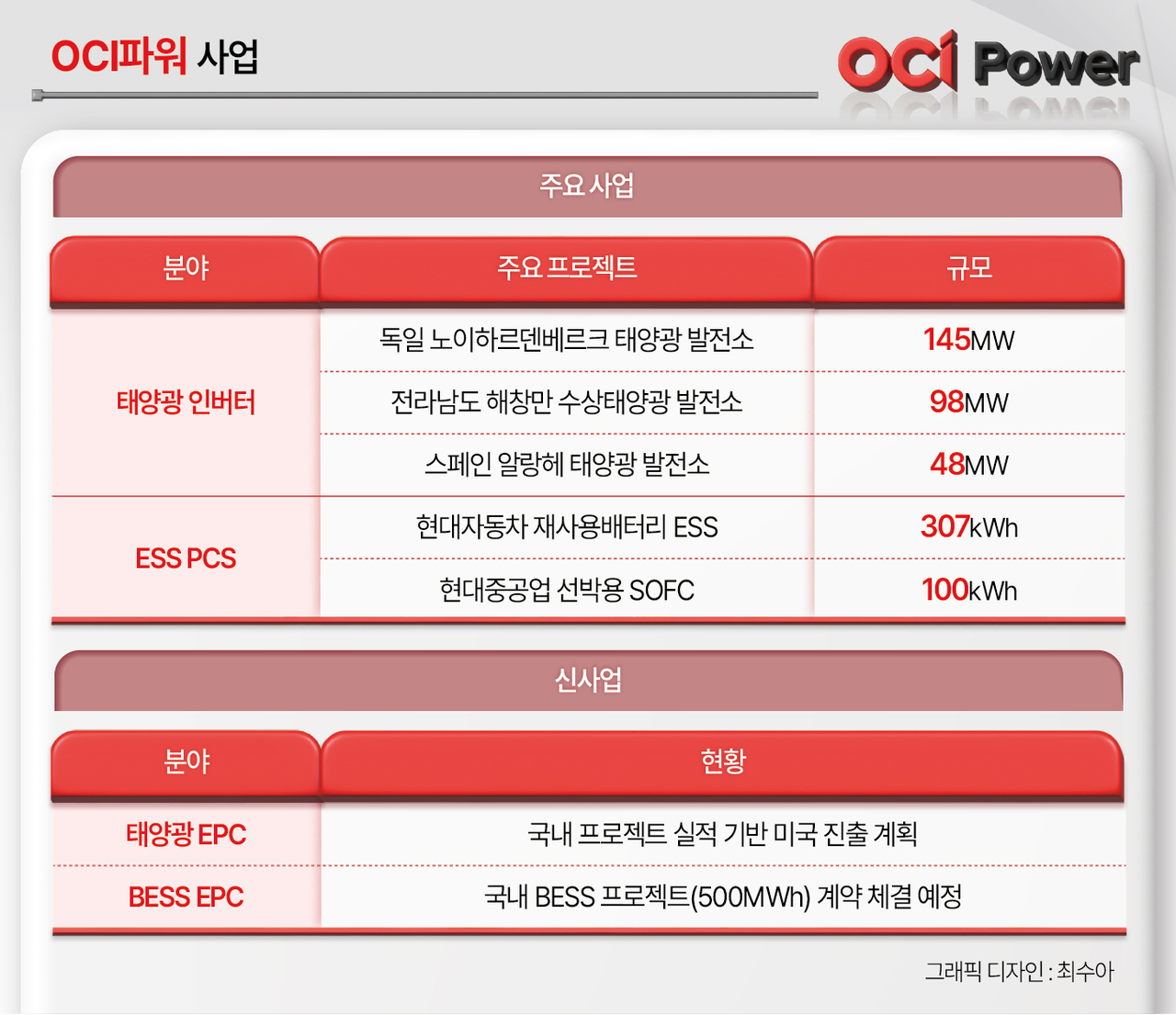
Domestically, OCI Power has already been expanding its business in stages. Since last year the company has been winning small- and mid-sized solar EPC projects, accumulating more than 10 contracts. Building on that track record, it recently secured a 5.5-megawatt solar project from Bright Energy Partners, a domestic independent power producer. The company also plans to sign its first-ever 500-megawatt-hour BESS EPC contract this month.
"We will replicate this business model transition overseas as well," Kim said. "In Southeast Asia in particular, we want to expand a co-development model in which we participate from the earliest stages of project development — securing sites, reviewing grid interconnection and analyzing project viability — together with local partners."
"Ultimately, we aim to go beyond being a product supplier and establish ourselves as a comprehensive energy solutions partner that creates real value across the full spectrum of our customers' energy infrastructure — from construction to operation," Kim said.

klee@heraldcorp.com