Banks' liquidity war: 42.57 trillion won floods in within 20 days
Fixed deposits top 1,000 trillion won, climb further to 1,018 trillion won
Lenders chase stable retail money with limited-edition rate offers
Savings banks struggle to keep up as thin lending limits rate room
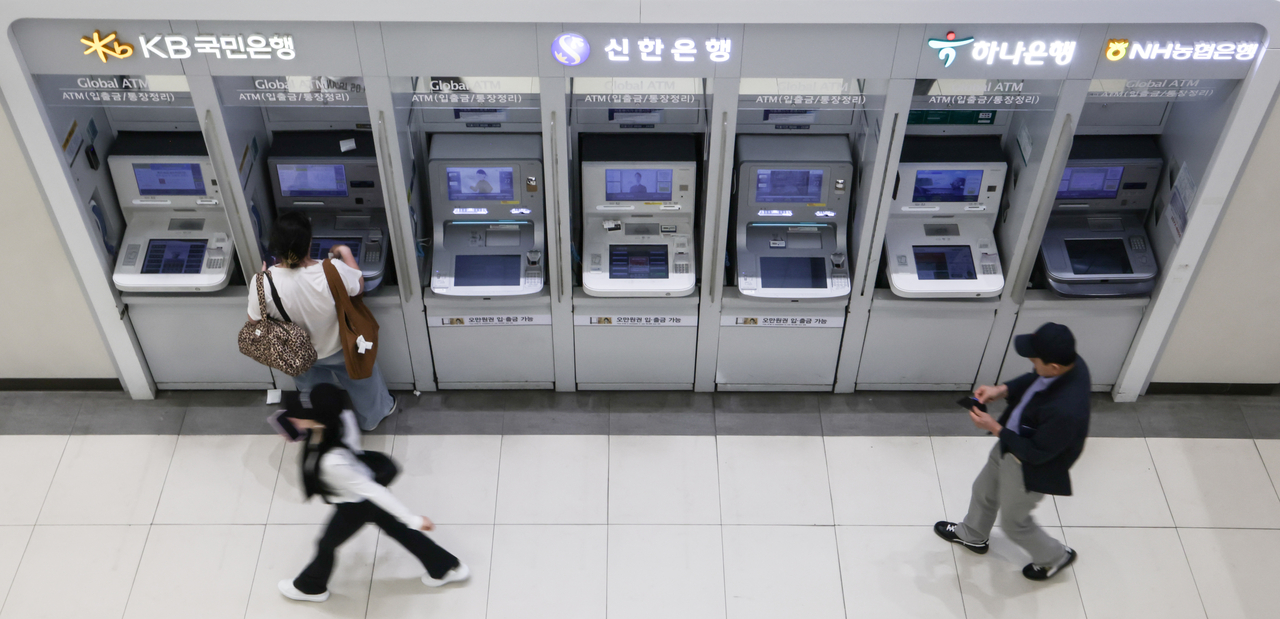
Competition among banks for deposits is intensifying ahead of year-end. With lenders rolling out a string of limited-edition time deposits offering around 4 percent annually in a bid to secure the more stable retail money they prefer over corporate funds, the combined fixed-deposit balance at the five largest banks has surpassed 1,018 trillion won ($767 billion). Analysts say the race to capture idle funds — compounded by stock market volatility and rising market interest rates — could reshape money flows across the broader financial sector.
The combined deposits at KB Kookmin, Shinhan Bank, Hana, Woori Bank and NH NongHyup Bank stood at 2,286.46 trillion won as of Monday, up 42.57 trillion won from 2,243.89 trillion won at the end of September — a gain accumulated in under 20 days.
Fixed-term deposits within that total rose 19.53 trillion won over the same period, climbing from 998.64 trillion won to 1,018.17 trillion won. The figure has continued to grow since first crossing the 1,000 trillion won threshold in August.
By contrast, demand and flexible savings deposits — accounts that allow free withdrawals — fell 17.33 trillion won, from 732.56 trillion won to 715.24 trillion won, underscoring the shift of funds into interest-bearing fixed deposits.
Banks are driving the trend by competing aggressively on rates to attract time deposits, with a particular focus on retail customers whose money is considered more stable. Corporate deposits can drain rapidly in large amounts as companies meet payment schedules, tax obligations and investment needs, whereas retail time deposits carry fixed maturities that make cash flows easier to predict. That predictability gives banks a stronger incentive to build a stable deposit base before year-end.
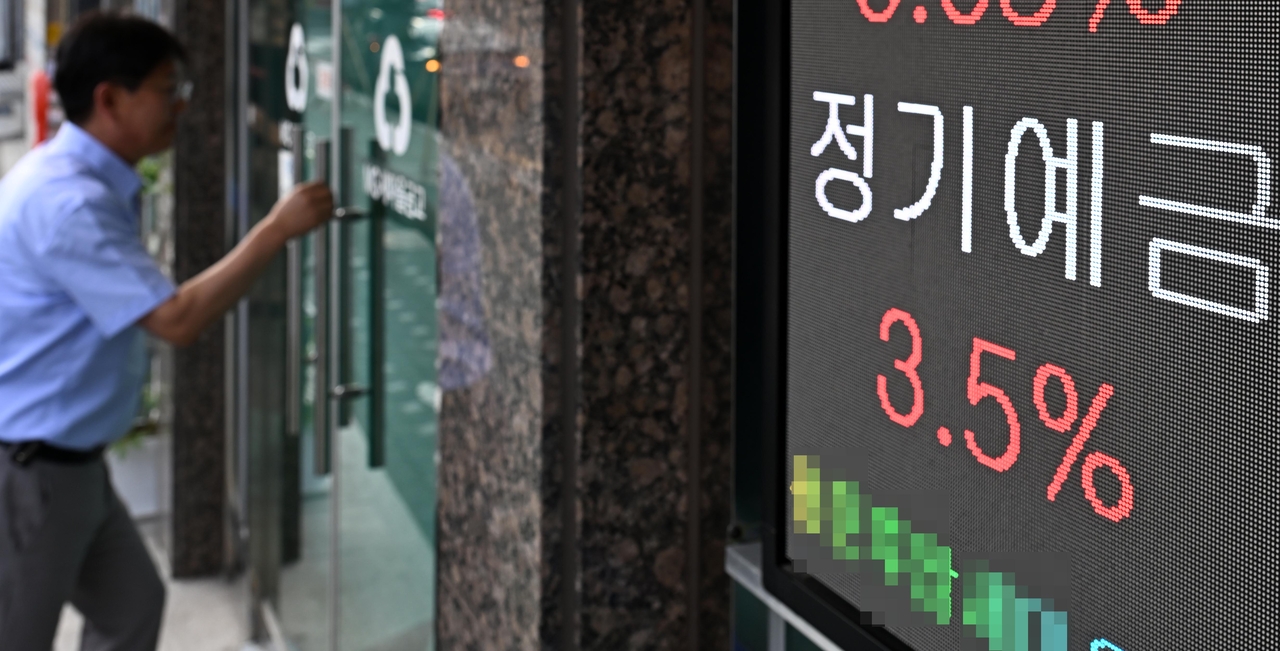
"Competition among banks has grown so fierce, and we believe a lot of money is also leaving because of stock market volatility," a banking industry official said. "In a rising rate environment, time deposits are the flagship product with the most room to attract customers, so the combination of market rate movements and strategies to expand the customer base is driving these limited-edition offers."
Banks are going beyond simply raising standard time deposit rates, deploying capped limited-edition products as well. Shinhan Bank's "Super SOL Welcome Time Deposit" offers a maximum annual rate of 4.0 percent on a one-year maturity and is available up to a total cap of 500 billion won. NH NongHyup Bank has also launched its "NH All One Bank 10th Anniversary Commemorative Deposit" with a 500 billion won cap, offering a maximum annual rate of 3.9 percent.
Woori Bank has taken a different approach, attaching higher rates to shorter maturities. Its "Woori 369 Time Deposit" carries an annual rate of around 3.8 percent for a nine-month term, topping the 3.6 percent annual rate on its flagship "WON Plus Deposit" at one year. The WON Plus Deposit's one-year rate was confirmed at 3.60 percent annually on Woori Bank's website as of Wednesday.
Meanwhile, funds parked in the stock market while awaiting investment opportunities are draining quickly. Investor deposit balances held at brokerages stood at 92.1 trillion won on Monday, down 2.31 trillion won from the previous trading day, according to the Korea Financial Investment Association. Compared with 104.66 trillion won at the end of September, the balance has fallen by about 12.6 trillion won. The decline looks even steeper against the roughly 139 trillion won level seen in early June.
The banking sector broadly expects the deposit competition to continue through year-end. The Bank of Korea raised its benchmark interest rate in consecutive moves in July and August, and the possibility of further increases remains on the table, sustaining upward pressure on deposit rates. Combined with each bank's drive to expand its customer base, that environment could produce additional high-rate limited-edition products, industry watchers say.

The concern is that the banks' rate competition could deepen the funding burden on the secondary financial sector. The average annual rate on one-year time deposits at savings banks has hovered around 3.80 percent in recent days, little changed from the roughly 3.9 percent level reached in mid-July before easing back to around 3.8 percent since August. Meanwhile, some commercial bank limited-edition products now offer maximum annual rates of 3.9 to 4.0 percent, meaning certain products have already overtaken the savings bank average.
Savings banks cannot easily follow commercial banks higher on deposit rates. Their total deposits grew 7.04 trillion won from 98.17 trillion won at the end of January to 105.21 trillion won at the end of July, according to the Bank of Korea, but their loan balances rose only 2.04 trillion won over the same period, from 94.21 trillion won to 96.25 trillion won. Raising deposit rates when there are not enough borrowers to deploy the additional funds would only inflate interest costs. The number of savings bank time deposit products offering 4 percent or more annually has already fallen from 113 at the end of July to 42 this month.
Asset quality concerns add to the pressure. The delinquency rate at savings banks stood at 6.26 percent at the end of June, up 0.22 percentage points from 6.04 percent at the end of last year. If commercial banks push ahead with high-rate deposit campaigns and expand their deposit base, savings banks face a painful choice: absorb customer outflows or raise their own funding costs further. That dynamic is fueling concern that the banks' deposit war could spread into a broader scramble for funds across the financial sector by year-end.
rim@heraldcorp.com