Putin seeks end-of-war deal among major powers, excluding Ukraine
Fears of a 'new Yalta' grow
Republicans warn Putin is 'manipulating Trump like a puppet'
Analysts caution summit could weaken US standing
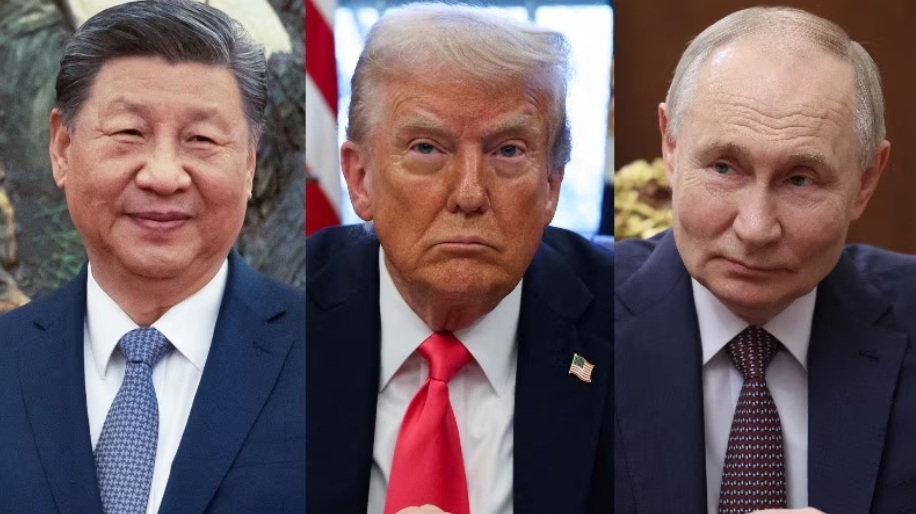
As the prospect of a three-way summit among the leaders of the United States, China and Russia on the sidelines of next month's Asia-Pacific Economic Cooperation forum in China grows more likely, so too does anxiety in Washington. The central fear is that a great-power deal — evoking memories of the Yalta Conference — could impose a settlement on the Ukraine war while excluding Ukraine itself. There are also warnings that Donald Trump risks a hasty approach that could damage the standing of the United States and its allies.
Trump said Monday (local time) at the White House that he would be open to a summit with Russian President Vladimir Putin and Chinese President Xi Jinping, adding that nuclear disarmament would be the focus of any such meeting. The remarks were his most explicit public signal yet that he is willing to hold a major-power summit on the sidelines of the APEC leaders' meeting in Shenzhen, China, in mid-November. The emphasis on nuclear disarmament appears designed to frame the gathering around an agenda that, if successful, would yield a sweeping diplomatic achievement Trump could tout on the world stage.
Russia is the most eager driver of the proposed summit. Analysts say Putin's goal is to reach a war-ending arrangement with the US and Chinese leaders while keeping Ukraine out of the room — and to secure what would amount to a division of great-power spheres of influence.
The push has drawn criticism even within Trump's own Republican Party. According to The Hill and other US outlets Wednesday, Republican Sen. Bill Cassidy condemned the idea of convening a US-China-Russia summit to decide Ukraine's fate, calling it "reckless and morally wrong."
"Ukraine needs to be part of any negotiations," Cassidy said. "Russia is trying to kill Americans, covertly and overtly, around the world."
Fellow Republican Sen. Thom Tillis went further, saying "Putin is manipulating Trump like a puppet," and warning that "if Putin gets what he wants, history will not judge America kindly for failing to defend the West." Tillis said it was absurd to discuss ending the Ukraine war through a US-China-Russia summit at a moment when Xi and Putin are seeking to dominate the globe.
Daniel Fried, a former US ambassador to Poland, said the proposed summit evokes the Yalta Conference. "A great-power deal that excludes Ukraine would be a 'new Yalta,'" he said. "Russia is proposing this and Russia loves it. The potential victims of such a deal hate it — and Republicans used to, as well." His reference was to longstanding Republican criticism of Democratic President Franklin D. Roosevelt for granting the Soviet Union expanded spheres of influence at the Yalta Conference near the end of World War II.
Fried warned that pursuing the summit amounts to "choosing a diplomatic arena that is unfavorable to us," adding: "Our position will be weakened, and I find it hard to believe Trump is careful and nimble enough to avoid the traps and the blandishments."
If Trump views the November APEC summit primarily as a venue for a great-power showdown, analysts say he may devote less attention to a potential meeting with North Korean leader Kim Jong-un on the sidelines.
In practice, when asked Monday (local time) whether he might meet Kim during his Asia trip for APEC, Trump said only, "I don't know." Some analysts read the response as a tactical move to pressure Pyongyang — which has continued to probe rather than engage despite repeated overtures — into action. Others suggest Trump's focus may simply have shifted toward securing a diplomatic win through the US-China-Russia summit.
yckim6452@heraldcorp.com