Final report on sustainable free-fare transit released; super-aging society projected to push 50-year net losses to 3 trillion won; 73.6% of Koreans say central and local governments should cover the costs
The free subway fare program for senior citizens generates more than 650.6 billion won ($490 million) in annual social benefits by keeping older adults mobile and preventing social isolation, according to a new study.
As South Korea rapidly enters super-aged society status, warnings are mounting over the program's long-term viability — and seven in 10 Koreans say the central and local governments should bear the financial burden.
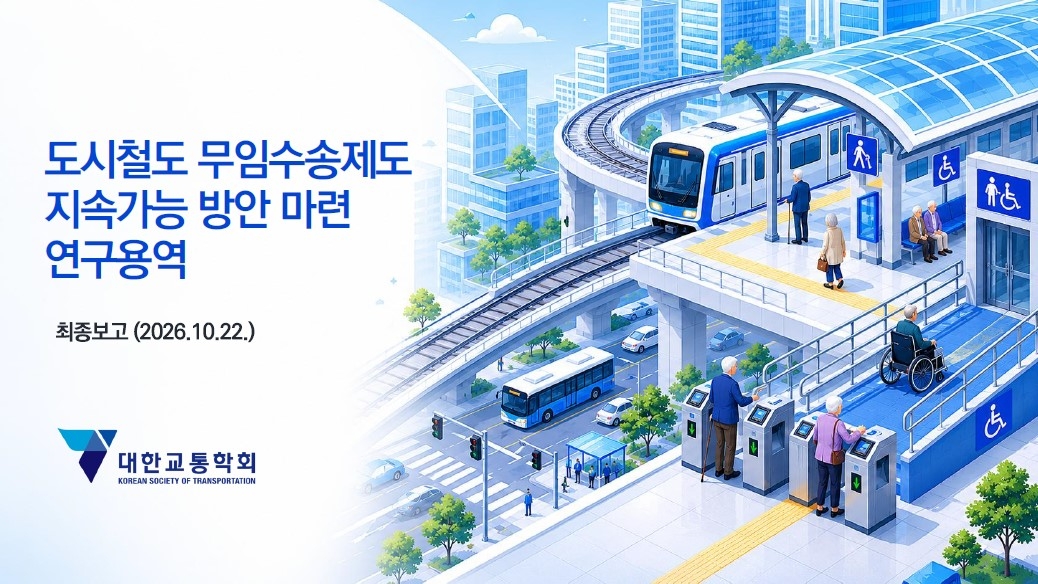
Seoul Metro released the findings Thursday at the final presentation of a commissioned study titled "Research on Sustainable Measures for the Urban Rail Free-Fare Transit System."
The study was jointly commissioned by six urban rail operators nationwide, including Seoul Metro, and carried out by the Korean Society of Transportation. It was completed in about four months after an initial briefing in July.
The report diagnoses the fiscal strain facing urban rail operators as the country ages, presents findings from a public awareness survey and an analysis of the social value of free senior transit, and outlines policy alternatives and projected fiscal outcomes under various scenarios.
The report calculates that the social benefits generated by free senior transit — by encouraging and sustaining older adults' participation in outside activities — total 650.6 billion won annually as of 2025. Benefits break down across three areas: health at 338.6 billion won (covering suicide and depression prevention, reductions in major illnesses, and shorter hospital visit times), transportation and environment at 229.3 billion won (vehicle operating cost savings, fewer traffic accidents, and reduced pollution), and economic activity at 82.7 billion won (boosting consumption in local commercial districts). Within the health category, the 338.6 billion won figure comprises 142.1 billion won in suicide prevention, 74.2 billion won in depression prevention, 86.1 billion won in reductions in major illnesses, 19.8 billion won in reduced long-term care admissions, and 16.3 billion won in shorter hospital visit times. The transportation and environment figure of 229.3 billion won breaks down into 158.5 billion won in vehicle operating cost savings, 54.9 billion won from fewer traffic accidents, and 15.9 billion won from reduced environmental pollution.
A Seoul Metro official said the findings "clearly demonstrate that free transit goes beyond a simple fare reduction — it functions as a form of public investment that reduces national welfare expenditures and other fiscal costs."
These social benefits are projected to grow sharply as the population ages, reaching 898.3 billion won in 2035 and 1.06 trillion won by 2050.
According to population projections from the Ministry of Statistics, South Korea's elderly population share is expected to rise from 21.2 percent in 2025 to 25.3 percent in 2030, 34.3 percent in 2040, and 40.1 percent in 2050.
At the same time, the financial condition of urban rail operators is expected to worsen as the cost of maintaining the program grows. Projections show the combined net loss of the six urban rail operators nationwide will rise from 1.48 trillion won in 2025 to 1.91 trillion won in 2030 and 3.15 trillion won by 2050.
On the question of who should fund the program, 73.6 percent of respondents said the central or local government should bear the financial responsibility. In a survey of 2,000 adults aged 19 and older conducted by the Korean Society of Transportation, 41.7 percent said the central government should be the primary funder, while 31.9 percent pointed to local governments. Only 9 percent said urban rail operators should cover the costs themselves.
On whether the free-fare system should continue, 51.5 percent of respondents said it should be maintained, 24.1 percent were neutral, and 24.4 percent said it was not necessary.
The report notes that major advanced economies handle such programs differently from South Korea. In France, Germany and the United Kingdom, governments have established the principle that fare reductions mandated for social welfare purposes are compensated — in full or in part — by the state or local authorities. France covers fare discount losses through a dedicated mobility tax and local government funding; Germany requires the federal and state governments to share the cost of legally mandated discounts for people with reduced mobility; and in the United Kingdom, local transport authorities such as Transport for London fully reimburse operators for revenue lost under the free senior travel program.
The Korean Society of Transportation also challenged the central government's position that subsidizing free urban rail transit would be inequitable toward regions without urban rail and inconsistent with other transport welfare programs. The report points out that various government ministries already run support programs aimed at guaranteeing mobility and expanding transport welfare — among them the Ministry of Land, Infrastructure and Transport's universal transit card program, the Ministry of Agriculture, Food and Rural Affairs' rural transport model, the Ministry of Employment and Labor's commuting cost support for workers with severe disabilities, and the Ministry of Oceans and Fisheries' ferry fare support for island residents.
Given this landscape, the report calls for a reassessment of the case for national funding of urban rail free transit on grounds of policy equity and consistency, and for the establishment of a rational legal basis for such support.
The report also sets out policy alternatives to secure the program's long-term viability. It recommends forming an inter-ministerial consultative body led by the Ministry of Land, Infrastructure and Transport and the Ministry of Health and Welfare, given that free senior transit is both a welfare service grounded in the Senior Welfare Act and a direct guarantee of citizens' right to mobility. The body would clarify each ministry's role in operating the program and establish criteria for calculating costs based on eligible recipients and actual usage.
Raising the eligibility age for free transit from the current 65 to 70 is also proposed as a key alternative. Projections of future demand and fiscal impact from such a change show that, while results vary by operator, the point at which operators would reach complete capital impairment could be delayed by up to two years.
For Seoul Metro specifically, the analysis finds that under the current system the operator would reach complete capital impairment in 2033, but raising the free-fare age to 70 would push that point back by one year to 2034.
However, the report cautions that raising the eligibility age alone cannot fundamentally resolve the fiscal problem, and calls for parallel improvements to the cost-sharing framework — including national government funding — alongside structural reforms to ensure the program's sustainability.
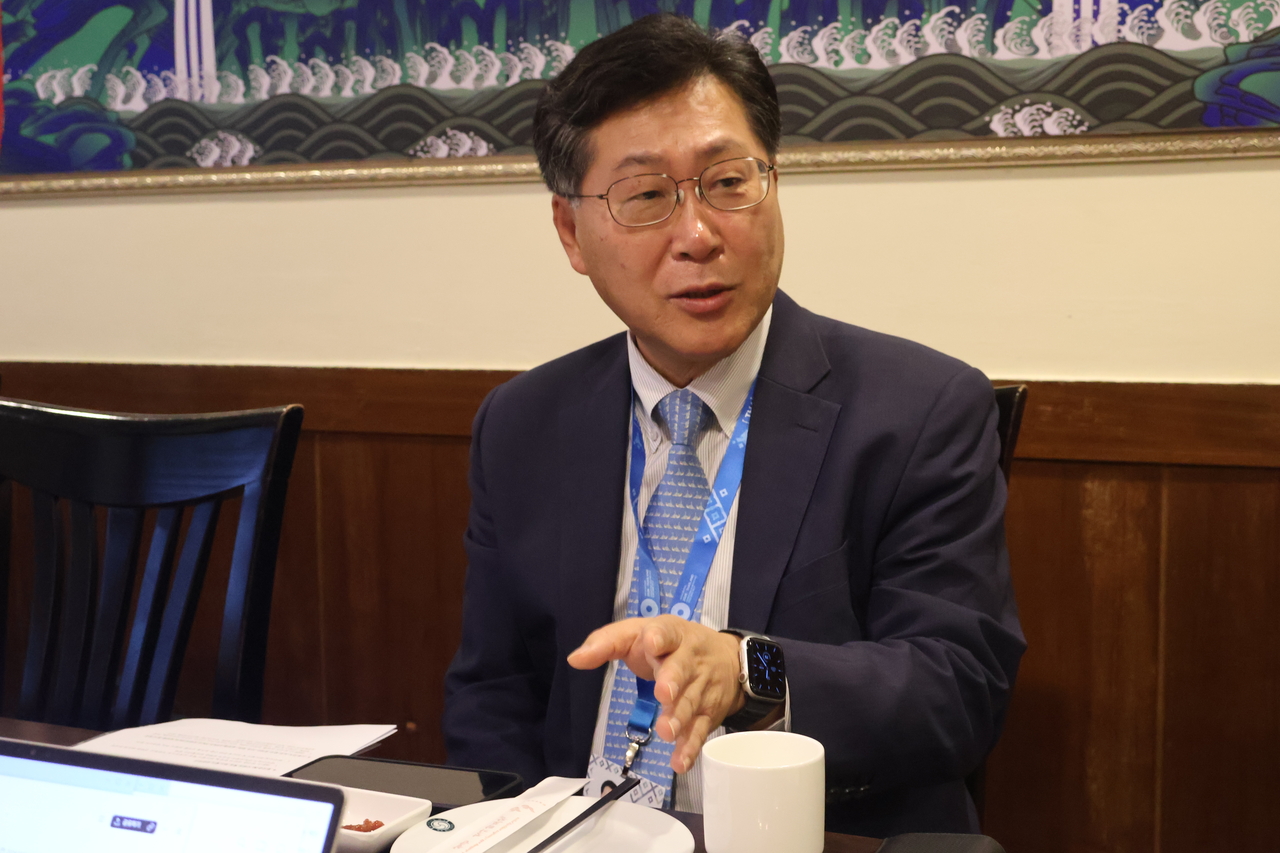
Han Young-hee, head of Seoul Metro's planning division, said the study concluded that public investment to sustain the free-fare program "represents a policy choice with sufficient economic justification." Han added that the company plans to use the findings to actively persuade key stakeholders — including the National Assembly and the government — of the need for reform, and to build broader consensus through public deliberation on a rational cost-sharing framework and the program's long-term viability.
seouldream01@heraldcorp.com