National 'open quantum testbed project' gets underway
Quantum technology infrastructure to reach all regions by 2028
Domestic tech to link heterogeneous networks; QKD extended to wireless and satellite

KT Corp is moving to build a nationwide demonstration infrastructure for quantum cryptography communications as it pushes toward commercialization of the technology. The company plans to extend its existing quantum cryptography network — currently concentrated in the Greater Seoul area — to the Yeongnam, Honam and Gangwon Province regions, while also validating next-generation wireless and satellite-based technologies.
KT Corp said Thursday it had completed a project launch briefing for the "2026 Open Quantum Testbed Advancement and Expansion Project," a national initiative led by the Ministry of Science and ICT and the National Information Society Agency (NIA), and would begin full-scale implementation.
The project is a national strategic initiative to expand the existing quantum cryptography communications testbed — currently centered on the Seoul–Pangyo–Daejeon corridor — to a nationwide scale by 2028, with the goal of accelerating the demonstration and commercialization of next-generation quantum technologies. The open quantum testbed is regarded as a core piece of demonstration infrastructure for bringing quantum cryptography communications to market.
KT Corp will take charge of building and operating "Segment A," a commercial hub, and "Segment C," a future-oriented hub, as part of its effort to establish a nationwide quantum cryptography communications infrastructure. The company also plans to deepen cooperation with industry, academia and research institutions, and to support the adoption of quantum security technologies in key national sectors including public services, defense and finance.
Under Segment A, KT Corp will build new links from the existing Daejeon hub to Daegu, Gwangju and Busan, as well as a Seoul–Chuncheon connection. This will lay the groundwork for a wide-area quantum cryptography communications network connecting the Chungcheong region, the Honam region, the Yeongnam region and Gangwon Province.
The expansion will rely on domestically developed quantum cryptography equipment to scale the open quantum testbed nationwide. KT Corp will create an environment capable of linking different networks and devices, and will conduct demonstrations using real service environments in sectors such as finance and healthcare.
Segment C will extend existing fiber-optic-based wired quantum key distribution (QKD) into wireless and satellite domains, and will verify quantum entanglement distribution technology. Wireless and satellite QKD broadens the reach of quantum cryptography communications to segments where fiber-optic infrastructure is difficult to deploy, as well as to satellite-to-ground applications. Quantum entanglement distribution shares entangled quantum states between distant points, providing the foundation for long-distance quantum networks.
KT Corp also plans to extend its wireless QKD demonstration range from about 4.8 kilometers to about 15 kilometers. The company will apply equipment modularization and atmospheric-turbulence-adaptive optics technology to secure the foundational capabilities needed for eventual expansion to satellite links. It will also verify multi-node quantum entanglement distribution technology to lay the groundwork for long-distance quantum network implementation.
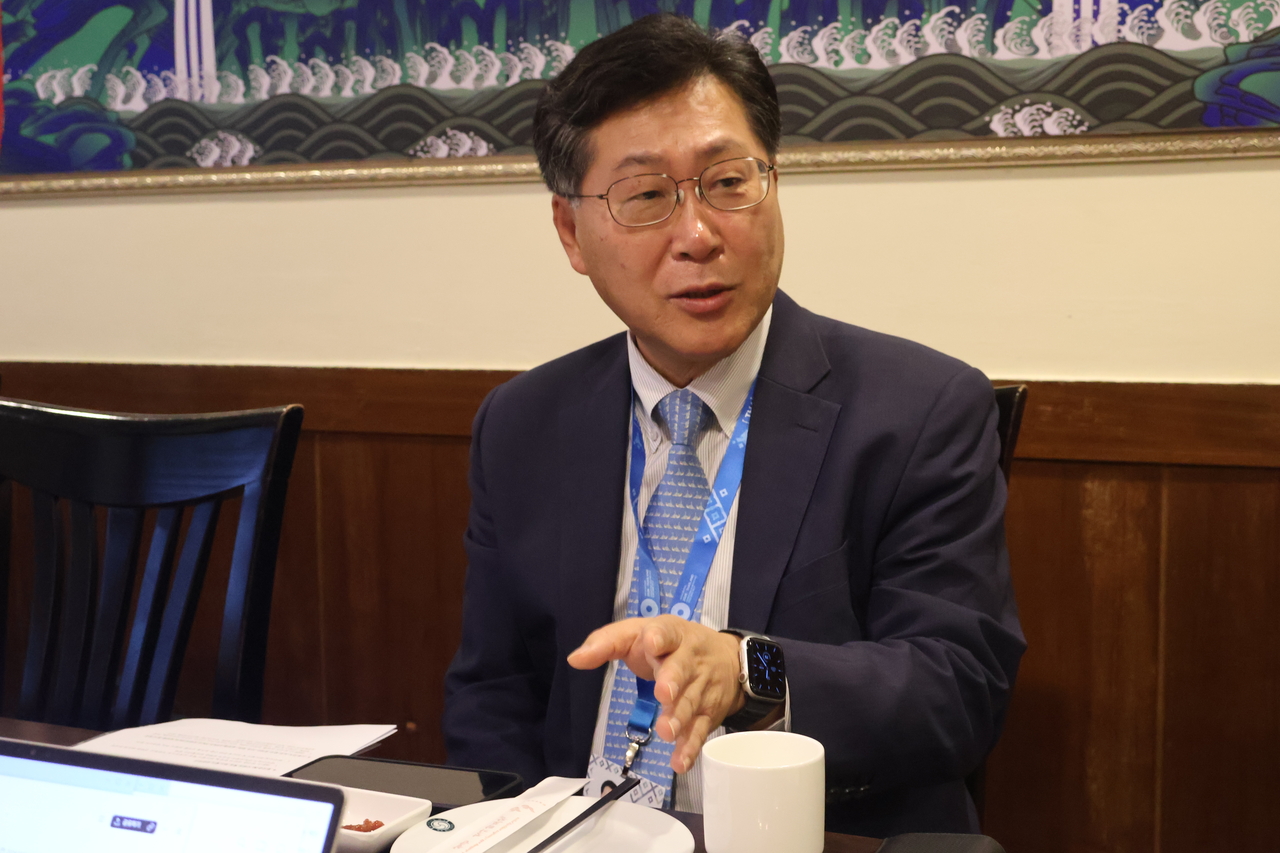
"We will advance the open quantum testbed and demonstrate next-generation technologies, drawing on KT Corp's nationwide network infrastructure and quantum cryptography expertise," said Jeon Myeong-jun, head of the enterprise service division at KT Corp's enterprise business unit. "We will expand the demonstration environment so that public institutions, private companies and research organizations can all make use of it, and contribute to energizing the industry ecosystem."
chami@heraldcorp.com