Three-year 'South Chungcheong solidarity economy' program targets startups, tourism, social services and AI
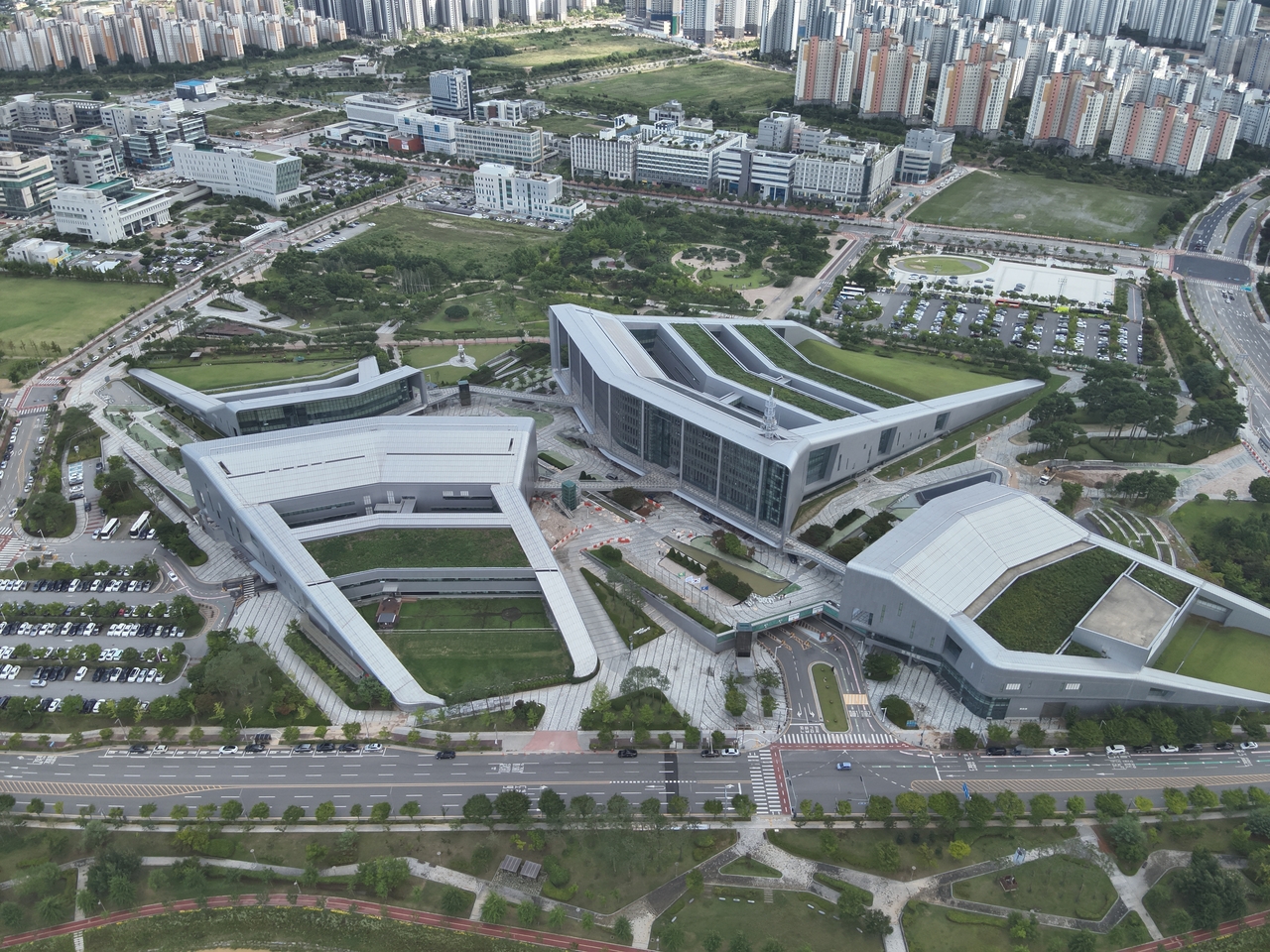
South Chungcheong Province announced Thursday that it will launch a homegrown solidarity economy initiative aimed at tackling regional challenges — including population decline — through cooperation among local stakeholders rather than top-down government action.
The program, dubbed the South Chungcheong solidarity economy, will run for three years through 2028. The province has secured 1 billion won ($753,000) from this year's regional depopulation response fund, and plans to commit a total of 3 billion won in provincial funds and 1.5 billion won in municipal funding over the three-year period.
Rather than relying solely on government agencies to address local problems, the initiative brings together a broad range of community actors — including local networks, intermediary support organizations, social enterprises, cooperatives and residents — to identify and respond to regional needs collectively.
South Chungcheong Province said it had spent considerable time in the field engaging solidarity economy stakeholders in ongoing discussions about local issues, residents' needs and the role the solidarity economy can play, while exploring avenues for collaborative problem-solving.
The program was developed through a process in which the public and private sectors jointly identified projects and defined community needs. A "collective impact" approach — in which diverse local actors set shared goals and pool their resources and capabilities — will be applied across all areas of the initiative.
The program spans four fields: startup support to generate local jobs and income, tourism leveraging regional assets, social services to underpin residents' daily lives, and AI to strengthen the competitiveness of local organizations.
The first initiative, building a local solidarity economy startup support system, will receive 1 billion won over three years.
It will identify aspiring social economy entrepreneurs based on local needs and demand, providing education, mentoring and networking support. Shared office space at the South Chungcheong Social Economy Innovation Town will be utilized, and links with municipal intermediary organizations will help establish a provincial-local startup support framework to help founders put down roots in the region.
The second initiative, developing sustainable community tourism villages with a local circulation model, will receive a combined 2 billion won — 1 billion won in provincial funds and 1 billion won in municipal funding — over three years.
The project will draw on each area's distinctive cultural, ecological, agricultural and living heritage resources to connect accommodation, food, farm produce, culture and hands-on experiences, ensuring that tourist spending translates into local income and jobs. The goal is to build a locally circulating tourism model in which revenue generated by tourism is reinvested and consumed within the community.
The third initiative, a pilot social service model for rural and fishing communities, will be carried out at a combined scale of 1 billion won — 500 million won in provincial funds and 500 million won in municipal funding.
Targeting nine depopulation-designated areas, the project will identify gaps in everyday services — including care, education, transportation, food and health — and bring together solidarity economy organizations, community groups, and medical, welfare and education institutions to pilot locally tailored services. The aim is to expand lifestyle services that residents can tangibly feel and to improve conditions for long-term settlement in the region.
The fourth initiative, strengthening AI capabilities in solidarity economy organizations, will receive 500 million won over three years. It will support solidarity economy organizations, intermediary bodies and councils in depopulation areas through a three-stage program: basic AI use, application to organizational operations, and AI-driven local problem-solving.
A total of 100 organizations will receive basic AI education, hands-on training and usage consulting; 20 organizations will receive tailored AI application support covering operations, public relations, marketing and customer management; and five organizations will be supported in developing and piloting AI-based service and business models to address local challenges.
Through this initiative, South Chungcheong Province said it aims to move beyond simple support for individual organizations and instead build a regional cooperation framework that connects people, organizations, local resources and capabilities — creating a virtuous cycle in which outcomes feed back into the community as jobs, income, services and vitality.
Successful models identified through the program will also be extended to other depopulation areas, and the province plans to link the initiative with related policies and follow-up grant programs at the central government, provincial and municipal levels to ensure its long-term sustainability.
"More sustainable solutions can be found when residents and local stakeholders who know the region best work together," said Lee Jong-pil, director general of the province's solidarity economy bureau. "Through the South Chungcheong solidarity economy, we will bring together the diverse forces of the region and build a structure in which the results created locally flow back to the community."
kwonhl@heraldcorp.com