Anniversary ceremony held at Pohang campus
Founder Lee Dong-chae stresses technology, quality amid industry downturn
From North Chungcheong venture to 3.3 trillion won investment in Pohang
'Most precious asset is people,' founder says, highlighting regional talent
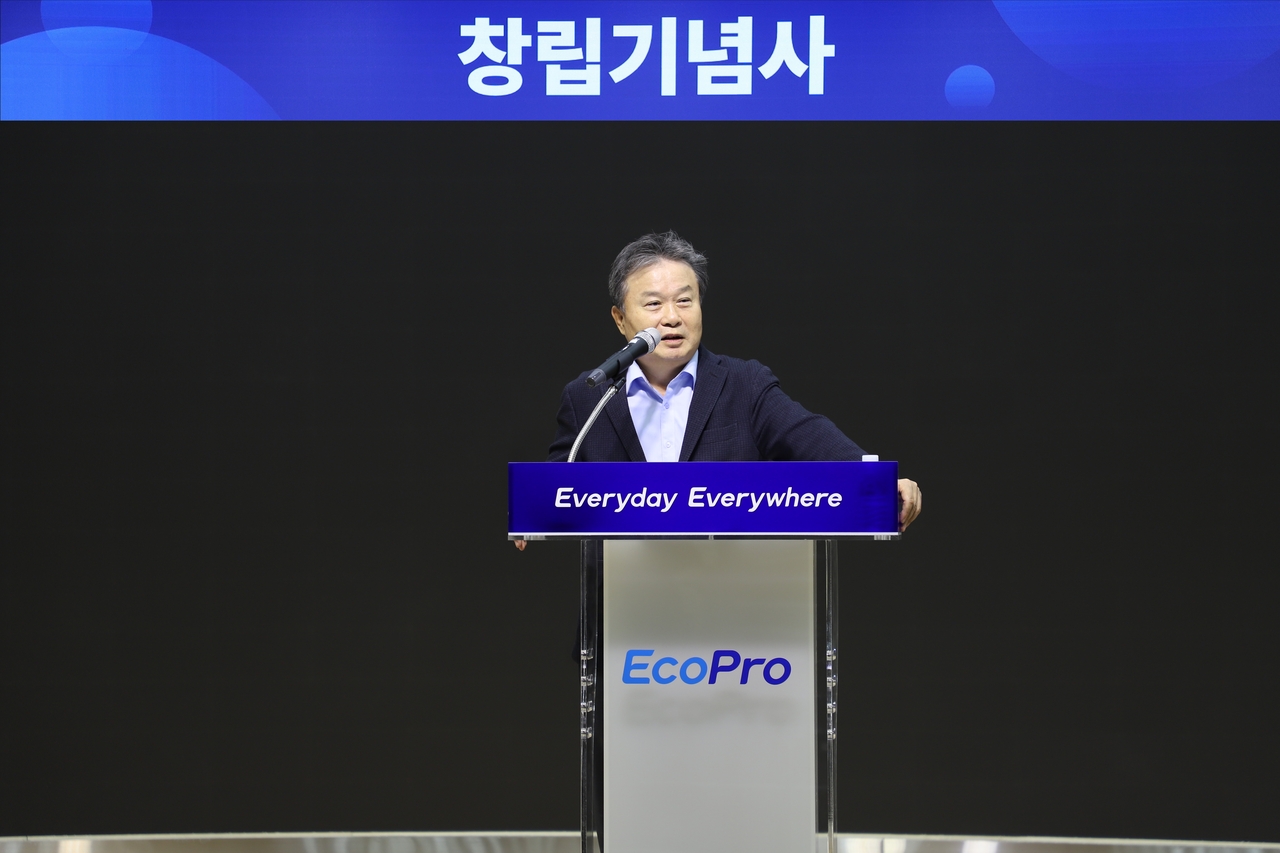
Ecopro founder Lee Dong-chae marked the company's 28th anniversary Thursday by calling on employees to press ahead with technology development and cost competitiveness despite a prolonged slump in the battery market. He expressed confidence in the long-term growth of the nickel-cobalt-manganese, or NCM, cathode material market, forecasting rising demand for high-energy-density batteries not only in electric vehicles but also in robotics and AI.
Ecopro held the anniversary ceremony at its Pohang campus in North Gyeongsang Province on Thursday, using the occasion to look back on the company's growth and share strategies for securing technological competitiveness amid shifts in the battery materials industry.
"As a pioneer in the environmental market, we have contributed to enhancing national competitiveness through the localization of environmental technology," Lee said in his address. "Walking a path no one else had taken first — that has been Ecopro's history."
Lee highlighted the company's track record over the past 28 years of entering new markets ahead of competitors and building up technological capabilities. He acknowledged that the battery industry has recently faced slowing demand and intensifying competition, but said the long-term growth potential remains substantial.
"When others were watching the market, we were looking at the future — and the market ultimately moved in the direction we had prepared for," he said.
He added that demand for higher-energy-density batteries would continue to grow across electric vehicles, robotics, AI and next-generation mobility. "The opportunity for NCM batteries will most certainly open wide," he said.
NCM batteries, which use nickel, cobalt and manganese, offer advantages in driving range and output performance for electric vehicles thanks to their high energy density. Competition from lithium iron phosphate, or LFP, batteries — which carry a price advantage — has intensified in recent years, but Ecopro expects demand for NCM materials to expand in the high-performance battery segment.
Lee also urged the company to use the downturn to prepare for a market recovery through technology development and cost reduction.
"Companies that prepare for the future during a downturn are the ones that emerge as true leaders," he said. "Let us advance our unrivaled technology further, raise our quality competitiveness higher, and lower our costs further — proactively preparing the future our customers want."
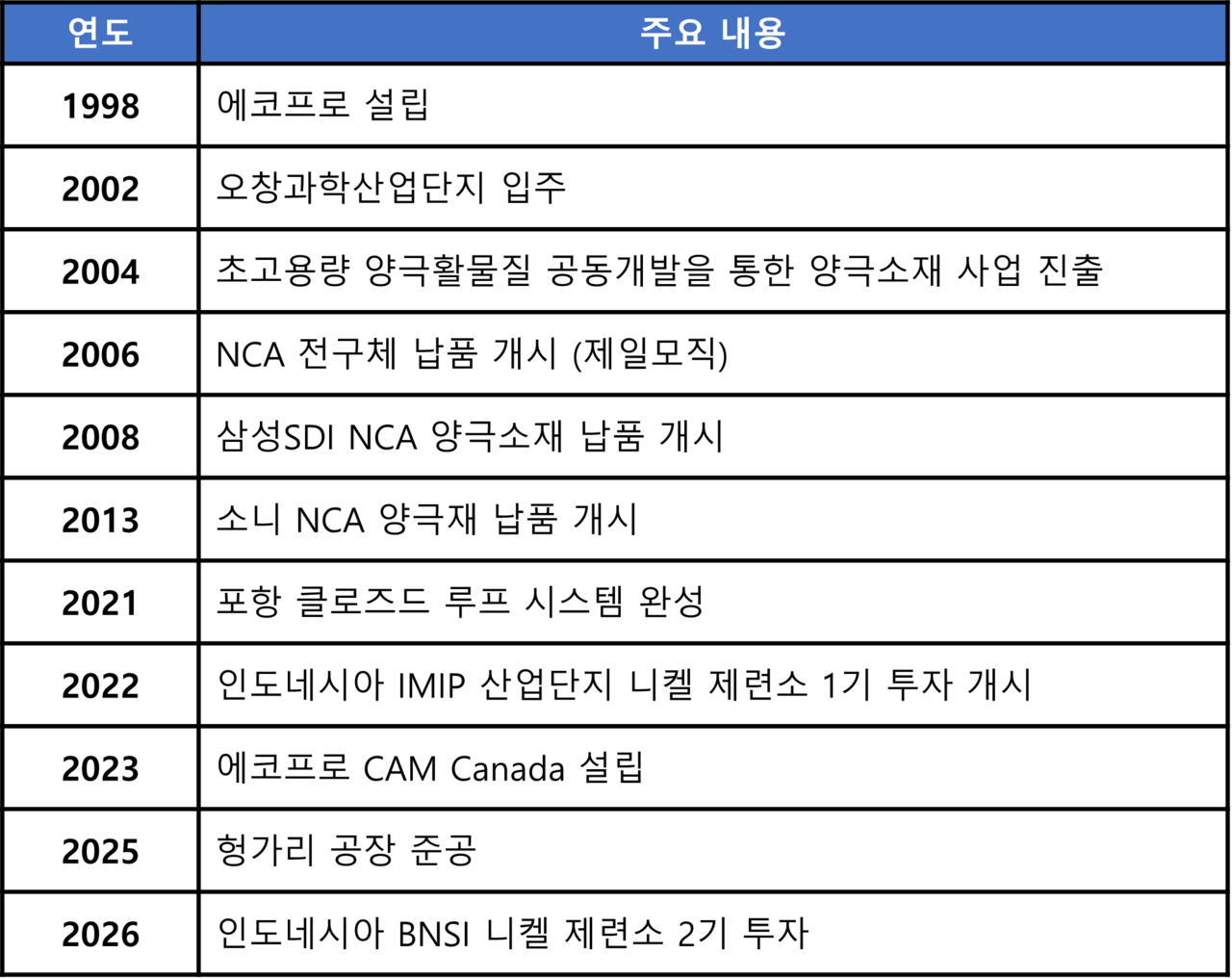
Ecopro was founded in 1998 in Ochang, North Chungcheong Province, with a single employee and seed capital of 100 million won ($75,400). In its early years, the company focused on environmental businesses — localizing chemical filters for semiconductor manufacturing processes that had previously relied on imported products, and developing catalytic technology for greenhouse gas reduction.
The company entered the secondary battery cathode material business in the early 2000s, expanding its scope of operations. In 2013, it began supplying nickel-cobalt-aluminum, or NCA, cathode materials to Japan's Sony, marking its full-scale entry into the overseas battery materials market.
Investment in production facilities and supply chains followed. Since 2017, Ecopro has committed approximately 3.3 trillion won to building a "closed-loop" system in Pohang that links precursor production, cathode material manufacturing and spent-battery recycling. The structure integrates raw material procurement, materials production and recycling processes to improve supply chain stability and cost competitiveness.
Ecopro has also made a point of building its business outside the Greater Seoul area. The company started in Ochang in North Chungcheong Province and established a large-scale production base in Pohang in North Gyeongsang Province, while steadily expanding its hiring of regional talent.
About 90 percent of the company's total workforce comes from outside Seoul and the greater metropolitan area. Ecopro has grown its operations by building its production and research and development organizations around regional talent.
"Technology is made by people, innovation is made by people, and the future is also made by people," Lee said. "Ecopro's most precious asset is not equipment, buildings or capital — it is people."
The ceremony also included an awards presentation recognizing employees who had exemplified the company's core values of challenge, innovation and trust.
kwater@heraldcorp.com