Local extinction response fund up to 12 billion won — more projects on the table
Housing, corporate tax breaks take effect; residents and local economy to benefit
Child allowance raised to 110,000 won a month; local gift voucher support expanded
Jobs, transport and tourism infrastructure to grow as city aims to attract and retain residents
Government support to translate into tangible change, laying groundwork for sustainable growth

Dongducheon has been newly designated a "depopulation zone," opening the door to expanded government fiscal support and a range of regulatory benefits aimed at revitalizing the city.
The designation unlocks a broad set of policies closely tied to residents' daily lives — from a larger share of the local extinction response fund to housing and corporate tax breaks, higher child allowances and expanded local gift voucher support.
The Ministry of Interior and Safety announced the redesignation on Oct. 7, the first such review in five years since the original 2021 designations. Gyeonggi Province's Dongducheon, Busan's Geumjeong-gu and South Gyeongsang Province's Tongyeong were newly added, bringing the total number of designated depopulation zones nationwide from 89 to 92.
The inclusion is particularly significant because Dongducheon had previously held the lower-tier status of a "depopulation attention zone." The city plans to link the expanded fiscal support and special provisions to local development projects, easing the burden of housing and child-rearing costs for residents while improving employment opportunities and quality of life — and laying the groundwork to attract new residents and stimulate the local economy.
Local extinction response fund raised to up to 12 billion won — broader project opportunities ahead
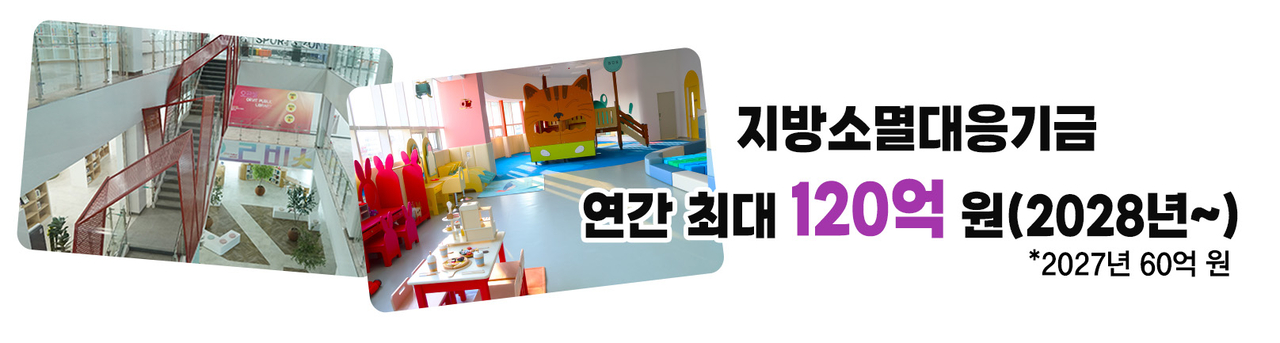
The most immediate change from the new designation is an expanded allocation from the local extinction response fund. Areas previously classified as depopulation attention zones were eligible for up to 3 billion won ($2.26 million) per year. Under the new status, Dongducheon can receive up to 6 billion won in 2027, rising to a maximum of 12 billion won annually from 2028 onward, depending on performance evaluations.
Building on this expanded funding potential, the city plans to identify projects that address local conditions and demographic shifts, securing resources for areas closely tied to residents' lives — including jobs, housing, education and tourism.
The designation also improves the city's standing in competitive grant programs run by central government ministries, raising the prospect of securing more national funding. The city said it will carefully review eligibility requirements and evaluation criteria for individual programs to identify projects that offer genuine local benefit and align with government support. The actual amount of fund support, however, will be determined by evaluation outcomes and project plans.
Housing and corporate tax breaks effective Tuesday — benefits for residents and the local economy
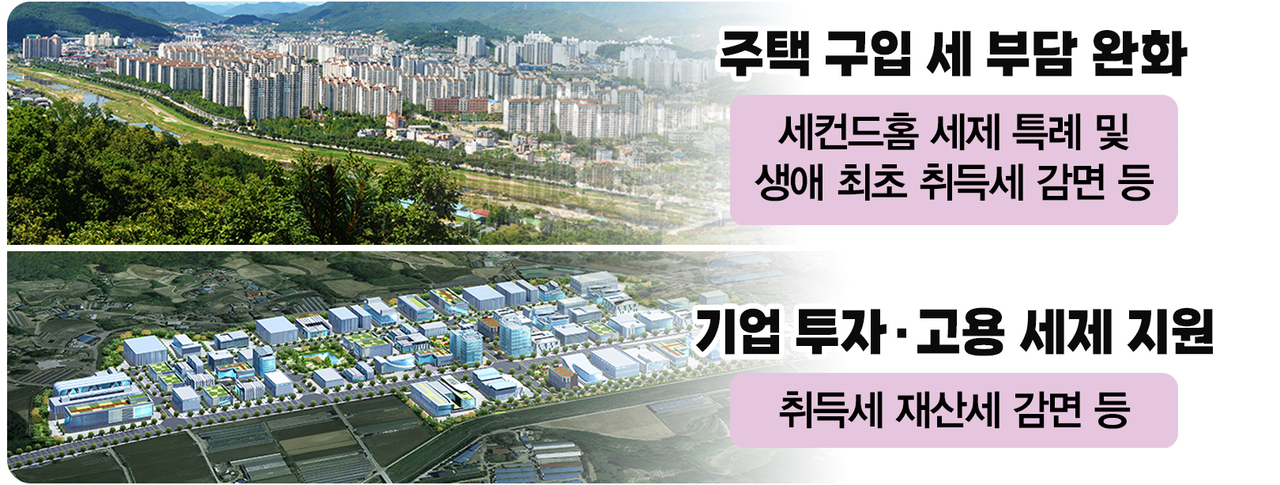
Tax benefits related to housing and businesses took effect Tuesday under the relevant implementation standards following the new depopulation zone designation. The measures are expected to ease the tax burden on home purchases and support corporate investment and hiring, helping to anchor residents and economic activity in the city.
On the housing side, those who meet certain conditions can take advantage of special provisions on capital gains tax and comprehensive real estate tax for second homes, as well as acquisition tax reductions for first-time homebuyers. These measures are expected to lower the cost of purchasing property and encourage demand from people looking to establish a new base in the area.
For businesses, companies that start up, open or relocate operations, or move into industrial complexes may be eligible — subject to relevant laws and requirements — for acquisition tax and property tax reductions. Companies that meet certain conditions, such as hiring local residents, may also qualify for corporate local income tax credits and other employment-related support.
These benefits are not applied automatically across the board. Each requires that specific conditions be met — including property value thresholds, the number of homes owned and the type of business — as set out in individual laws and guidelines. Some measures will also require separate municipal ordinances or detailed project plans before they can take effect.
The city plans to use these tax incentives to attract businesses, expand investment and create local jobs, strengthening the foundation for residents to work and live stably in Dongducheon. Details on eligibility requirements and the scope of tax reductions will be made available so that residents and businesses can easily understand and make use of them.
Child allowance up to 110,000 won a month, local gift voucher support expanded — a boost for households and neighborhood commerce
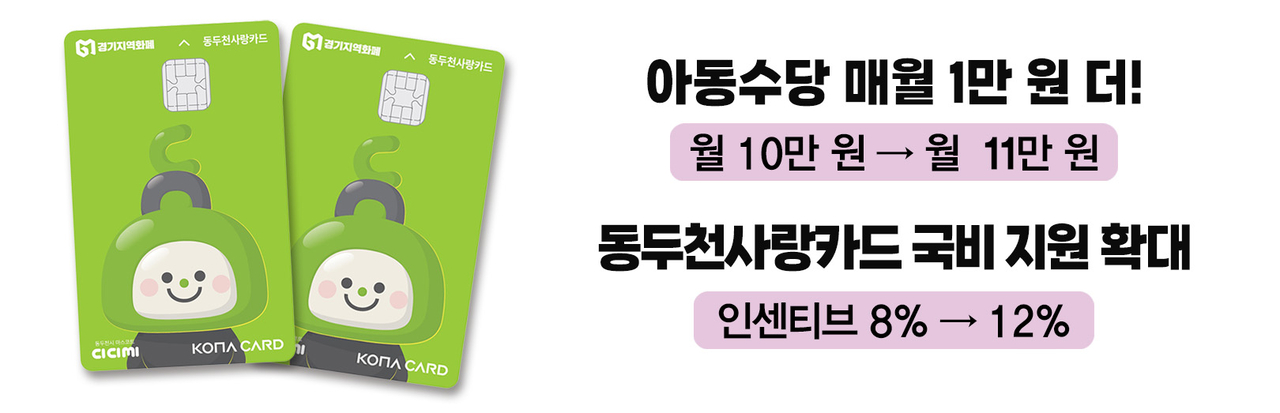
The designation also opens up expanded support in childcare and daily living. Under the current child allowance system, children living in depopulation zones receive an additional 10,000 won per month on top of the standard 100,000 won, bringing the monthly total to 110,000 won. A separate provision also allows for an additional 10,000 won per month when the allowance is paid in the form of local gift vouchers.
The city plans to confirm the applicable timing and payment procedures with related ministries following the new designation, and to review the necessary arrangements — including the local gift voucher payment method — to ensure eligible families receive the support.
Expanded support for local gift voucher issuance is another area the city can leverage to stimulate the local economy. If a measure raising the national subsidy incentive rate for depopulation zones from 8 percent to 12 percent is applied, it could reduce the city's voucher issuance costs and help boost spending within the local economy. The specific timing and support rate will be confirmed against the government's finalized criteria and program-specific conditions before implementation.
Alongside this, the city plans to review support programs in childcare, education and housing, and to link them with existing local initiatives — including a residential settlement support housing project and a residential environment improvement program — to improve living conditions for residents.
Dongducheon plans to center its response on four strategic pillars, 14 action tasks and 51 detailed projects outlined in its 2027–2031 basic plan for addressing depopulation, strengthening the link between government support and local development initiatives.
On industry and employment, the city will pursue a defense innovation cluster tied to a national industrial complex, attract related businesses and nurture young entrepreneurial talent to expand the local jobs base.
On transport, the city will push for an extension of the GTX-C metropolitan rail line to Dongducheon and work to expand the wider metropolitan transport network. On education, it plans to activate a hub-style global talent education center and roll out tailored education programs to improve local learning conditions.
On tourism, the city intends to pair existing attractions — including Soyo Mountain and a natural recreation forest — with longer-stay tourism programs to increase visitor dwell time and local spending, injecting vitality into the local commercial district. Childcare and youth services, as well as senior-friendly welfare programs, will also be strengthened to improve residential satisfaction among existing residents.
Dongducheon said it intends to treat the new depopulation zone designation not merely as a regulatory change, but as an opportunity to expand necessary projects and reinforce the city's growth foundations. By linking government fiscal support and tax and lifestyle benefits to locally tailored policies, the city aims to counter population outflow, attract new residents and pursue sustainable local development that residents can tangibly feel.
Given the city's unique circumstances as a border community that has long endured constraints tied to national security, Dongducheon said it will continue to seek cooperation and support from the government and relevant agencies to secure the assistance the region needs — and to ensure that industrial development, transport improvements and better living conditions advance together.
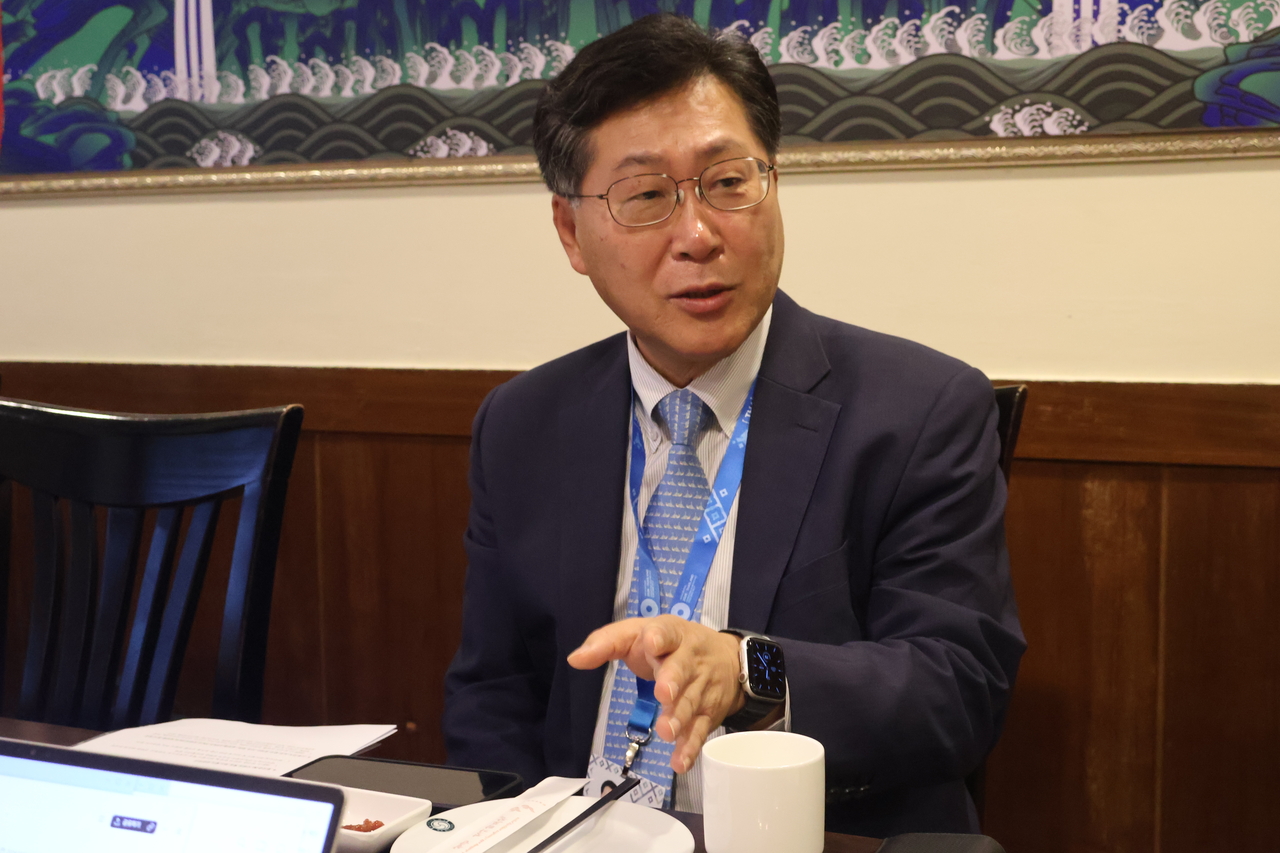
"The depopulation zone designation is an opportunity to use government fiscal support and a range of special provisions to improve residents' lives and broaden the foundation for local development," Dongducheon Mayor Park Hyung-deok said. "We will carefully prepare the necessary projects to translate the expanded support base into improvements in residents' living environment and a more vibrant local economy."
"It is important to build a city where residents can live stably in Dongducheon, where young people can find jobs and put down roots, and where more people come and stay," Park added. "We will drive change starting from the areas most closely tied to daily life — industry, transport, education and housing — and pursue local development that residents can genuinely feel."
pjh@heraldcorp.com