- Korea Basic Science Institute and Gyeongsang National University jointly develop high-efficiency catalyst that converts waste PET bottle components into formate
- Catalyst maintains stable performance for 300 hours, raising prospects for high-value recycling of waste plastics
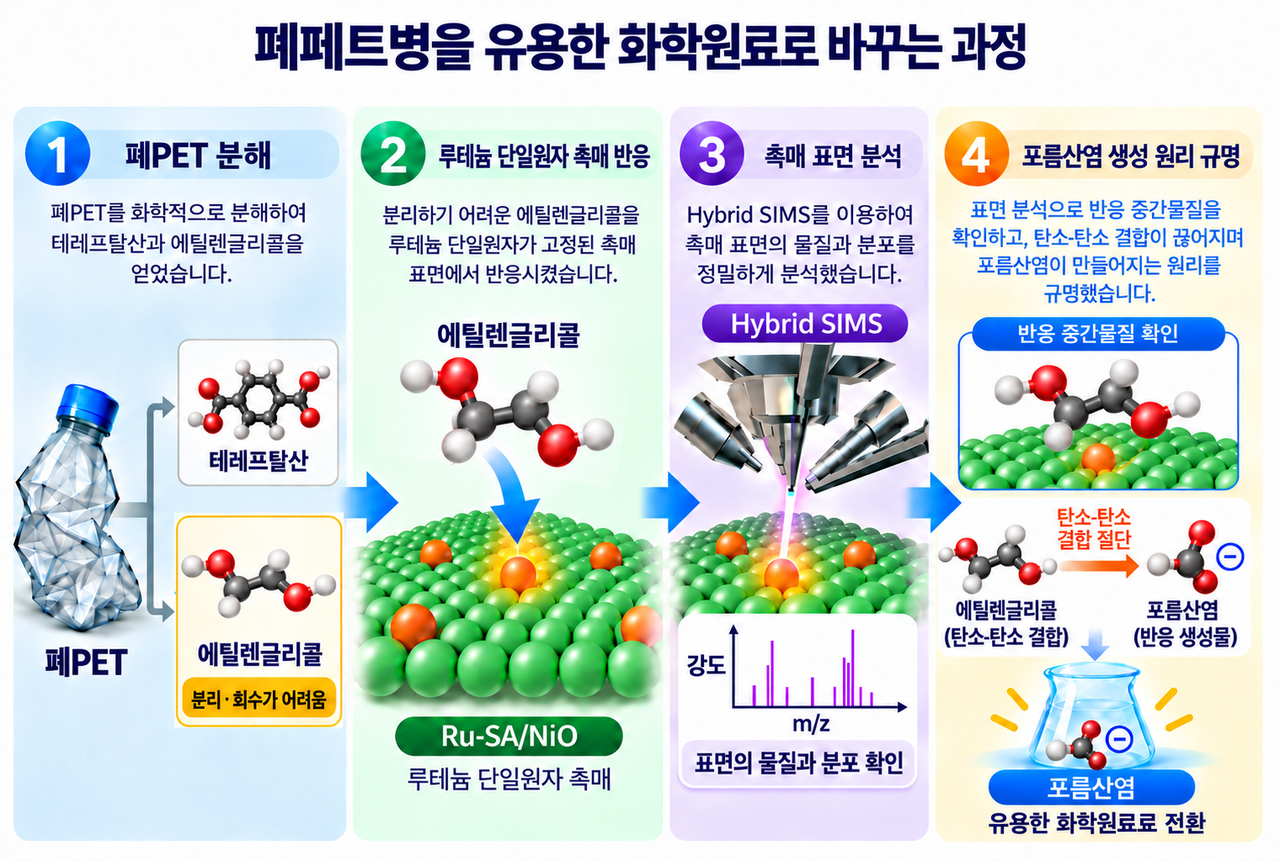
Korean researchers have developed a high-efficiency catalyst capable of converting discarded plastic bottles into useful industrial chemical feedstock. The catalyst achieved a Faradaic efficiency of around 86 percent in converting a component extracted from waste PET bottles into formate, while maintaining stable performance for 300 hours.
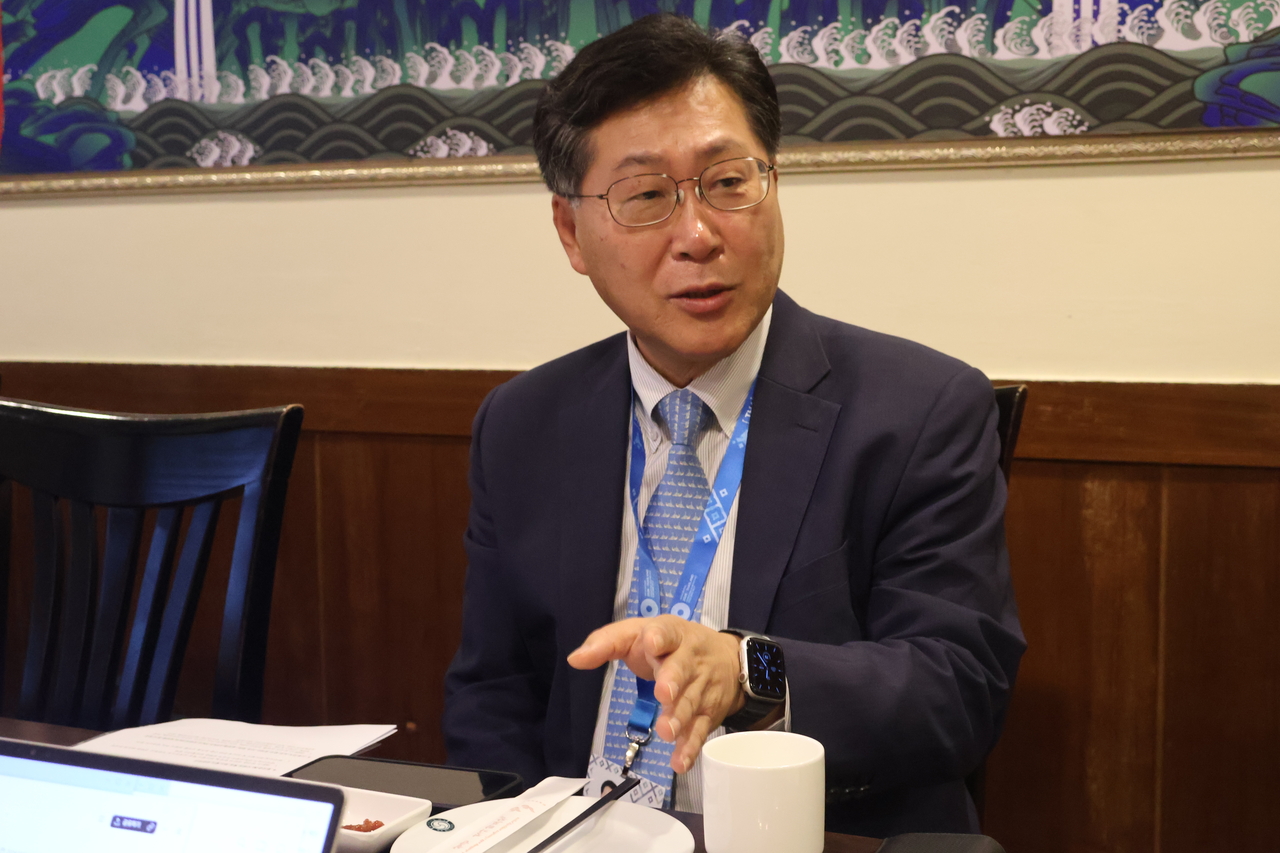
The Korea Basic Science Institute (KBSI) announced Thursday that a research team led by Jin Jong-seong, in collaboration with Professor Choi Myung-ryong of Gyeongsang National University and Professor Chang Chih-chang of National Taiwan University of Science and Technology, had developed the high-efficiency catalyst for converting ethylene glycol — obtained from waste PET bottles — into formate.
When PET bottles are chemically broken down, they yield two main components: terephthalic acid and ethylene glycol. Terephthalic acid can be reused in plastic manufacturing, but ethylene glycol has proven difficult to separate and recover because it mixes readily with water and has a high boiling point.
Rather than attempting to isolate the ethylene glycol, the research team focused on converting it directly into formate, an industrial chemical feedstock. Formate can be used in the production of a wide range of chemical products, increasing the resource value of waste plastics.
The team developed a "single-atom catalyst" by anchoring individual ruthenium (Ru) atoms onto the surface of thin-plate nickel oxide (NiO).
The catalyst was fabricated by irradiating the material with a carbon dioxide laser for about 10 minutes. A key design feature is that the chemical reaction is concentrated at the interface where the ruthenium atoms meet the nickel oxide.
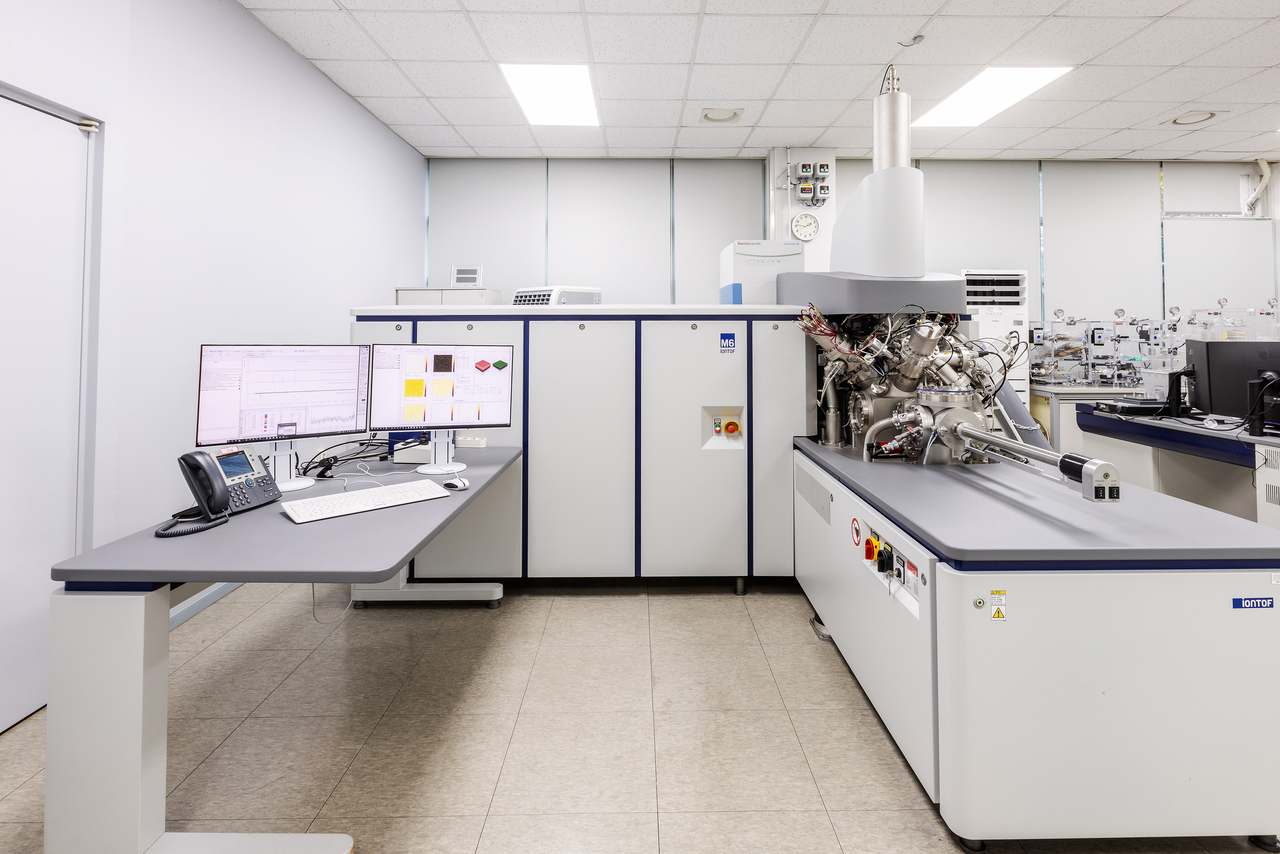
To investigate how the catalyst works, the team used a hybrid secondary ion mass spectrometer — an advanced analytical instrument at the KBSI Yeongnam Regional Center.
The instrument allowed the researchers to precisely map the types and distribution of substances on the catalyst surface and to identify intermediate compounds formed during the chemical reaction.
The analysis revealed that formate is produced as hydrogen atoms are sequentially stripped from ethylene glycol and the carbon-carbon bond is cleaved.
The researchers also confirmed that the interface between the ruthenium atoms and the nickel oxide stabilizes reaction intermediates, promoting formate production.
In conversion experiments, the catalyst recorded a Faradaic efficiency of 86.37 percent — meaning that about 86 percent of the total electrical charge used in the reaction was directed toward producing formate.
Tests using a solution derived from actual decomposed waste PET bottles demonstrated stable catalytic performance across 12 sessions of 25 hours each, totaling 300 hours.
The study is significant not only for advancing the technology of converting waste plastics into useful chemical feedstock, but also for precisely mapping the reaction pathway on the catalyst surface — laying the groundwork for the design of next-generation high-performance catalysts.
Jin, a principal researcher at KBSI, said the team had "secured the basis for explaining the conversion process from ethylene glycol to formate by analyzing reaction intermediates on the catalyst surface," adding that he plans to "use analytical technology to uncover the operating principles of various eco-friendly catalysts and suggest directions for their design."
The findings were published Oct. 5 in the online edition of Angewandte Chemie International Edition, an international journal in the field of chemistry.
nbgkoo@heraldcorp.com