Applications open to 10 non-metropolitan regional governments
Program expands nationwide after initial rollout in Daejeon, Daegu, Gwangju and Ulsan
Submissions due by Nov. 30; final selections announced in January
Initiative aims to build startup ecosystems rooted in regional industries
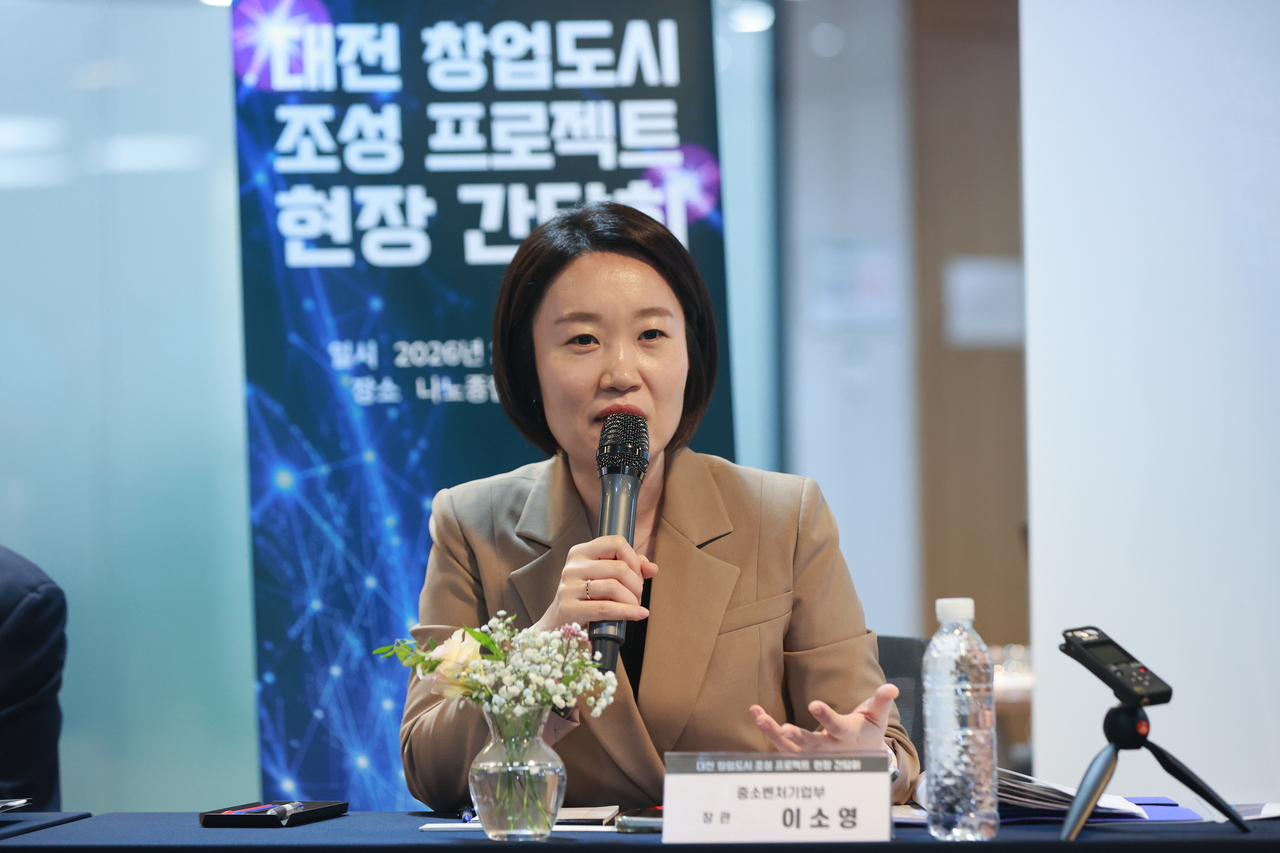
The government plans to expand its network of regional startup hubs nationwide, selecting six additional startup cities by January and committing a total of 60 billion won ($45.3 million) in funding over four years.
The Ministry of SMEs and Startups announced Thursday that it will launch a new round of applications for its Startup City Development Project starting Friday, aimed at building locally led startup ecosystems across the country.
The project connects regional resources — talent, technology and capital — and supports startup companies in growing and putting down roots in their home regions, with a focus on each area's specialized industries.
The ministry selected four cities — Daejeon, Daegu, Gwangju and Ulsan, all home to institutes of science and technology — as pilot startup cities in the first half of this year. Those cities have been running programs since August covering startup commercialization funding, entrepreneurship education, proof-of-concept testing and open innovation.
The new round of applications seeks to identify additional startup hubs beyond the initial four. Local governments will design their own priority sectors and development strategies based on their regional industrial conditions and innovation resources.
The competition is open to 10 non-metropolitan regional governments outside Greater Seoul: North Chungcheong Province, South Chungcheong Province, Sejong, North Gyeongsang Province, Busan, South Gyeongsang Province, South Jeolla Province, Gangwon Province, North Jeolla Province and Jeju. Six of the 10 will be selected.
Each selected city will receive a total of 60 billion won over four years from 2027 to 2030. The annual allocation of 15 billion won breaks down into 11 billion won for startup company grants and 4 billion won for operating costs.
Beyond direct funding, the ministry plans to link selected cities to existing government startup support programs, including TIPS — a private investment-led technology startup support initiative — as well as regional growth funds and angel investment hub development.
Each region will also form a "startup city task force" bringing together local government, universities, research institutions, Creative Economy Innovation Centers, investment firms and regional companies. The goal is to build an ecosystem in which regions can independently identify and nurture promising startups, going beyond support for individual companies.
Local governments wishing to apply must designate at least one representative city and one central zone, form a task force with regional innovation stakeholders, and secure 640 million won in local funding to cover relocation support grants and angel investment hub operating costs. Creative Economy Innovation Centers must assign at least seven dedicated staff members.
Applicants must submit their startup city strategy and business plan by 3 p.m. on Nov. 30. The ministry will conduct document and on-site evaluations before announcing the final selections in January.
Once the additional selections are complete, the number of designated startup cities will grow from four to 10 nationwide.
"Regions have ample innovation potential — talented people and technologies from universities and research institutions, specialized industries and established companies," Minister Lee So-young said. "Through this process, we will connect each region's unique strengths to entrepreneurship and create new growth hubs where startups, talent and investment converge."
boo@heraldcorp.com