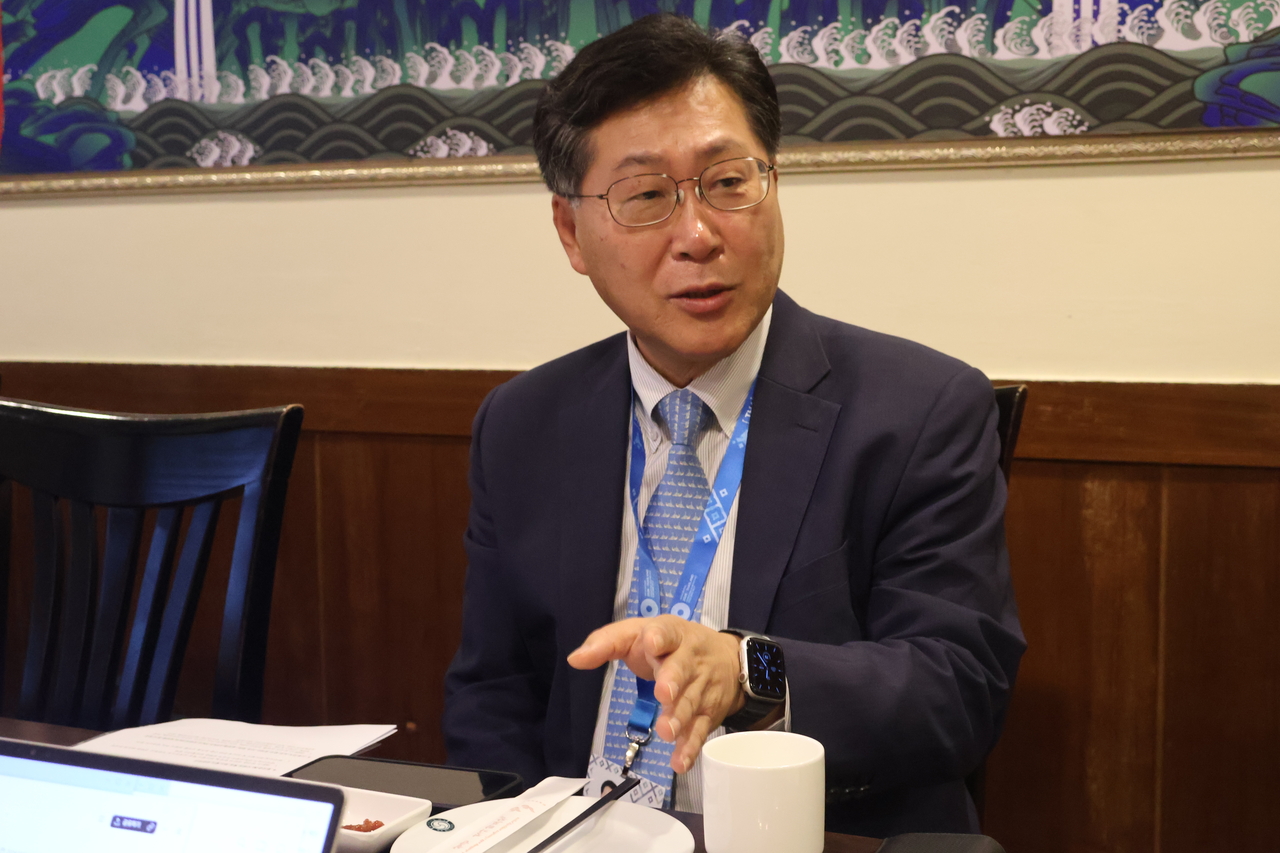
Questions over the effectiveness of the K-League's mandatory technical director system have intensified after records showed that Lee Dong-gook, the technical director of Yongin FC and a former national team player, visited his office only 26 days over roughly 10 months. Critics say the rule has become a revolving door for retired soccer figures to collect high salaries with little accountability.
Kim Jae-won, a Rebuilding Korea Party lawmaker on the National Assembly's Culture, Sports and Tourism Committee, raised the issue Wednesday at the committee's national audit held at the National Assembly in Yeouido, calling for "a management system to verify whether duties are being performed in line with the high compensation."
According to data obtained by Kim, 26 of the 28 technical directors registered in the K-League — 92.9 percent — work on a non-resident basis.
Of the 20 technical directors whose salaries were confirmed, 12 (60 percent) earned 90 million won ($67,900) or more annually, while seven (35 percent) earned at least 110 million won.
Eighteen technical directors are set to see their contracts expire by year's end, and 10 of them signed one-year deals.
Lee's annual salary at Yongin FC stands at 144 million won, yet his badge-entry records show he entered the office just 26 days over a 308-day period.
Yongin FC said Lee was engaged as a non-resident contractor and was therefore not held to the same attendance standards as regular employees. The club acknowledged that he had attended club events and open player trials and was involved in signing MOUs with clubs in Japan and Spain, but admitted it lacked sufficient objective records to verify his work performance.
Lee's representatives said he had come in as many as three times a week over the past year and had handled work matters outside the office through messaging apps. "We are sorry that working on a non-resident basis while receiving a salary of over 100 million won may have appeared insufficient to the public," they said.
Kim said the appointment of technical directors should not become "a cushy re-employment channel for existing soccer insiders," adding that without objective documentation of duties performed, it was difficult to assess whether the compensation was appropriate.
Seven of the 28 registered technical directors — 25 percent — were found to have previously served as executives or committee members of the Korea Football Association or the Korea Professional Football League.
Kim went on to say the current mandatory technical director system "should be reviewed from scratch" by the professional soccer growth committee. He called for a comprehensive personnel cost management framework covering not only players but also coaches and technical directors, including consideration of scrapping the system entirely.
Given that public funds are used to cover operating costs, he argued, mechanisms to verify work performance are needed regardless of employment type.
The mandatory technical director requirement was originally introduced to meet Asian Football Confederation club licensing standards.
yeonjoo7@heraldcorp.com