Korea, Japan business groups hold 33rd Korea-Japan Business Conference
Leaders pledge cooperation on trade, energy and regional depopulation
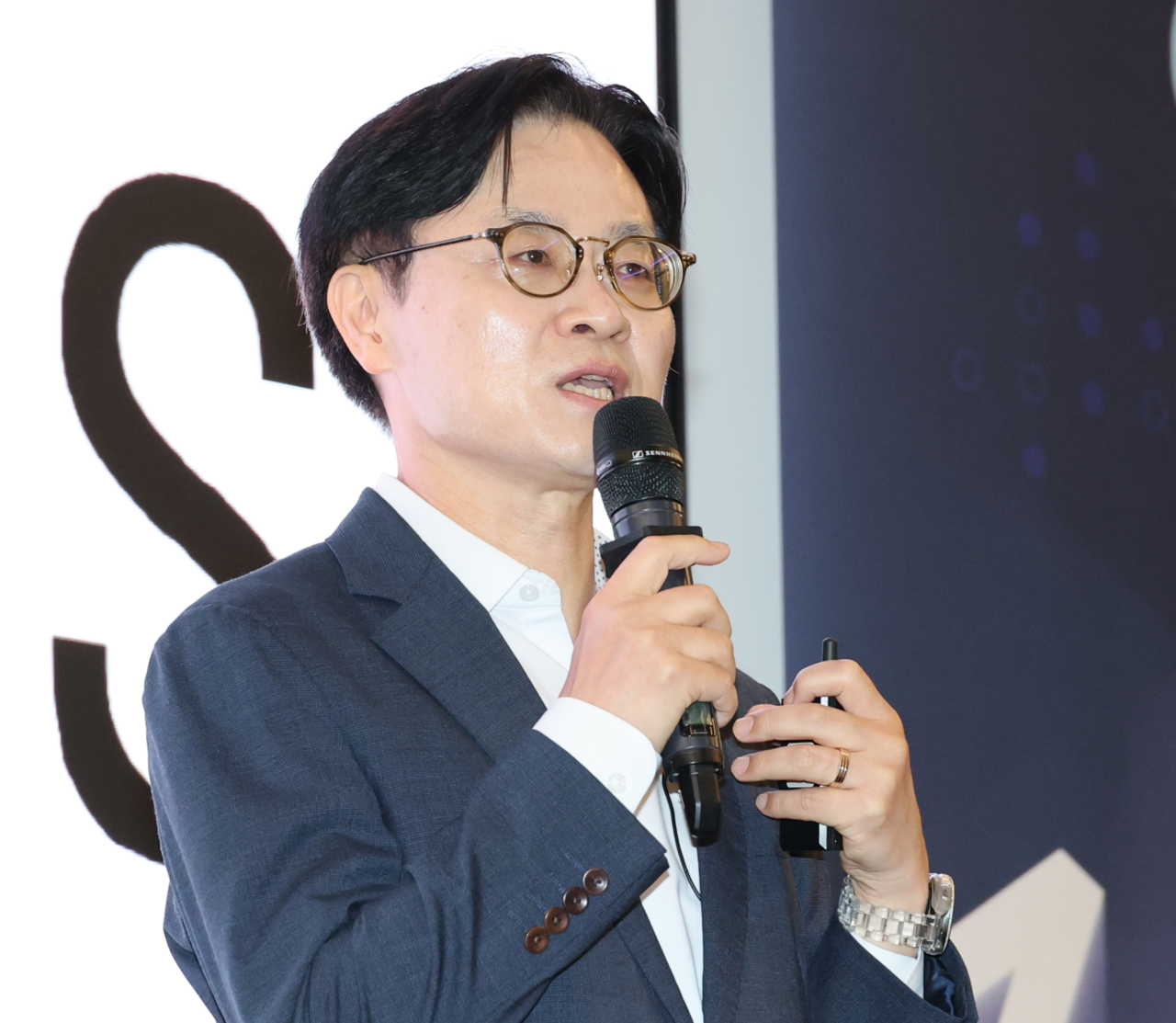
Minister of Trade, Industry and Energy Kim Jung-kwan called on Korean and Japanese business leaders to speak with one voice in response to the shifting global trade order.
Business leaders from both countries agreed to coordinate on trade environment changes and energy supply chain instability, as well as on addressing regional population decline driven by low birth rates and aging.
The Korea Federation of Enterprises and Japan's Keidanren held the 33rd Korea-Japan Business Conference on Friday at the FKI Tower Conference Center in Yeouido, Seoul, adopting a joint statement centered on those commitments.
Held under the theme "A New Horizon for Korea-Japan Economic Cooperation — The Dawn of a New 60 Years," the conference brought together business leaders from both countries to share economic outlooks and discuss cooperation on key issues.
In his keynote address, Kim said "the deepening US-China strategic competition and geopolitical instability are expanding uncertainty across global supply chains," and called on the two countries to overcome shared challenges through strategic solidarity.
Kim said cooperation should focus on strengthening economic security — including resource procurement and supply chain stabilization — while also presenting a unified position on the evolving trade order. He also proposed exploring cooperation in physical AI.
Korea Federation of Enterprises Chairman Ryu Jin said in his opening remarks, "If the past 60 years were largely about crossing the Korea Strait back and forth, I hope the next 60 years will be a new era of cooperation where we look beyond the horizon together." He put forward three priority areas for bilateral cooperation: international norms and economic security cooperation, supply chain and energy security, and responses to shared social challenges.
Specifically, he called for joint responses to US trade policy and digital regulation, and for cooperation on South Korea's accession to the Comprehensive and Progressive Agreement for Trans-Pacific Partnership, as well as on setting technology standards and data rules for advanced industries.
He also called for establishing mutual support frameworks for supply chain emergencies involving key goods, and for pursuing tangible cooperation in LNG and crude oil. He proposed that both sides work together to address structural social crises including low birth rates, aging, regional depopulation and labor shortages.
Keidanren Chairman Tsutsui Yoshinobu said "it is essential for Korea and Japan to deepen and expand multilateral economic agreements such as WTO reform and the Regional Comprehensive Economic Partnership and CPTPP," adding that he strongly looks forward to South Korea applying to join CPTPP.
In the session on international cooperation and multilateral coordination, participants agreed that both countries should work together to restore a WTO-centered trade order, support South Korea's CPTPP accession, and establish international rules on cross-border data flows and AI.
Participants also called for the early resumption of the Korea-US-Japan Business Dialogue to deliver a joint position to the US government and Congress.
The session on energy and resource security and supply chain resilience highlighted the need for cooperation in hydrogen — including identifying business opportunities and developing certification, standards and safety frameworks.
On LNG, participants discussed strengthening emergency volume exchanges between Korea Gas Corporation and Japanese energy company JERA, and expanding such arrangements to third-country transactions. In critical minerals, cooperation on stockpiling and crisis response through the Korea-Japan Supply Chain Partnership was also proposed.
The session on shared social challenges — including regional revitalization — spotlighted regional industry development as a solution to low birth rates, aging and the concentration of population in the greater Seoul area.
Participants discussed a mutual-benefit model that would identify high-potential regional companies and commercial districts, connect them with financial support, and expand market access through the networks of financial institutions and retail companies in both countries. A proposal was also made to invite regional companies to the Korea-Japan Startup Cooperation Forum — set to resume next year — to expand business and investment opportunities with companies and investors from the other country.
The Korea Federation of Enterprises and Keidanren also agreed to strengthen their role as a mutual cooperation platform supporting the economic activities of companies in both countries, with plans to use each organization's networks to broaden exchanges and business opportunities with local business communities.
joze@heraldcorp.com