CJ CheilJedang's Hetbahn brand marks 30 years; Jincheon campus produces 280 million units annually
Busan factory brings total output to 700 million units; same-day milled rice lifts quality
Record sales last year; company targets 1.5 trillion won in annual revenue by 2028
Multigrain and health-focused lines expand at home; sticky rice drives overseas push
"Hetbahn holds an enormous number of patents related to its production processes," said Oh Ye-jin, a senior researcher at CJ Food Research Institute.
Oh made the remark Wednesday at a press briefing marking Hetbahn's 30th anniversary, held at CJ Blossom Campus in Jincheon, North Chungcheong Province. "Most patents held by food companies tend to cover ingredient formulations," she said. "Ours reflect our ability to design not only the method of cooking delicious rice but the entire manufacturing process itself."
CJ CheilJedang's flagship brand Hetbahn has turned 30. Since its launch, the company has continuously refined its sterilization and cooking processes after introducing aseptic rice manufacturing technology in the early years. Hetbahn now holds a total of 267 patents, including overseas filings.
CJ Blossom Campus is the largest processed-food factory in South Korea, built with an investment of around 1 trillion won ($754 million). The facility covers about 490,000 square meters — roughly the size of 70 soccer fields — and began full operation in October 2018. About 280 million units of Hetbahn are produced there each year. Including the Busan factory, total annual Hetbahn output reaches about 700 million units.
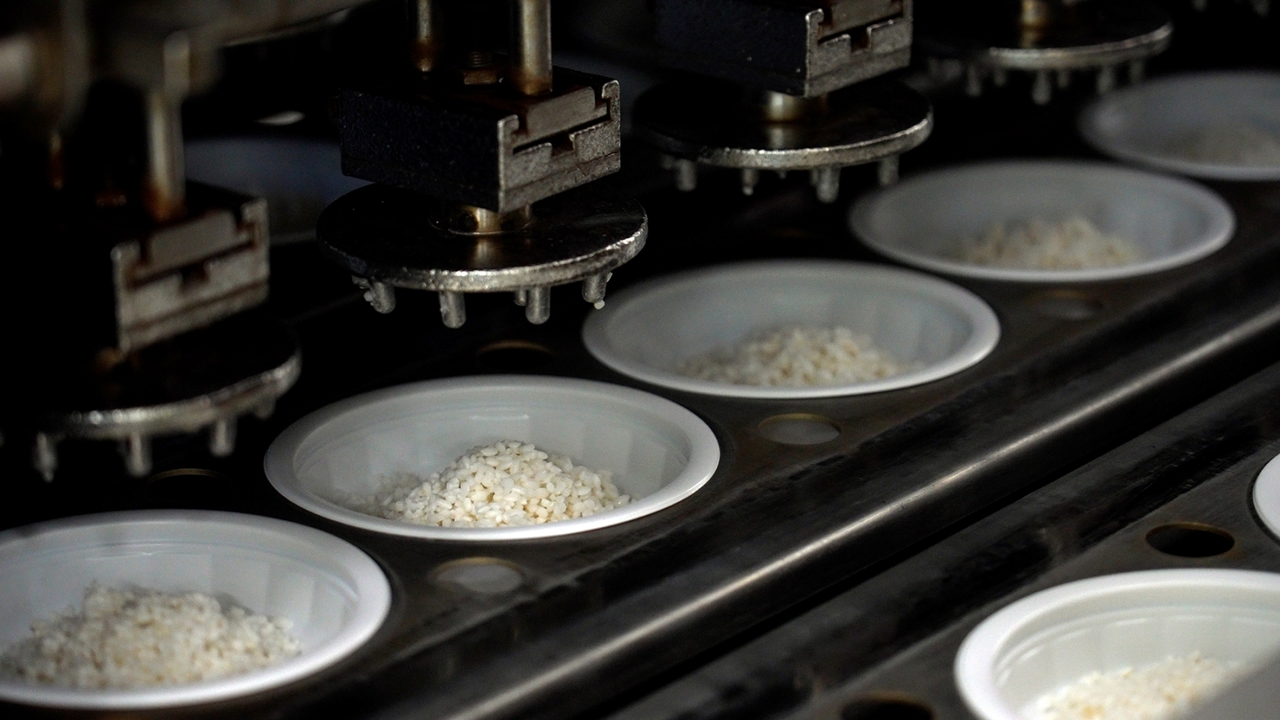
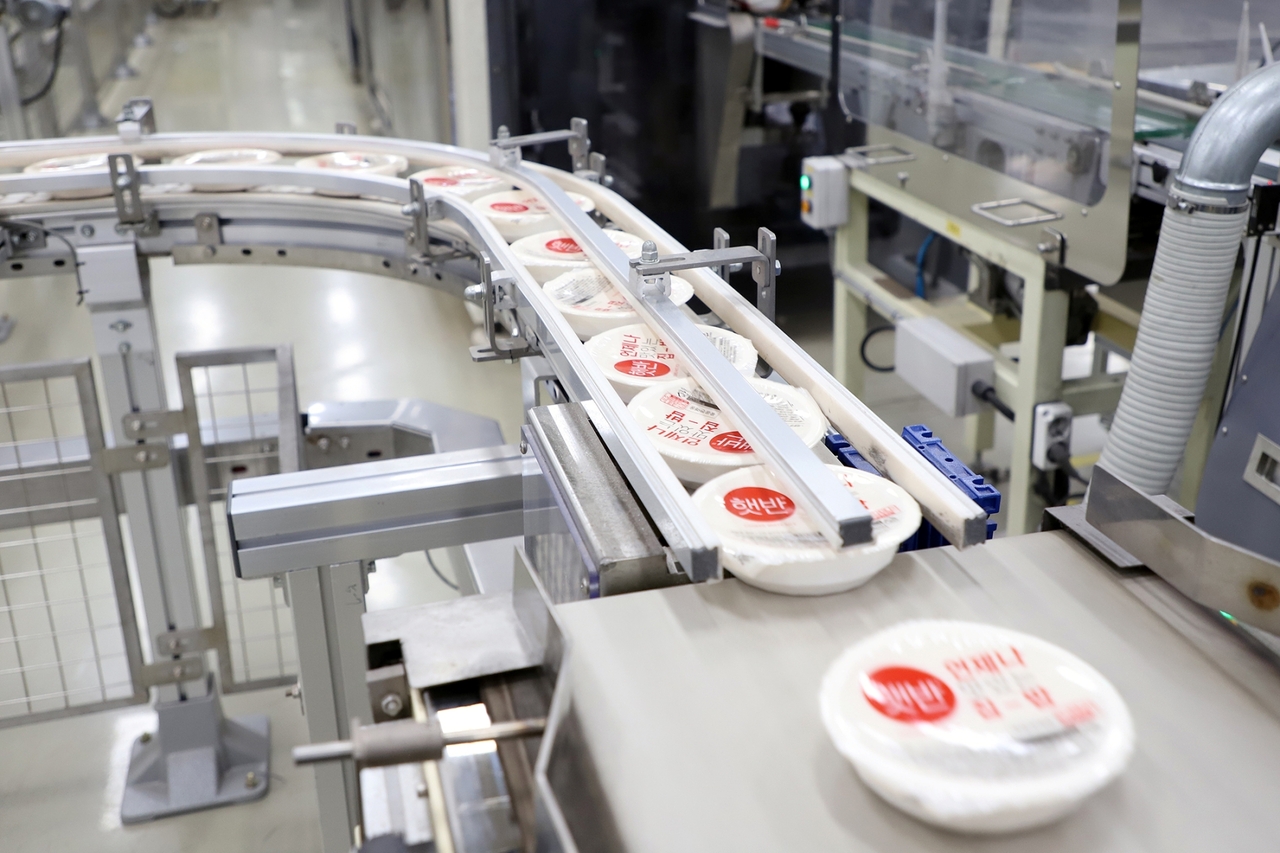
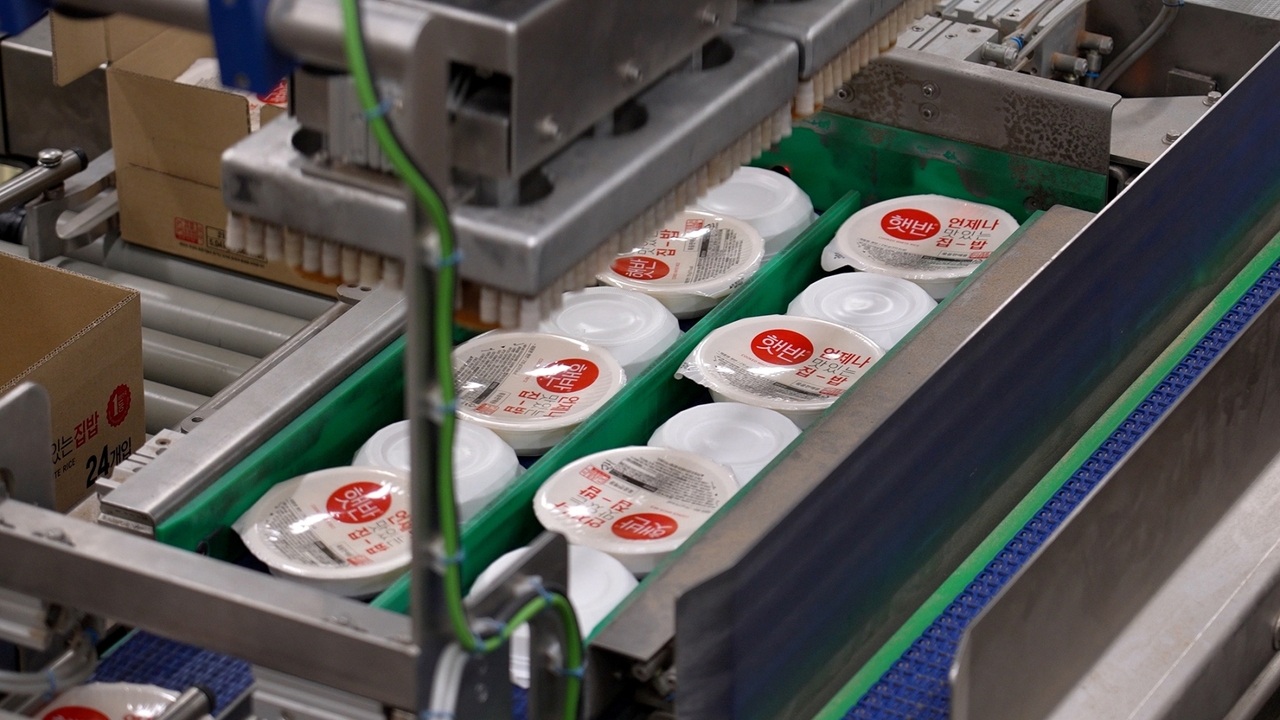
Across six production lines, every step — washing and soaking the rice, cooking it, and sealing the packaging — runs automatically. A massive cooker shaped like a giant rice pot steams about 4,200 Hetbahn units simultaneously, each cooked inside its own container. "Many consumers assume the rice is cooked first and then transferred into the cup," a factory official explained, "but with Hetbahn, the rice and water go into the container and the whole thing is cooked together." Once done, the container is sealed and flipped upside down to steam further. Robotic arms handle the final packaging after the products pass through cooling and inspection.
Everything starts with the rice. CJ CheilJedang manages quality from the harvest stage, sending researchers and production staff to growing regions across the country each autumn to check moisture content and other indicators. The rice that goes into each container is milled on the day it is used.
Hetbahn can be stored at room temperature for nine months without preservatives, thanks to an aseptic packaging technology developed by CJ CheilJedang. High-temperature, high-pressure steam controls microorganisms on the surface of the rice, and once cooked, the product is sealed in a cleanroom that strictly limits the entry of dust and microbes. A specialized packaging material that blocks outside oxygen and microorganisms is also applied.

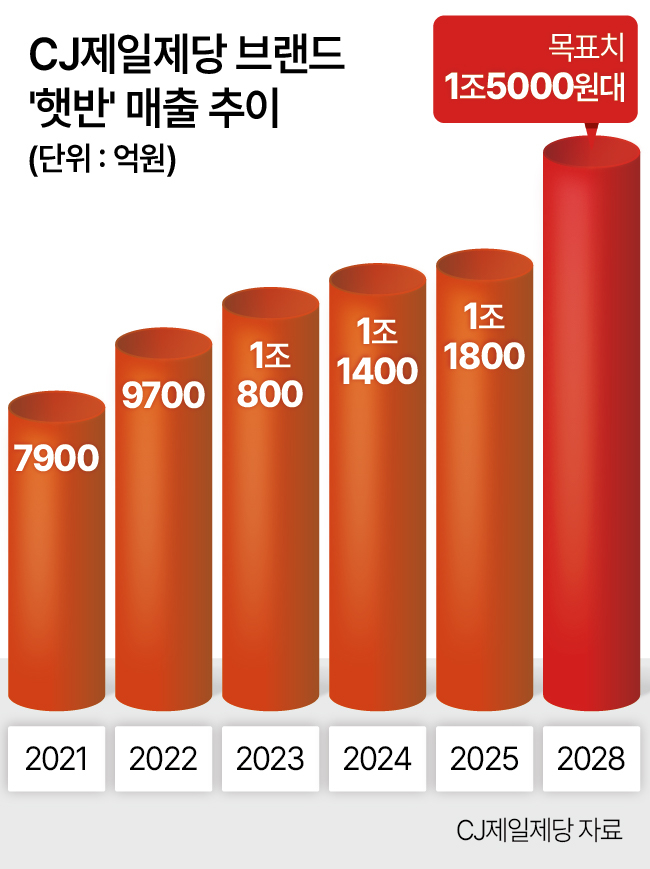
Sales have grown consistently. According to CJ CheilJedang, combined domestic and overseas Hetbahn revenue rose from 790 billion won in 2021 to 970 billion won in 2022, then crossed the 1 trillion won mark for the first time at 1.08 trillion won in 2023. It climbed further to 1.14 trillion won in 2024, and last year reached a record 1.18 trillion won. The company aims to grow annual Hetbahn revenue to the 1.5 trillion won range by 2028.
Hetbahn also leads the domestic instant rice market. According to Nielsen data, the brand's share of the combined online and offline packaged rice market in South Korea rose from 54 percent in 2023 to 57 percent in 2024 and 62 percent last year.

CJ CheilJedang is expanding its multigrain and health-oriented product lines, reflecting a view that the domestic white-rice instant meal market has reached maturity. Kim Suk-jin, head of food marketing and Korea business at CJ CheilJedang, said the multigrain segment of the domestic packaged rice market grew 13 percent year on year, well above the 3 percent growth recorded for white rice. "Multigrain rice still has a household penetration rate of about 15 percent — roughly half that of white rice — so there is room to grow," Kim said.
The share of multigrain products within Hetbahn's domestic lineup was in the 10 percent range in 2019 but approached 30 percent last year. The company has recently broadened its range of products using whole grains and legumes, and is also working on formulations that boost protein and dietary fiber while factoring in the glycemic index. "Many people avoid rice because of concerns about blood sugar spikes and its relatively low proportion of nutrients other than carbohydrates," Oh said. "We are increasing products that supplement protein and dietary fiber and make active use of whole grains."
In December, the company will launch a new product, Hetbahn Protein Multigrain Rice, made with plant-based protein ingredients. Using 100 percent plant-based protein rice, the product delivers a protein content equivalent to more than three egg whites. "Shaped rice is a new ingredient made by processing various plant-based protein sources — such as soybeans, wheat and peas — into a rice-grain form," Oh explained. "We developed the process independently to preserve the shape and taste of the rice grains."
CJ CheilJedang also plans to accelerate its push into overseas markets. The brand is currently present in more than 60 countries, including the United States, Canada, Australia and Mexico. After entering the US packaged rice market in 2017 under the Bibigo brand, the company expanded its footprint with its Korean-style sticky white rice. As a result, overseas sales have grown at an average annual rate of about 30 percent over the past five years.
Rice consumption is rising in the United States as well. In a CJ CheilJedang survey of US consumers, 34.6 percent cited rice as a "healthy option" as their reason for buying it. According to global market research firm Mintel, the share of American consumers who eat rice at least once a week rose from 37 percent in 2023 to 45 percent last year.
Overseas sales accounted for 8 percent of total Hetbahn revenue in 2021 and rose to 15 percent last year. Kim said the company is targeting an overseas share of about 25 percent by 2028. "We are not trying to impose our food culture," she said. "We are thinking about how to make rice that fits local food cultures."
korean@heraldcorp.com