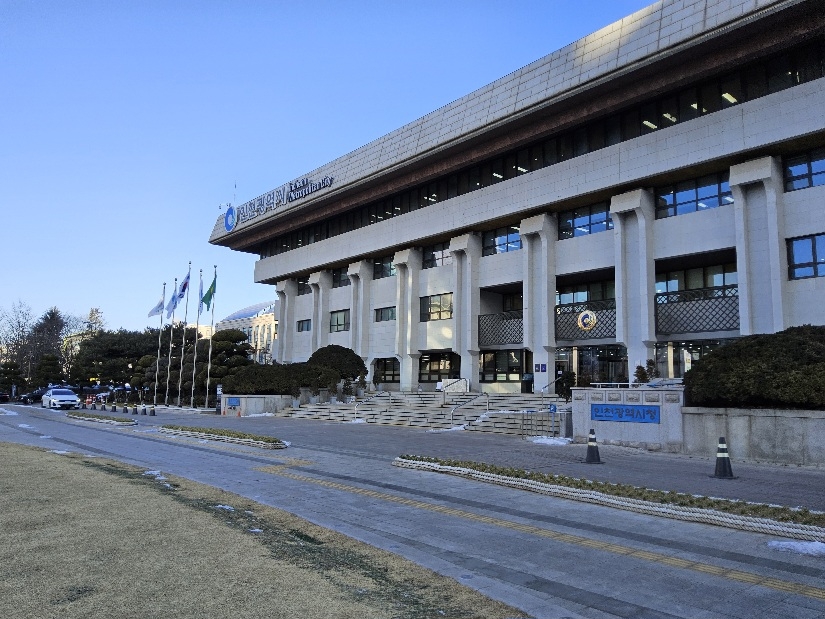
Incheon Metropolitan City has become the first local government in South Korea to deploy a smart marine environment management system that uses satellites and drones to detect, collect and transport ocean debris in a single integrated operation.
The city said Friday that on Tuesday it used heavy-lift drones to transport about 4.4 metric tons of marine debris collected by residents on the islands of Mungapdo and Soyado in Ongjin-gun, loading the waste onto a dedicated transport vessel, the Ongjin Cheongjong, for removal to the mainland.
The achievement is a product of the city's "Smart Marine Village" project.
It marks the country's first demonstrated case of linking every stage of the process — wide-area satellite detection, precision drone surveys, resident collection, drone transport and vessel removal — under a single integrated control system.
Rocky shores and cliffs on Incheon's outlying islands had long been inaccessible to workers and vessels due to difficult terrain.
As a result, debris was routinely left to accumulate, and the risk of accidents during manual removal operations had been a persistent concern.
The city had built a monitoring system since 2022 to analyze debris accumulation sites, but struggled to move beyond monitoring to actual removal.
In this latest demonstration, however, detection data was directly linked to on-site collection work.
The city deployed heavy-lift drones capable of carrying up to 100 kilograms per trip to fly debris from previously inaccessible coastlines directly to collection points and retrieval vessels, establishing a system in which detection leads to actual disposal.
The city has steadily expanded the project's scope since a pilot operation last October at Parae-geum Beach on Deokjeokdo, which recovered 0.3 metric tons.
Following a haul of 4.6 metric tons in September, the city removed an additional 4.4 metric tons by Tuesday.
Park Gwang-geun, director of Incheon's Marine and Aviation Bureau, said the system that safely carries debris found by satellites and drones out to sea via drones and a dedicated vessel had taken firm hold in the field. "We will go further by building drone stations aboard vessels to keep even the most remote island coastlines clean, creating a smart marine city," Park said.
The city plans to conduct additional demonstrations in underserved collection areas of Ongjin-gun through November, with a target of removing a total of 30 metric tons of debris by year's end.
Alongside this, the city intends to finalize an "Incheon-model smart marine management standard" based on the data gathered and roll it out to coastal municipalities across the country.
gilbert@heraldcorp.com