Korea Institute for Industrial Economics and Trade analyzes 1,512 gas stations nationwide; prolonged regulation poses fiscal risks, researchers warn
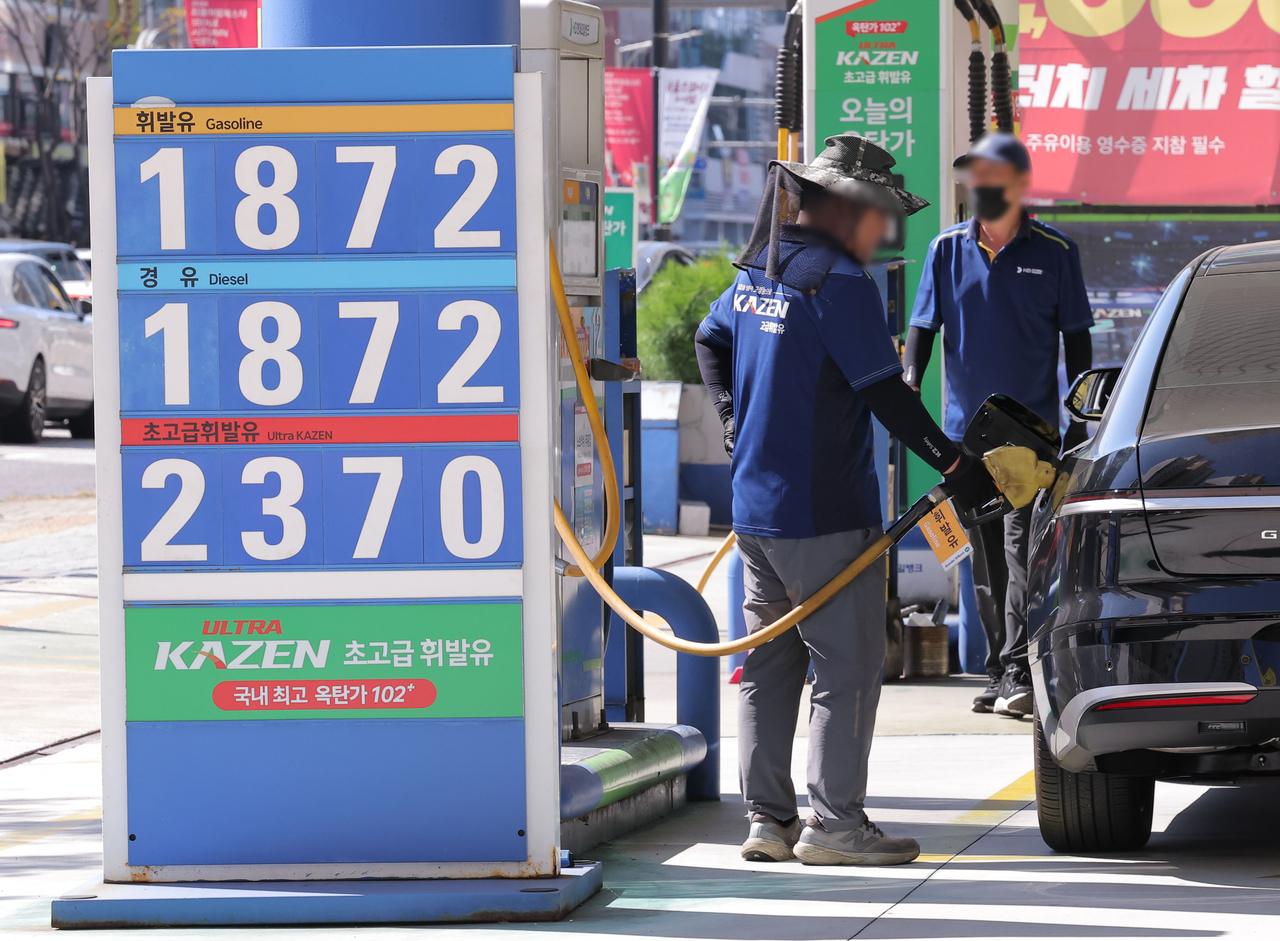
A state-run research institute has found that the government's petroleum price cap — introduced to prevent a sharp rise in fuel costs triggered by the war in the Middle East — suppressed the price of regular gasoline by up to around 239 won per liter compared with premium gasoline, which is exempt from the regulation. The institute also cautioned that the longer the price controls remain in place, the greater the fiscal burden on the government and the weaker the market's supply incentives, and called for an exit strategy.
According to a report titled "Price Stabilization Effects of the Petroleum Price Cap" released by the Korea Institute for Industrial Economics and Trade on Friday, the relative price of regular gasoline compared with premium gasoline fell by 45.75 won per liter during the first policy interval after the cap took effect, by 165.51 won during the second through sixth intervals, and by 239.48 won from the seventh interval onward.
The government introduced the petroleum price cap on March 13, setting a ceiling on the supply prices that refiners charge for petroleum products. The initial ceiling for regular gasoline was set at 1,724 won per liter — 109 won below the average refiner supply price of 1,833 won recorded on March 11, two days before the policy took effect. The ceiling was then raised by 210 won to 1,934 won on March 27, before being cut by 150 won to 1,784 won on June 27. That level was maintained through the 10th policy interval.
To assess the cap's actual impact on retail pump prices, the institute analyzed daily price data from Korea National Oil Corporation's Opinet covering the period from January 2023 through Sept. 16 this year. Of those stations, 1,512 that sold both regular and premium gasoline every day from January through Sept. 16 this year served as the primary sample.
The analysis used a difference-in-differences method, comparing price changes between the two fuel grades sold at the same stations. The approach was based on the observation that premium gasoline is subject to the same common cost factors — such as international oil prices and the exchange rate — but is not directly regulated by the price cap.
As a result, the relative price of regular gasoline fell across all three policy intervals after the cap was introduced: by 45.75 won per liter from March 13 to March 26, by 165.51 won from March 27 to June 26, and by 239.48 won from June 27 to Sept. 16. All three estimates were statistically significant. The institute noted, however, that these figures do not mean the actual retail price of regular gasoline fell by those amounts compared with before the policy took effect.
By region, Sejong recorded the largest price suppression. The city was estimated to have seen a decline of 201.26 won per liter during the second through sixth intervals (March 27 to June 26) and 259.04 won from the seventh interval onward (June 27 to Sept. 16). Jeju, by contrast, posted the smallest declines over the same periods, at 78.87 won and 183.36 won, respectively.
The institute said the findings suggest the price cap either restrained consumer price increases driven by rising international oil prices or accelerated the pass-through of cost reductions to retail pump prices. It cautioned, however, that premium gasoline may also have been indirectly affected by shifts in demand or refiner pricing adjustments, making it difficult to attribute the estimated effects solely to the price cap.
The institute particularly flagged the costs of prolonging the policy. While the price cap can ease the burden on households and businesses during periods of sharp oil price increases, it said, the government's fiscal burden from compensating refiners for losses could accumulate over time.
Artificially capping supply prices could also weaken companies' incentives to supply fuel and consumers' incentives to conserve energy, the institute said. It also raised equity concerns, noting that the price stabilization benefits may disproportionately favor heavier fuel consumers.
Rather than maintaining or ending the price cap uniformly, the institute recommended that policymakers take a comprehensive approach weighing international petroleum product prices, the won-dollar exchange rate, the actual binding effect of the supply price ceiling, and the degree to which cost changes are passed through to retail prices.
The institute also called for targeted support for low-income households and essential transport sectors during any phase-out, and urged the government to coordinate the timing of any rollback so that fuel tax adjustments or cuts to other support measures do not take effect simultaneously.
"The price cap should be used as a buffer against sudden oil price shocks, but its prolonged use requires scrutiny of the cumulative cost of loss compensation, the weakening of supply and energy-saving incentives, and the equity of its benefits," said Lee Hong, an associate research fellow at the institute.
Lee added, "There is a need to design an exit strategy that comprehensively considers international product prices, the exchange rate, the binding force of the ceiling, and the degree of retail price pass-through."
oskymoon@heraldcorp.com