Remarks made at National Assembly audit
Recent rise in long-term rates tied to competition for funding
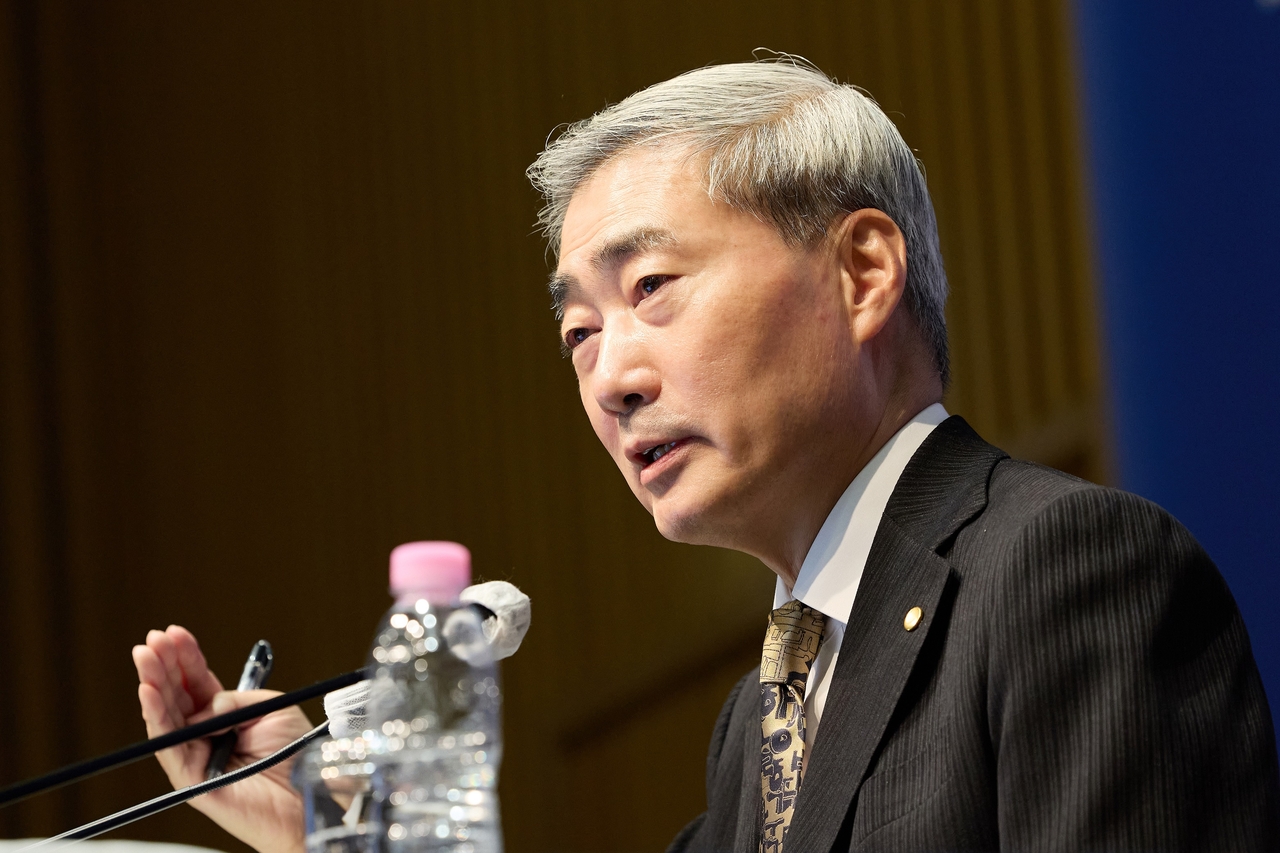
Bank of Korea Governor Shin Hyun-song said Friday that the government's proposed future response fund represents investment that is "desirable and necessary" for raising long-term growth.
Speaking at a comprehensive audit of the National Assembly's Finance and Economy Planning Committee, Shin responded to a question from Democratic Party of Korea lawmaker Kim Young-hwan about the outlook for South Korea's potential growth rate, calling the current moment "an important inflection point." He said the long-term stagnation thesis that had persisted since the 2010s was being shaken, and that the trajectory of global potential growth was improving.
Shin added that there had been broad consensus at the IMF annual meetings that the recent trend of rising investment and higher long-term interest rates was not a fiscal problem but was instead linked to improving returns on investment.
When Kim asked how South Korea could take a leading role in this environment and what Shin thought of the future response fund, the governor said investment aimed at raising long-term growth was "desirable and necessary." He also said competition in financial markets to secure long-term funding had become quite active, and agreed that the recent rise in long-term interest rates stemmed from that competition.
Last month the government approved next year's budget at a cabinet meeting, setting total expenditure at 820.9 trillion won ($620 billion) — a 93 trillion won, or 12.8 percent, increase from this year's original budget of 727.9 trillion won. The plan includes a newly created future response fund worth 162 trillion won, financed in part by additional tax revenue from the semiconductor sector, with 45 trillion won earmarked for future-oriented investment.
Some critics have warned of the risks of expanding the budget on the back of what they see as a temporary semiconductor boom. Because spending, once increased, is difficult to cut, they argue that a future downturn in the semiconductor cycle could significantly worsen the fiscal burden. Former BOK Governor Lee Chang-yong has also raised concerns about expansionary fiscal policy on several recent occasions.
Shin has generally been supportive of the government's expansionary fiscal stance, arguing that as long as the budget is directed toward raising potential growth, it need not be at odds with a restrictive monetary policy.
However, on Thursday he warned at a post-rate-decision press conference about the risks of expansionary fiscal policy. While investment to raise potential growth is necessary, he said, the sustainability of budget execution deserves careful attention.
On Friday, addressing concerns about the government's expansionary fiscal stance, Shin said the budget contained "a significant amount of transfer payments alongside investment items," and noted that transfer payments have a limited impact on GDP as measured by the fiscal multiplier. Transfer payments refer to funds or goods the government disburses unilaterally without receiving anything in return.
Shin had earlier told the same committee's national audit that next year's budget was expected to affect GDP and prices by 0.5 percent and 0.06 percent, respectively.
Even so, Shin said it was necessary to remain attentive to whether fiscal spending posed any problems, stressing that sustainability must always be kept in mind even when the fiscal multiplier is low. He added that if temporary revenue sources gave rise to ongoing expenditure, sustainability would require especially close attention, because continued spending could create items that become impossible to reverse.
He said that when designing spending with sustainability in mind, policymakers should consider how easily outlays could be unwound if the circumstances were temporary — otherwise, concerns about sustainability could arise. Shin added, however, that the fiscal authorities would be keeping a close watch, and that ultimately it would be up to the National Assembly to scrutinize the budget rigorously.
kimstar@heraldcorp.com