Trade minister posts on internal board under his own name and office — 'fake work reduction' drive quietly fades amid bigger priorities
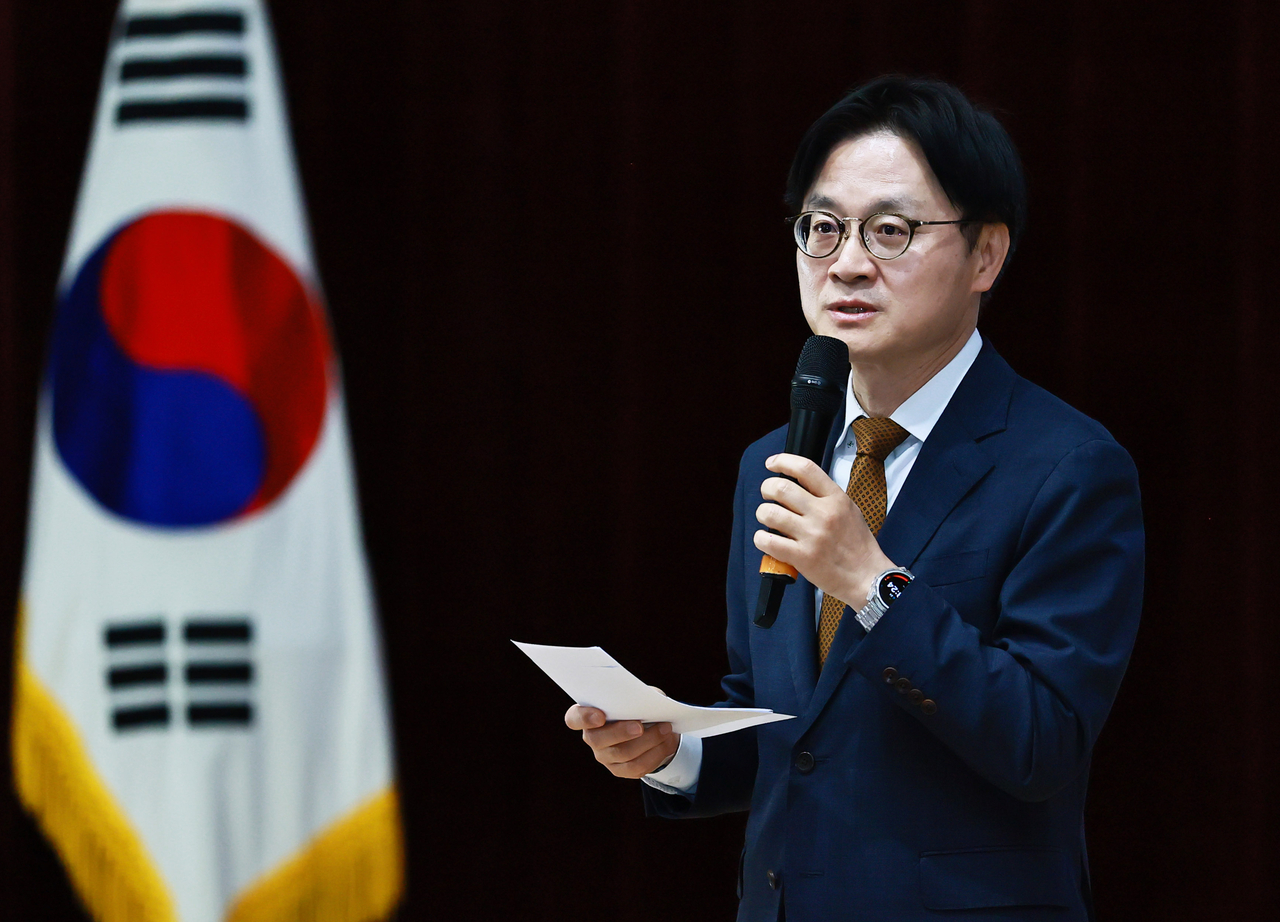
"How is the fake-work reduction going these days? Have low-value tasks, unnecessary work and work-for-work's-sake finally disappeared? Does nothing get done unless the minister personally follows up?"
Kim Jung-kwan, minister of trade, industry and energy, posted those words on the ministry's internal bulletin board at 7:53 a.m. on Sept. 30 under the title "Where did fake-work reduction go?" according to government sources Sunday.
The post was listed as the 68th entry on the ministry's internal fake-work reporting board, with the author identified as Kim Jung-kwan and the department listed as the minister's office.
The entry immediately preceding Kim's was a post by the innovation administration officer on Aug. 3 — more than 50 days earlier — soliciting opinions on the proactive administration mileage system. No post had appeared on the board in the roughly 50 days before Kim wrote his on Sept. 30.
Kim launched the "30 percent fake-work reduction" initiative at a ministry briefing held at the Sejong Convention Center on Dec. 17 last year, pledging to eliminate deference to superiors, fake overtime and performative events. President Lee Jae Myung responded positively, saying, "That's a good idea. Please have other ministries do the same at the same time," and encouraged the initiative to spread across all government agencies.
Five months later, a ministry-wide survey conducted in April found that 53 percent of respondents said organizational culture and work practices had improved since the "fake-work reduction project" was introduced, and the initiative gained momentum.
The positive changes most frequently cited under the project were streamlined public relations work such as providing summarized press clippings (65 percent), a reduction in standby overtime (61 percent), fewer business trips due to greater use of video reporting (58 percent), and improved awareness among division and section chiefs about simplifying events and reports (58 percent).
Yet the prevailing view inside the ministry is that the project has quietly disappeared. No remedies have been proposed for what many consider the most glaring source of fake work — waiting on and reporting to the National Assembly — and the initiative has been overshadowed by major ministry priorities such as three large-scale industrial projects and investment negotiations with the United States.
The vacancy at the top of the fake-work reduction task force is also cited as a key factor: the team leader position has been empty for roughly three months since July. The remaining members have kept the task force nominally alive by handling complaints on an anonymous board, but its functions have in effect stopped, critics say.
More broadly, there are growing concerns within government circles that the hunt for fake work is itself generating more fake work. Running a dedicated reporting center and pushing staff to submit results, critics argue, ultimately amounts to the very thing the initiative was meant to eliminate.
The line between "real" and "fake" work is also seen as frustratingly vague. In a structurally fragmented environment where one department's core task can be dismissed as unnecessary by another, there is no objective standard to ensure the policy delivers real results.
Critics also note that Kim himself has not always practiced what he preaches: his senior-official meetings typically run more than two hours, and staff sometimes wait more than an hour for a face-to-face briefing with him.
"It seems the minister does not realize how many people are grumbling that tracking a 30 percent fake-work reduction is itself fake work," a government official in Sejong said.
oskymoon@heraldcorp.com