SNU's third election attempt collapses with no candidates; leadership void stretches nearly a year
Six of Seoul's top 15 universities now run by emergency committees
Job-market pressure and limited authority erode student government participation
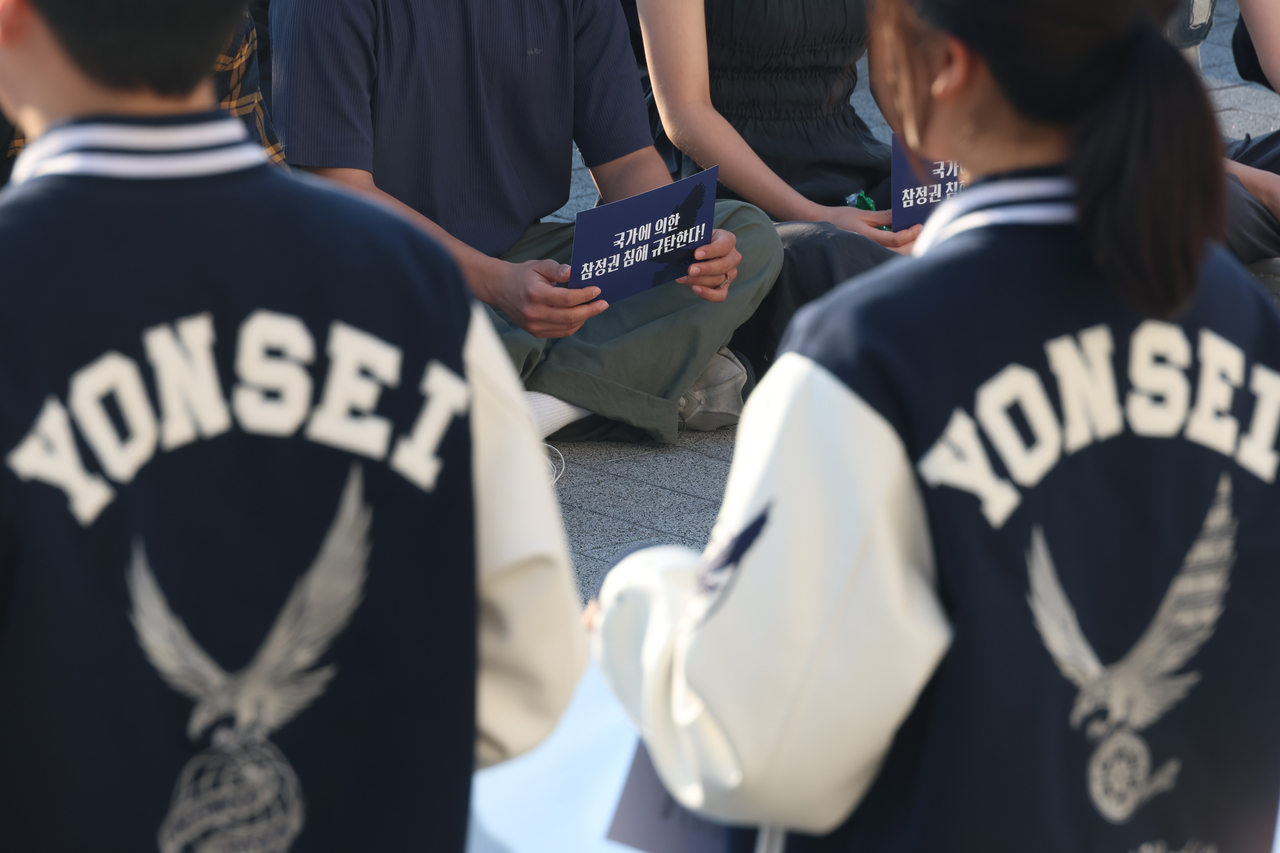
Seoul National University's student council election has collapsed again — because no student was willing to run. The SNU student council presidency has sat vacant for nearly a year.
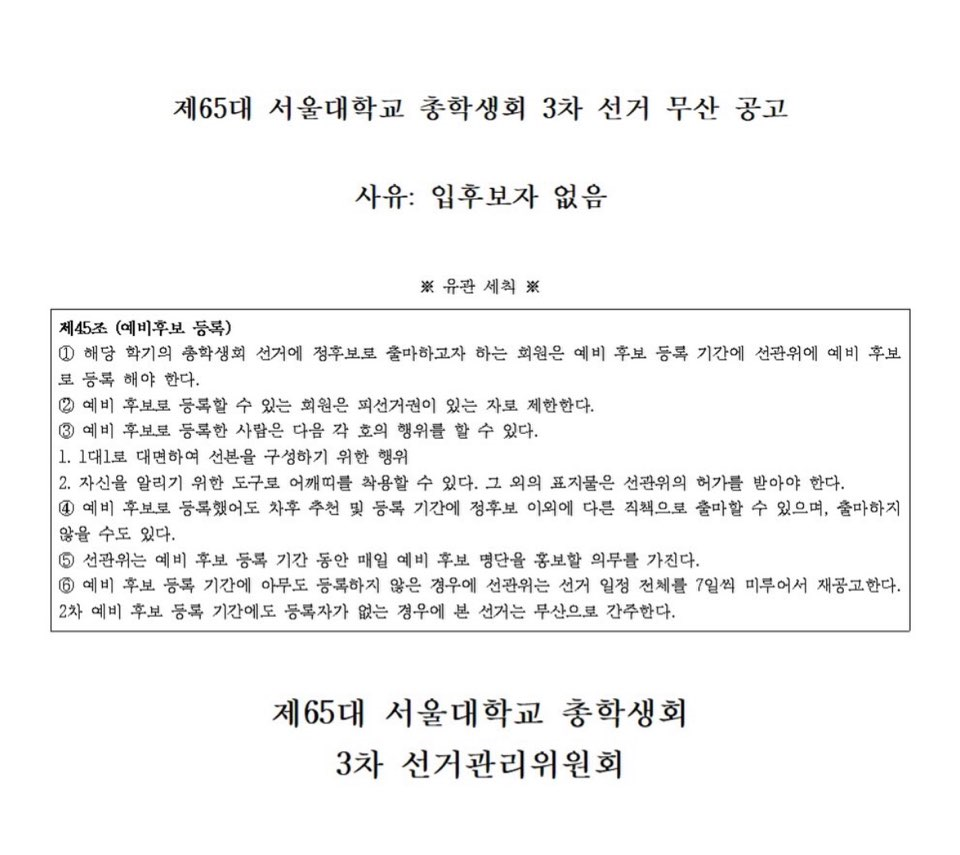
According to SNU's student council election commission, the third election for the 65th student council was called off after no candidates registered by the Sunday deadline. The university has been operating under a joint council of college-level student presidents since last year, unable to elect a central student body president to represent the broader student population.
This is not the first time an SNU student council election has fallen through. A regular election for the 65th council held last October produced no candidates, and a by-election attempted in February this year met the same fate.
SNU had managed to elect its 64th student council in 2024 through a full vote — its first in about six years. But the administration was dogged by controversy throughout its term, including allegations of manipulated comments on an online community forum that prompted an impeachment motion against the council leadership. The motion was ultimately voted down, but criticism that the student council had failed to function as a stable representative body persisted.
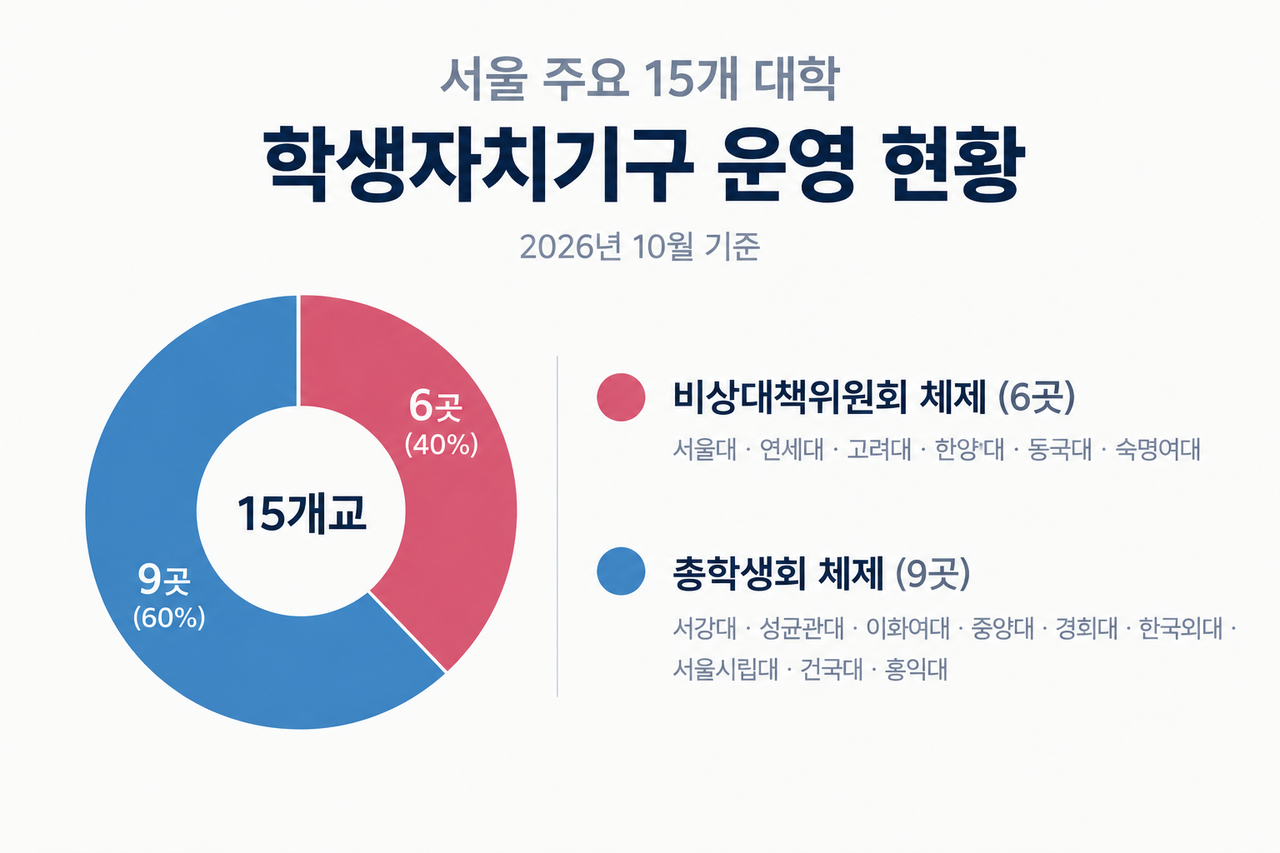
Several other universities in Seoul find themselves in a similar position. A survey of student governance at 15 major Seoul universities found that six — including SNU, Yonsei University, Korea University, Hanyang University, Dongguk University and Sookmyung Women's University — have been unable to form a student council and are instead operating under emergency committees. Elections at those schools either drew no candidates or failed to meet the minimum turnout threshold required for a result to be valid.
Academic and job-search pressures drive students away from campus governance
Analysts and students alike point to academic workloads and job-market competition as the main forces shrinking participation in student government. Kim Ga-young, 23, a Yonsei University student, said juggling student council duties on top of job hunting would be extremely difficult. "There are regular meetings, gathering student opinions, and major events like festival planning — the time commitment is considerable," she said.
The relentless criticism directed at student council presidents and the burden of representing an entire student body also deter candidates. A 22-year-old Hanyang University student, identified only by his surname Lee, said the role invites criticism no matter how well one performs. "You can't satisfy everyone. Whether you do well or poorly, you get criticized," he said. "There's also the pressure that whatever the student council says can be taken as the position of the whole school or all students."
Some analysts say the sense of social obligation that once drew students into campus activism has faded. Park Nam-gi, a professor of education at Gwangju National University of Education, said the strong sense of elite responsibility and social mission that defined earlier generations of university students has weakened. "Back then, students had an elite consciousness and saw themselves as future social leaders," he said. "There was also a sense of calling — a belief that they were a group responsible for realizing justice in our society."
Today, he said, university attendance has become the norm, individual economic success is prized above collective engagement, and student council experience carries little weight — or even works against applicants — in the job market. "If you say you were a student council president, it can actually count against you when applying for an ordinary job," Park said.
The diminished role and standing of student councils compared with the past is also cited as a factor. With online communities and social media offering students multiple channels to voice opinions on campus issues, many no longer feel the need for a formal student council. A 22-year-old Konkuk University student, identified only by his surname Park, said that if the student council cannot make itself feel indispensable, it will struggle to attract interest going forward. "I don't feel much inconvenience without a student council, so if students don't see it as a truly necessary organization, it will be hard to draw attention in the future," he said.
Weakening momentum raises question of restoring university community
Some argue, however, that blaming students alone misses the point. Before urging greater participation, they say, universities need to examine the structural conditions that make student council work unattractive — chief among them the limited influence student bodies actually have over institutional decision-making.
Jang Seung-jin, a professor of political science and diplomacy at Kookmin University, said it is unreasonable to ask why students are not participating when the role and authority of student councils have been reduced to almost nothing. While student governance is important for developing democratic values and civic awareness, he said, the lack of participation cannot simply be laid at the feet of individual students.
"It is very important for young people to have the experience of making their own decisions about their careers and various aspects of their lives," Jang said. "But this is not an environment where you can criticize them for not participating or demand that they do."
A weakening financial base adds another layer of difficulty. Park, the education professor, explained that universities once collected student council fees alongside tuition and passed the funds directly to the student council, but now rely entirely on voluntary payments, making it far harder to secure a budget. When fee payment rates fall, he said, student councils struggle to carry out programs — and the appeal of participating in student governance drops further.
Kim Yun-tae, a sociology professor at Korea University, said the broader weakening of university community life — driven by intensifying job competition and rapid changes in the educational environment — has left students with little room to engage in collective activities. "Young people in their 20s are being pushed into a survival struggle of every-man-for-himself, with their communities destroyed and public forums collapsed, all because of changes in the economic, educational and technological environment," Kim said.
"If no student council is formed and there is no one to represent students' voices, there is a high likelihood of falling into this vicious cycle," he added. "Education also needs to shift away from a focus solely on employment and toward building a sense of community and leadership."
newday@heraldcorp.com