Calls up 25.9% from same period last year; Eunpyeong-gu leads districts; June saw sharpest monthly surge at 71.1%
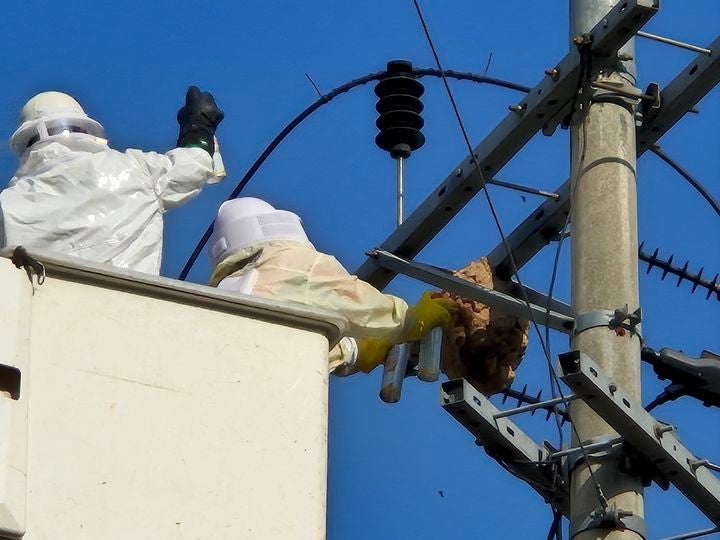
Seoul fire authorities responded to 18,965 beehive removal calls in the first nine months of this year — already surpassing the full-year total for last year with an entire quarter still to go.
According to the Seoul Metropolitan Government's Fire and Disaster Headquarters, the January–September call count of 18,965 represents an increase of 3,902 calls, or 25.9 percent, over the same period last year (15,063 calls). It also exceeds last year's full-year total of 16,189 calls by 2,776.
Over the past three years (2023–2025), beehive removal calls totaled 48,107. Including this year's figures through September, the cumulative total stands at 67,072, with July through September accounting for 57.7 percent of all calls.
By month, August recorded the highest number at 20,284 calls, followed by July (18,448) and September (9,587). The steepest growth rate, however, came in June, when calls reached 2,913 — up 1,201 calls, or 71.1 percent, from the same month last year (1,703).
Residential homes and apartments were the most common locations, accounting for 44,947 calls, or 67 percent of the total. Other facilities followed at 10,582 calls (15.8 percent), with education and research facilities at 3,641 calls (5.4 percent).
Among Seoul's districts, Eunpyeong-gu led with 5,974 calls (8.9 percent), followed by Seodaemun-gu (4,028) and Songpa-gu (3,722). Guro-gu recorded the largest year-on-year increase, with calls rising 62.9 percent from last year. Mapo-gu (52 percent) and Gangseo-gu (37 percent) followed.
The headquarters advised the public to avoid wearing perfume or strongly scented cosmetics during outdoor activities in summer, to take care with sweet fruits and beverages, and to wear long-sleeved clothing.
"When you find a beehive, do not approach or disturb it — move to a safe location," a headquarters official said. "If bees are nearby, avoid sudden large movements that could provoke them, and report any hive that needs to be removed by calling 119."
The official also urged anyone stung by a bee to call 119 immediately if they experience symptoms such as difficulty breathing, dizziness or hives across the body.
ken@heraldcorp.com