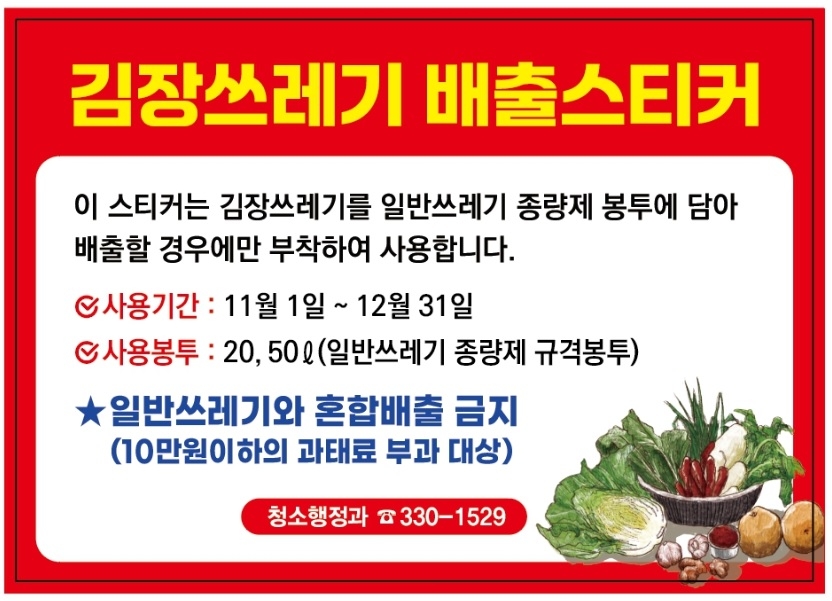
Seodaemun-gu will run a special kimchi waste collection period in November and December, allowing large volumes of raw vegetable scraps to be disposed of in 20-liter or 50-liter standard waste bags with a dedicated sticker attached.
Residents of Seodaemun-gu can now dispose of raw vegetable scraps — such as cabbage and radish — generated during kimchi-making season using standard pay-per-bag waste bags. The district is expanding its disposal options for two months during kimchi-making season to ease the burden on residents.
Seodaemun-gu will run a special kimchi waste collection period from Nov. 1 through Dec. 31.
The measure applies to large volumes of raw vegetable scraps produced before seasoning or salting. Residents may use the existing food waste disposal method, or place the scraps in 20-liter or 50-liter standard waste bags, attach a designated kimchi waste sticker, and set them out for collection.
The stickers are available free of charge at each neighborhood community center. Residents may also download a template from the Seodaemun-gu district office website's notice board, print it out, and tape it to the bag.
However, seasoned or salted vegetables and wet kimchi waste must still be disposed of through the existing food waste method — either in food waste pay-per-bag bags of up to 20 liters, or via existing RFID volume-based meters in apartment complexes.
Not all vegetable scraps qualify as food waste. Onion, garlic and ginger peels; the roots of green onions, chives and water parsley; the stems of chili peppers, bell peppers and paprika; and chili seeds, chili stalks and garlic stalks must all be disposed of as general waste.
Kimchi waste should be drained of moisture and cleared of foreign matter as much as possible, then chopped into smaller pieces to reduce volume before disposal. Only kimchi waste may be placed in bags bearing the kimchi waste sticker — mixing in general household waste, other food waste or recyclables may result in a fine.
Seodaemun-gu District Mayor Park Un-gi said the district had expanded residents' options "so that vegetable waste generated all at once during kimchi-making season can be disposed of conveniently," adding that it would "keep disposal methods simple while making sure guidance is thorough enough for proper collection and processing."
seouldream01@heraldcorp.com