'Sweeping up talent with massive fees'
As Netflix marks its 10th year in South Korea, the streaming giant has launched a major round of layoffs. The company had been snapping up Korean content by paying actors 300 million to 500 million won ($226,000 to $377,000) or more per episode, and has now hit a wall of stagnating growth.
Netflix helped drive K-drama onto the global stage, but it has also drawn criticism as the primary force behind surging drama series production costs. Just a few years ago, the average production budget per episode ran 300 million to 400 million won. Since Netflix entered the Korean market, budgets of 2 billion won per episode have become commonplace — and actor fees account for a large share of those costs.
"I thought the lead actor's per-episode fee was 100 million to 200 million won — turns out it was 500 million," an industry insider said.
The escalating actor fees drove up overall production costs, and domestic broadcasters and homegrown streaming platforms, unable to match Netflix's financial firepower, have seen the number of drama series they produce cut roughly in half.
Netflix recently announced it would cut about 1,000 jobs, or roughly 6 percent of its global workforce, and has since parted ways with its chief content officer as well as the film executive who oversaw the success of the animated series KPop Demon Hunters. The departures of senior executives come as Netflix grapples with slowing growth and a deepening plateau in new subscriber additions.
"The company is not growing as fast as we want it to," Netflix co-CEO Ted Sarandos said.

Some in the industry argue that the hefty fees are justified, given that Korean content has been a key driver of Netflix's earnings.
Even as Netflix's overall growth has stalled, viewership of Korean content has continued to expand. According to market research firm Ampere Analysis, Korean content racked up 8.6 billion viewing hours in the first half of this year, outpacing the global average growth rate across all content.
Netflix has launched a website titled "Netflix and Korea: 10 Years" to mark the milestone. From 2016 through last year, the company collaborated with more than 80 domestic production companies to produce or co-produce more than 200 titles, involving roughly 25,000 cast and crew members and approximately 70,000 extras and day laborers.
The global audience for K-content has grown as well. According to Netflix, about 80 percent of its members worldwide have watched Korean content at least once.
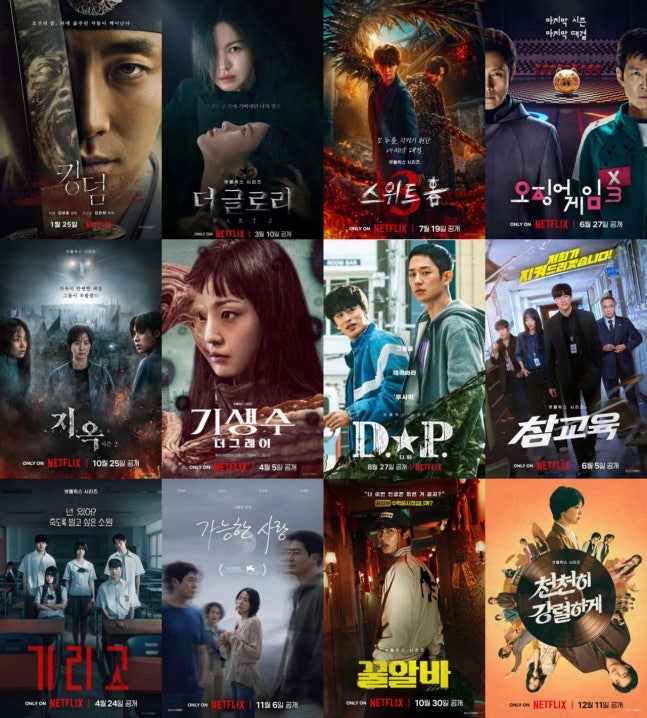
Meanwhile, even as Netflix trims its workforce amid slowing growth, it announced that "Slowly and Intensely" — a production that cost more than 70 billion won — will premiere Dec. 11.
"Slowly and Intensely" is set against the backdrop of the South Korean entertainment industry of the 1960s through 1980s, an era marked by brutality and violence. It follows the coming-of-age story of people who threw themselves into chasing success despite having nothing to their name.
Song Hye-kyo plays Minja, a woman who rises from a poverty-stricken childhood to break into the music industry, while Gong Yoo plays Dong-gu, her childhood friend who stays by her side and runs alongside her toward her dreams.
park@heraldcorp.com