KORIBOR-based loans stood at 240.7 trillion won at end-March
Exposures with maturities of one year or less total 193.4 trillion won
KOFR share of interest rate swap transactions exceeds first-year target
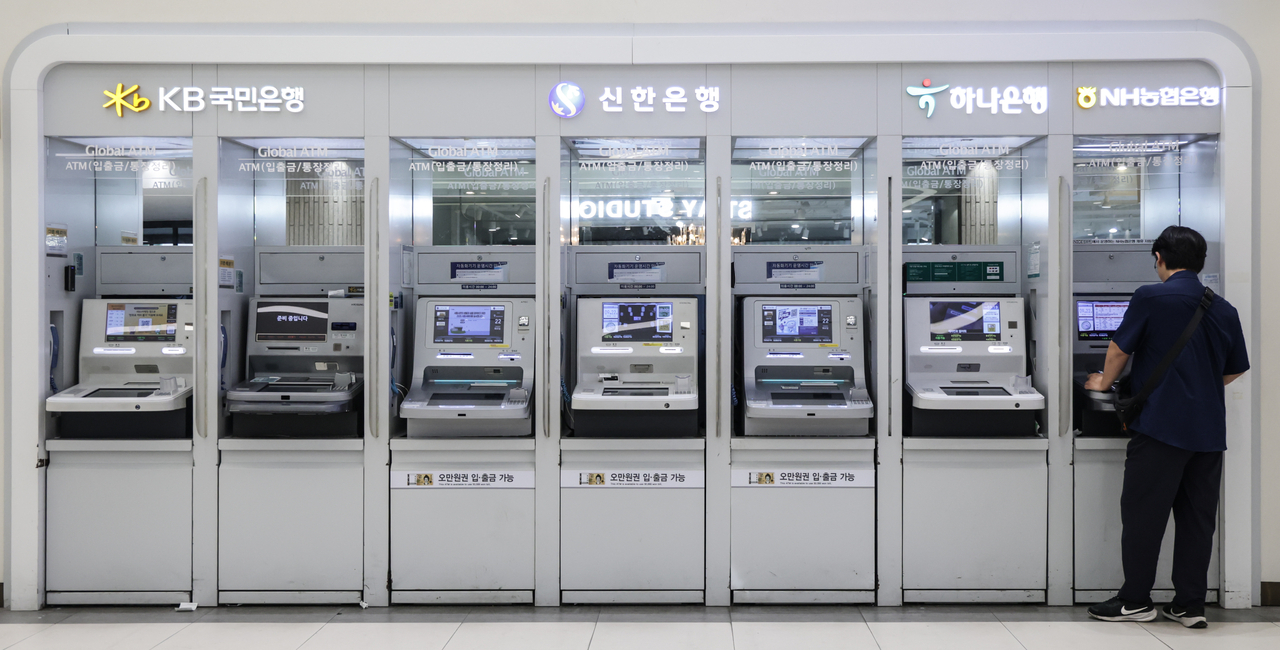
South Korea will ban new loans benchmarked to KORIBOR starting next year, while Korea Development Bank and Industrial Bank of Korea are set to launch loan products tied to the risk-free reference rate KOFR.
Financial authorities plan to halt new KORIBOR-based lending in principle from April next year, according to financial industry sources Sunday.
KORIBOR, or the Korea Interbank Offered Rate, is an asking price-based rate applied to interbank borrowing. It is primarily used for unsecured and collateralized corporate loans.
Because KORIBOR's calculation methodology closely resembles that of LIBOR — which has already been discontinued internationally — authorities decided to stop new issuance starting next year as part of a gradual phase-down.
To that end, the Financial Supervisory Service formed a task force in June with the Korea Federation of Banks and financial institutions that handle KORIBOR-based products to prepare for the halt. The task force is developing guidelines covering the cessation of new issuance and maturity extensions, as well as the conversion to alternative rates upon maturity rollover.
A comprehensive industry-wide survey by financial authorities found that KORIBOR was being used across 240.7 trillion won ($182 billion) in exposures — primarily loans — as of end-March. Exposures with maturities of one year or less accounted for 80.4 percent of the total, or 193.4 trillion won.
As the use of KORIBOR and CD rates gradually declines, COFIX is expected to play an increasingly prominent role in the lending market. The Korea Federation of Banks, which calculates COFIX, will accordingly strengthen its procedures for reviewing the rate's calculation framework.
KOFR, South Korea's homegrown risk-free reference rate, is gaining traction in the market.
The Financial Supervisory Service revised its administrative guidance in June to expand KOFR's share of the interest rate swap market, raising the target for KOFR-based transactions from 10 percent in the first year (July 2025–June 2026) to 25 percent in the second year (July 2026–June 2027), with a final goal of exceeding 70 percent by June 2030.
A review of first-year compliance showed that KOFR-based transactions accounted for 12.1 percent of all interest rate swap deals in the financial sector, surpassing the 10 percent target.
Issuance of KOFR-based domestic floating-rate notes is also rising. Banks issued 20.5 trillion won in KOFR-linked FRNs from January through September this year, already exceeding last year's full-year total of 5.8 trillion won.
Korea Development Bank and Industrial Bank of Korea are set to launch KOFR-based corporate loan products Monday, each offering 500 billion won for a combined total of 1 trillion won. Small and midsize enterprises based outside major cities will receive preferential rates as part of efforts to strengthen inclusive finance and regional lending.
"Policy authorities plan to continue pushing forward financial benchmark reform in a consistent and timely manner, working together with relevant institutions and the financial sector to enhance the reliability of financial markets," a Financial Services Commission official said.
hyuk@heraldcorp.com