Amended Animal Protection Act to take effect Oct. 28, 2027; tougher measures to prevent repeat abuse
Pet breeding license renewals required every 5 years; crackdown on 'new-type pet shops' disguised as shelters
Fines for inadequate care, including leashes under 2 meters and exposure to extreme temperatures
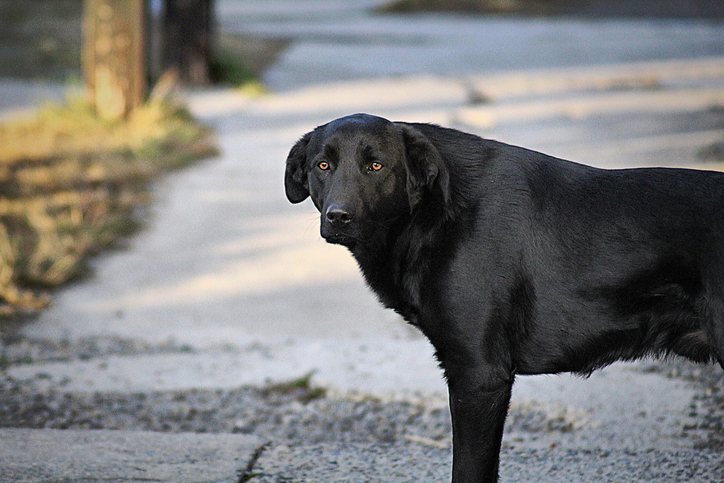
Starting in October 2027, people convicted of serious animal abuse — including killing or injuring animals — will be barred from keeping animals for up to five years. Failing to retrieve a pet left at a pet hotel or veterinary clinic will also constitute animal abandonment under the law. Pet breeders will be required to renew their licenses every five years, and regulations will be tightened against so-called new-type pet shops that operate under the guise of animal shelters.
The Ministry of Agriculture, Food and Rural Affairs announced Monday that an amendment to the Animal Protection Act will be promulgated Tuesday. The revised law takes effect Oct. 28, 2027. A special provision allowing private animal shelters to temporarily use farmland for other purposes will take effect immediately upon promulgation.
The amendment focuses on preventing repeat animal abuse and broadening protections for abandoned or neglected animals. The ministry drafted the revision after gathering input from animal welfare groups, academics and experts beginning late last year.
The most significant change is the introduction of a court-ordered ban on keeping animals. Courts will be empowered to prohibit people convicted of serious animal abuse — such as killing or injuring animals — from owning or raising animals for up to five years.
Protections for abused animals will also be strengthened. When an animal owner is indicted on animal abuse charges, the animal's protective custody period can be extended until the ruling is finalized. Convicted animal abusers will also be barred from receiving or adopting animals from local governments for a set period.
Those sentenced to a fine or heavier punishment for animal abuse will be prohibited from receiving or adopting animals for five years from the date their sentence is completed or remitted. Those given a suspended sentence will face the restriction for the duration of the suspension period.
New penalties will also be introduced for inadequate care and management of companion animals. Owners who use a leash shorter than 2 meters or fail to provide a resting space that protects animals from extreme heat or cold will face fines of up to 1 million won ($755).
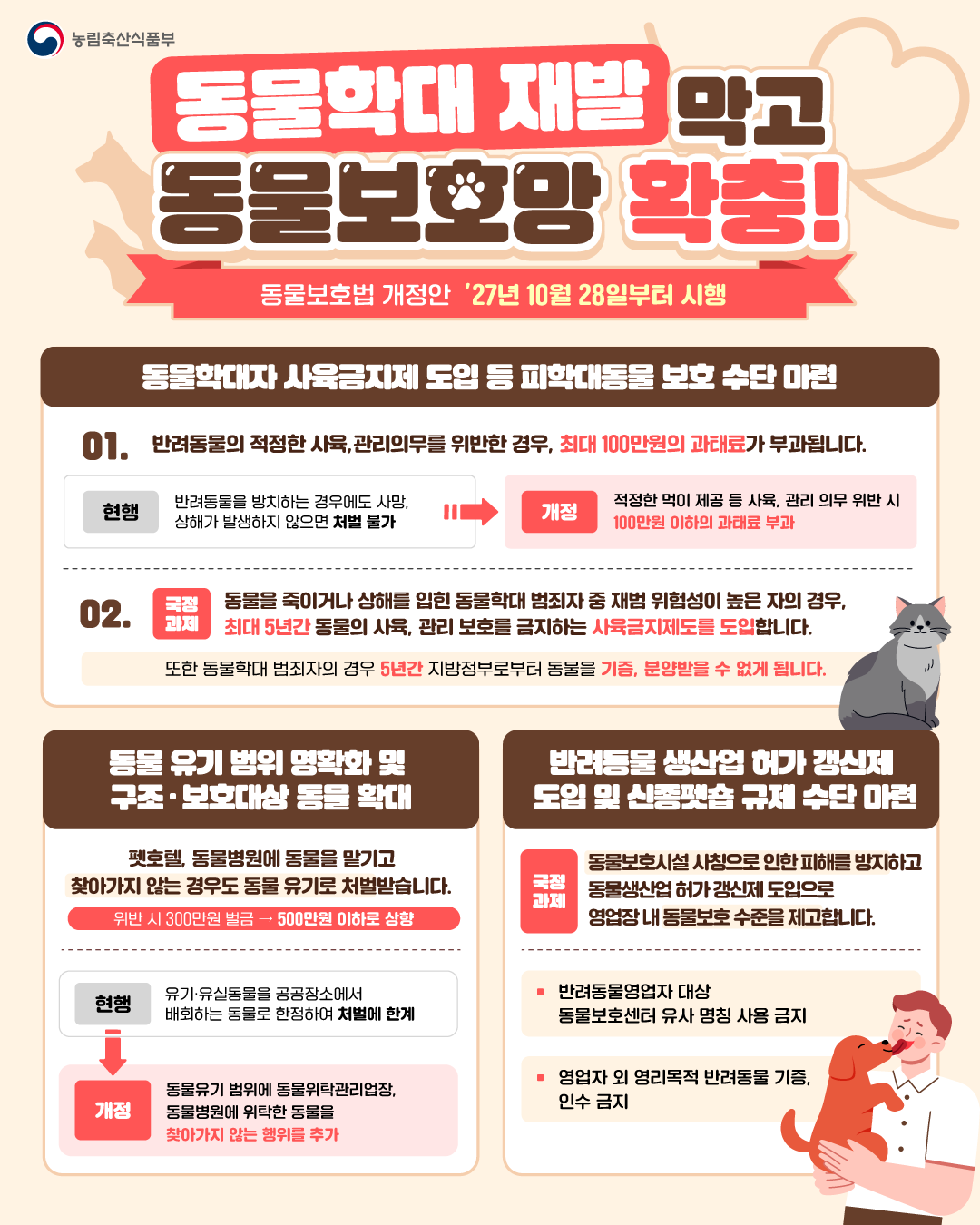
Under the current law, animal abuse could only be recognized after an animal had already been killed or injured in such conditions. The amendment allows authorities to impose penalties for violations of care and management obligations before any harm occurs.
The definition of animal abandonment will also be clarified. Failing to retrieve a pet from a boarding facility such as a pet hotel, or from a veterinary clinic, will now be explicitly classified as abandonment.
The range of animals that local governments can rescue and protect will be expanded. In addition to stray, lost and abused animals, authorities will now be able to take in animals left unattended due to natural disasters or the death or disappearance of their owners.
A five-year license renewal system will be introduced for the pet breeding industry. Previously, a single license allowed operators to continue indefinitely; going forward, facilities and staffing standards will be reviewed every five years to determine whether a license should be extended.
Regulations will be tightened against new-type pet shops that sell animals under the pretense of operating shelters or that take in surrendered animals and resell them. Pet business operators will be restricted from using or advertising names similar to those of animal protection centers. Non-licensed individuals will be prohibited from donating or acquiring companion animals for commercial purposes.
The dangerous dog ownership licensing system will also be partially revised. Dogs that cannot undergo neutering or temperament assessments due to old age or illness may be exempted from those requirements. However, such dogs will be subject to obligations including a breeding ban and a restriction on leaving their designated keeping area. Violations will carry fines of up to 5 million won.
When a dog-bite incident occurs, the head of the relevant local government will be able to record the details in the animal's registration file for management purposes.
A legal basis for supporting service animals — including military dogs, search-and-rescue dogs and detection dogs — will also be established. The central and local governments will be able to support the owners of service animals and establish and operate support centers for retired service animals.
Additionally, private animal shelters that were in operation before April 27 will be eligible for a special provision allowing temporary use of farmland for other purposes during the registration process.
Lee Yong-jik, director general for animal welfare policy at the Ministry of Agriculture, Food and Rural Affairs, said the amendment — including the introduction of the animal-keeping ban — reflects measures that animal welfare groups and field workers have consistently called for. "We will do our utmost to prepare the necessary subordinate legislation and implementation measures so that the system operates effectively on the ground," he said.
adastra@heraldcorp.com