About 6,000 visitors enjoy 'Seongbuk-style garden culture' at Gaeunsan Park over two days
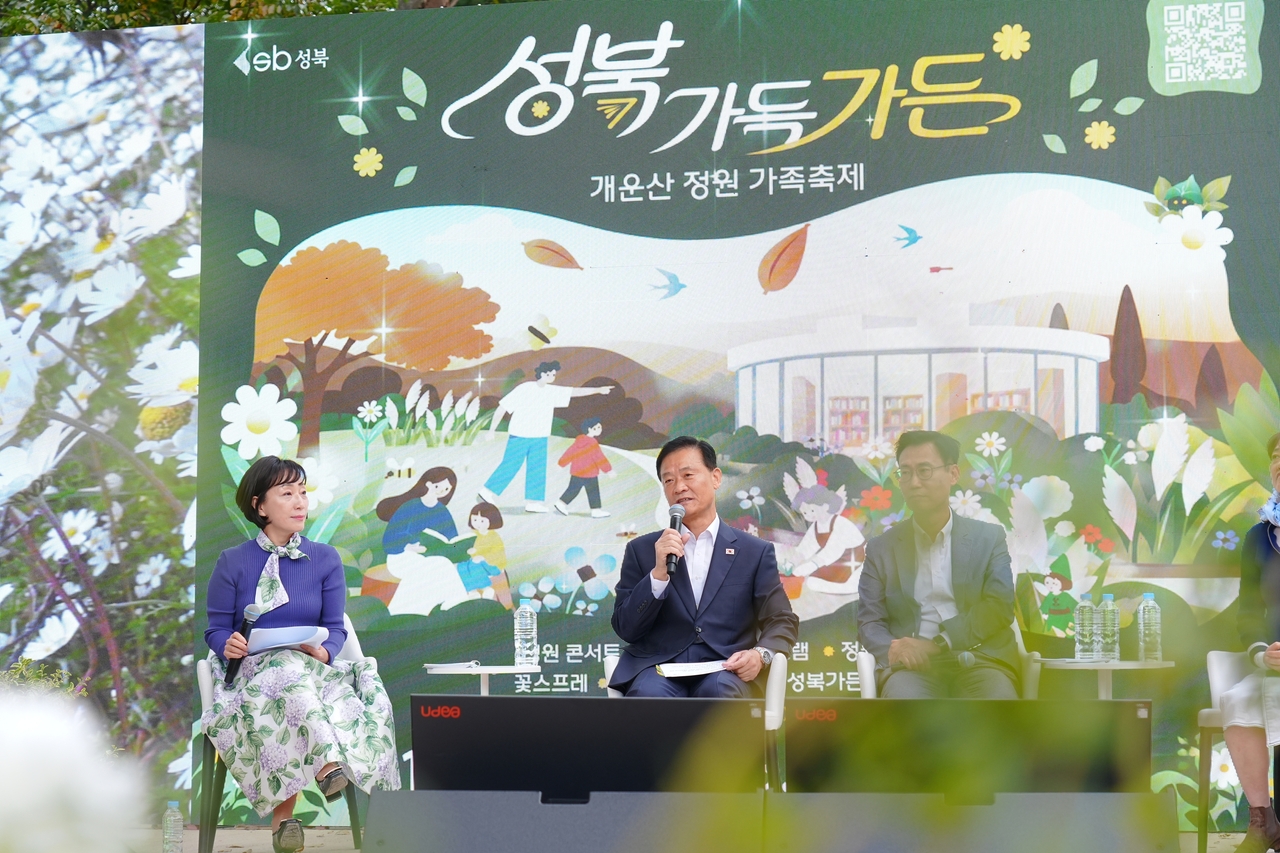
Seongbuk-gu in Seoul held a family garden festival, "Seongbuk Gadeuk Garden," at Gaeunsan Neighborhood Park on Saturday and Sunday.
About 6,000 residents visited the two-day festival, during which the district shared its vision for "Garden Phase 2" — a community-driven effort to cultivate gardens as everyday cultural spaces.
The festival was designed to expand the role of gardens beyond spaces for appreciating flowers and trees, transforming them into living spaces for reading, relaxation, cultural activities and neighborly exchange. A range of family-friendly programs were offered, including a garden concert, hands-on gardening experiences and a garden library.
On Sunday, a garden talk concert was held under the theme "Urban Gardens Found on the Ground — Bringing Culture into the Garden." Moderated by Kim Seon-mi, a reporter at the Dong-A Ilbo, the session brought together Lee Su-yeon, a professor in the Department of Environmental Horticulture at the University of Seoul, garden writer Oh Kyung-ah, and Seongbuk-gu District Mayor Lee Seung-ro to discuss what makes a garden a place residents want to stay in, and the direction of Seongbuk's garden policy.
Professor Lee Su-yeon argued that the success of a garden should be measured not by its size but by how residents use and experience it. She added that "Seongbuk-gu's Odong Mulbit Garden is a meaningful example in that it restored an existing landscape and facility into a resting place for residents," and that "Seongbuk-gu's approach — going beyond simply creating new spaces to connecting resident use, participation and ongoing stewardship — can serve as a good model for urban gardens."
Garden writer Oh Kyung-ah highlighted Seongbuk-gu's efforts to weave everyday culture into its gardens. "Seongbuk-gu is giving people reasons to linger by adding water, books and residents' stories to its gardens," Oh said. "The sight of neighborhood gardeners tending gardens alongside their neighbors shows that a garden is not just a place to plant things, but a space that holds people's time and a community's culture."
District Mayor Lee Seung-ro said, "The greatest strength of Seongbuk's gardens is the residents who tend them directly and share their experiences with neighbors." He added, "Just as we restored the existing waterway in Odong and created a space where forest, books and culture meet at Gaeunsan, we will continue to find answers on the ground and nurture a garden culture where residents are the true owners."
The festival also showcased Odong Mulbit Garden, Odong Forest Library, the Gaeunsan Forest Yard, a book rest area currently under development, and the activities of neighborhood gardeners — all examples of projects that preserve the character of existing spaces while connecting reading, relaxation, cultural activities and resident participation.
The core of Seongbuk-gu's "Garden Phase 2" initiative is "use after creation." The district is broadening its policy scope beyond planting flowers and trees to address what residents experience in gardens and who will sustain them over time.
At the center of this effort are neighborhood gardeners drawn from the community. Seongbuk-gu has produced a total of 39 graduates through the first three cohorts of its neighborhood gardener training program, and 20 participants in the fourth cohort are currently receiving training in the second half of this year. The district plans to expand community garden projects carried out in partnership with neighborhood gardeners and to support residents in directly tending gardens and sharing their experiences with neighbors.
District Mayor Lee said he hoped the festival would "serve as an opportunity for residents to enjoy reading, resting and spending time with neighbors in the garden," and pledged that through "Garden Phase 2," the district would "add cultural and community value to its gardens and ensure that everyone can enjoy nature close to home."
seouldream01@heraldcorp.com