Nominal effective exchange rate reaches 94.83, highest since October 2024
Semiconductor export conversions drive won's gains against major currencies
Monthly average won-dollar rate falls for four consecutive months
Analyst forecasts won could test 1,200s in first half of next year
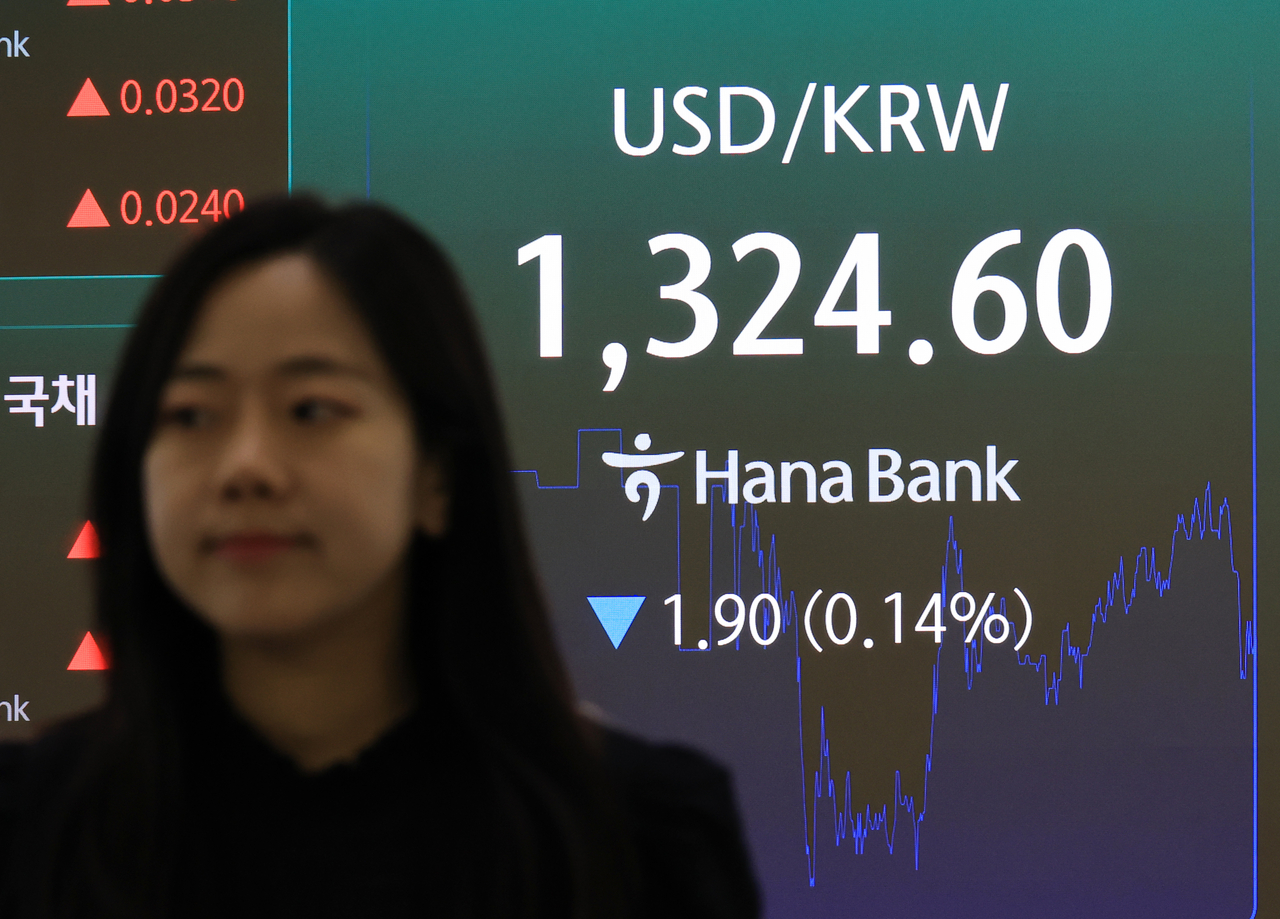
The won's nominal effective exchange rate — a measure of the currency's value against those of South Korea's major trading partners — has climbed to its highest level in roughly two years, while the won-dollar rate, which had once threatened to breach 1,600 won, has retreated to the 1,320s. Bank of Korea Governor Shin Hyun-song signaled further room for the won to strengthen, saying the currency remains undervalued.
According to Bank for International Settlements data released Monday, the won's nominal effective exchange rate stood at 94.83 (base year 2020=100) as of Tuesday — the highest reading since Oct. 9, 2024, when it reached 94.91.
The nominal effective exchange rate measures a currency's value by weighting it against the currencies of major trading partners according to trade volumes. A higher index reading indicates a stronger won relative to those currencies.
The won's nominal effective exchange rate hovered between 100 and 103 during the COVID-19 period of 2020–2021, before sliding to 91.26 at the end of December 2024 in the wake of the emergency martial law crisis. It fell further to 85.9 in late February this year, shortly after the outbreak of the Iran war, then dropped to 81.99 in June, when the won-dollar rate surged to the 1,560s amid foreign investors' equity rebalancing.
Since the second half of the year, however, the won has reversed sharply, driven largely by demand from semiconductor exporters converting dollar revenues into won, pushing the nominal effective exchange rate back up.
The real effective exchange rate — which adjusts the nominal rate for price differences between South Korea and its trading partners — has followed the same trajectory.
The won's real effective exchange rate for September came in at 92.73, up 3.2 percent from 89.88 in August and the highest since November 2024, when it reached 93.43. The index has risen for three consecutive months after hitting a trough of 83.03 in June.
Speaking at a monetary policy press briefing on Thursday, Bank of Korea Governor Shin said the BIS effective exchange rate — which weights trading partners by their share of trade — stood at around 89 as of end-August, well below the long-run average of 101. "The dollar has been strong for the past several years, so it is important to look at the BIS effective exchange rate weighted by trading partners," Shin said. "At around 89, it is below the average of 101, so one can still say the won is weak."
The monthly average won-dollar rate (based on weekly closing prices) surged to 1,528.0 won in June before falling to 1,488.9 won in July, 1,404.4 won in August and 1,358.8 won in September. The October average through Friday stood at 1,337.2 won, the lowest since September 2024, when it averaged 1,332.8 won.
Intraday lows have also been trending down. The rate set a year-to-date low of 1,328.9 won on Oct. 16, then extended that streak over five consecutive sessions — touching 1,327.6 won on Monday, 1,325.4 won on Tuesday, 1,322.8 won on Wednesday and 1,321.2 won on Thursday — reaching its lowest point since Oct. 2, 2024, when it hit 1,317.1 won.
Lee Jeong-hun, a researcher at Daishin Securities, said the 1,320-won level could serve as a near-term floor, given the historically large scale of the won-dollar correction and wariness over the National Pension Service suspending its currency hedging. Still, he projected the won would push into the 1,200s during the first half of next year. "Reflecting the strength of supply-and-demand flows and the expected dollar weakness in the first half of next year, the rate will attempt to enter the 1,200s during that period," Lee said.

kimstar@heraldcorp.com