The Serious Crime Investigation Agency has begun accepting cartel leniency filings directly; the Public Prosecution Service revised its rules on Oct. 16 to do the same before forwarding cases. Legal experts warn the split undermines the system's core incentive structure.
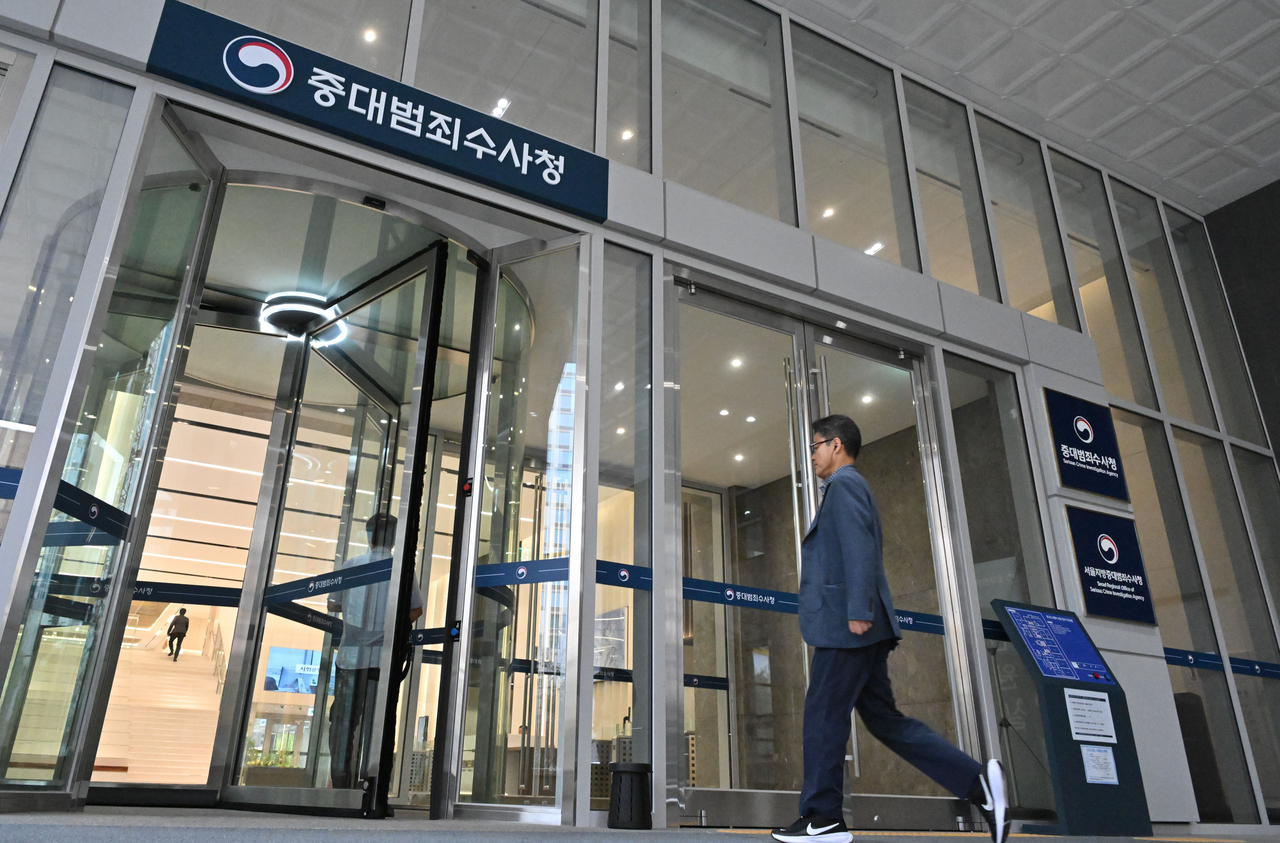
The Serious Crime Investigation Agency has begun accepting applications for criminal leniency — a self-reporting program that offers reduced penalties to cartel participants who come forward voluntarily. Legal experts say the move risks distorting the program's intent and sits in tension with the separation of investigation and prosecution that underpins South Korea's reformed criminal justice system.
The agency, which handles serious financial and competition crimes, has finalized its internal procedures for receiving leniency applications and notified relevant parties of its policy to accept them directly, according to Monday reporting by The Herald Business.
"We will ensure swift evidence collection and effective investigations," an agency official said.
The criminal leniency regime has been in place since 2020, designed to secure consistent evidence and cooperation throughout criminal proceedings in cartel cases where the state lacks prior proof. Under guidelines issued by the Supreme Prosecutors' Office — now reorganized as the Public Prosecution Service — the first applicant who cooperates with both the investigation and trial is exempt from indictment, while the second receives a sentencing recommendation reduced by half.
Legal experts warn that the agency's move to accept leniency filings could undermine the program's purpose. They argue it conflicts with the principle of separating investigation from prosecution — the cornerstone of the criminal justice overhaul that created the agency to handle serious crime investigations and the Public Prosecution Service to decide on and maintain indictments after the prosecutors' office was abolished.
At its core, criminal leniency is a mechanism by which companies or individuals voluntarily disclose their own wrongdoing to a prosecutor — the authority holding the power to prosecute — and request the exercise of prosecutorial discretion in the form of immunity from indictment or a reduced sentencing recommendation. Having an investigative agency receive those applications is fundamentally at odds with the separation of investigation and prosecution, experts say.
Even if a company or individual files with the agency, the agency has no authority to grant immunity from prosecution or reduce charges, meaning it cannot guarantee the benefits the program promises — removing any real incentive to apply. The agency can only decide not to refer a case for prosecution; it cannot issue a non-prosecution disposition. If the incentive disappears, applications will decline and the program itself could ultimately become meaningless, analysts say, adding that the situation risks creating serious confusion for businesses.
In practice, experts note that accepting applications on the basis of voluntary surrender under the Criminal Act would yield only the limited benefit of a discretionary sentence reduction available under that provision. Under Supreme Court precedent, a general voluntary surrender can be made even after a crime has been discovered and does not require that new facts come to light as a result. Notably, the legal effect of a surrender is not extinguished even if the person later retracts it and denies the offense — a result that runs counter to the program's intent.
When the guidelines were first drafted and implemented in 2020, applicants seeking a penalty reduction for cartel involvement were required to include in their application a commitment to cooperate until the conclusion of both the investigation and the trial. That obligation extends through the trial stage, and accepting applications on the basis of a criminal-law voluntary surrender would fundamentally conflict with that purpose, experts say.
That said, the investigative agency's role remains important: securing consistent evidence at the investigation stage is essential for any eventual prosecution of a cartel case, and it is the agency that deals directly with suspects and gathers evidence in practice. In response to these concerns, the Public Prosecution Service revised its guidelines to adapt to the reformed criminal justice system.
Under the revised guidelines, which took effect Oct. 16, the Public Prosecution Service will receive leniency applications in the same manner as the former Supreme Prosecutors' Office did — recording the date and application number, signing or stamping the document, and providing a copy to the applicant. The service will then forward the application to its dedicated fair-trade division for review.
Once the Public Prosecution Service has completed both the receipt and review of a leniency application, it will "transmit" the original documents — including the application, any supplementary submissions and related materials — to the investigative agency. The revised guidelines also require prosecutors to hold at least one session at a designated time and place before deciding on a penalty reduction, during which they may hear opinions from the suspect, parties to the case, experts or judicial police officers, or receive written submissions, in order to verify the facts.
Article 16 of the revised guidelines also provides for cooperation between the Public Prosecution Service and the Serious Crime Investigation Agency. The two bodies may consult on the materials or statements submitted by the applicant and the degree of their evidentiary contribution; the progress and extent of cooperation in interviews with current and former executives and employees; whether statements have been retracted, false materials submitted, evidence destroyed or investigations obstructed; whether information has been leaked to third parties; whether the cartel has ceased; and the status of evidence collection.
Both agencies say they are "in discussions." "We are in ongoing consultations on the matter," a Public Prosecution Service official said. An agency official said the agency is "coordinating the specific procedures with the relevant agency" — the Public Prosecution Service — "to protect applicants and ensure the stable operation of the program."
bell@heraldcorp.com