Agency vows to guarantee fair prices that sustain domestic manufacturing while going beyond lowest-bid purchasing to support small businesses and spur technology development; products using cheap Chinese-made parts to face market-price investigations
The Public Procurement Service is accelerating its push to remove unreasonably overpriced goods from Narajangteo, the government's online procurement marketplace.
At the same time, the agency will strengthen policies to guarantee fair compensation for technology innovation and small businesses, moving beyond lowest-bid purchasing to better support smaller and more vulnerable enterprises and promote technology development.
The Public Procurement Service said Monday it will re-examine the price appropriateness of goods listed on the Narajangteo shopping mall and step up comparison and verification against market prices, in line with the principles governing public procurement pricing.
Concerns about the rationality and reliability of procurement prices have grown after some goods listed on the Narajangteo shopping mall were found to be priced higher than their market equivalents.
In response, the agency said it is committed to explaining the characteristics of public procurement and the principles behind procurement pricing, and to building a price management framework that the public can trust.
Public procurement: realizing diverse public values beyond the lowest price
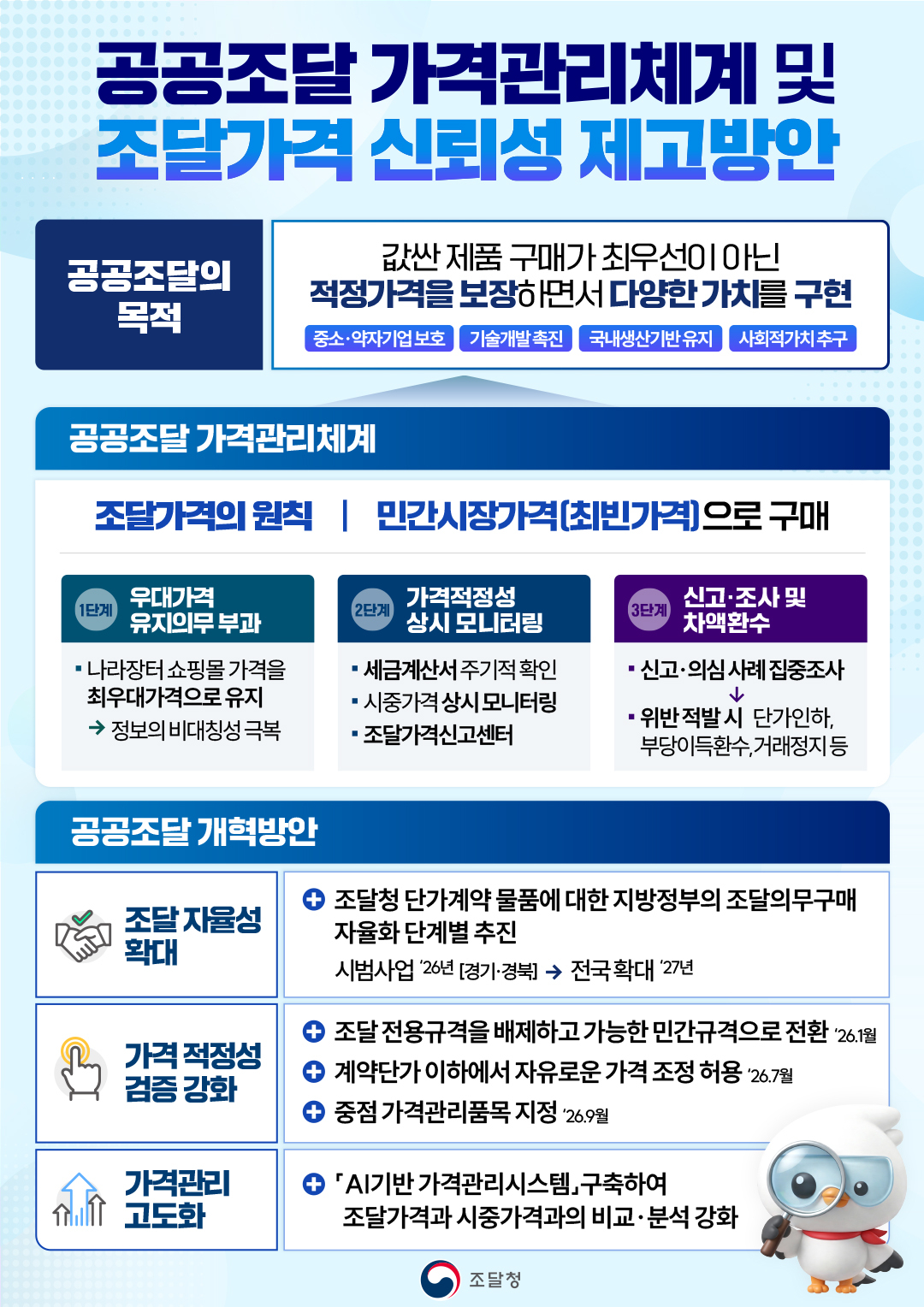
The goal of public procurement is not simply to buy the cheapest products available. As a policy instrument, it serves a range of public interests — protecting small and vulnerable businesses, promoting technology development, sustaining the domestic production base, and pursuing social values.
In practice, lowest-bid awards are rarely used in public contracts, as they can lead to deteriorating business conditions for small and medium-sized enterprises, declining product quality, and contract non-performance driven by excessive price competition.
During eligibility reviews, a minimum award rate is applied to ensure appropriate contract amounts. For goods listed on the Narajangteo shopping mall, prices are based on market rates — but rather than selecting the single lowest price among various private-sector options, the agency uses the most frequently occurring price as the benchmark for what is considered appropriate.
Regarding the recent criticism that some Narajangteo-listed products are priced above market rates, the agency confirmed that some of those products have been found to use cheap Chinese-made components, and said it will continue thorough management and investigation into the matter.
Narajangteo shopping mall price management: a three-stage system to maintain preferential pricing
Because market prices fluctuate constantly depending on market conditions and sales terms, a procurement price that was appropriate at the time of contracting may end up exceeding the market price during the contract period. To address this, the agency manages procurement prices through a three-stage system.
In the first stage, taking into account information asymmetry in pricing, the agency imposes a "preferential price maintenance obligation" on vendors to ensure that prices for goods registered on the Narajangteo shopping mall remain appropriate throughout the contract period.
In the second stage, to respond to market price fluctuations, the agency continuously monitors whether vendors are meeting their preferential price obligations — through periodic checks of vendor tax invoices, dedicated staff monitoring of market prices, and operation of a procurement price reporting center.
In the third stage, when a vendor violates the preferential price maintenance obligation, the agency takes action under relevant regulations, including reducing the contract unit price, recovering unjust gains, and suspending transactions.
'Public Procurement Reform Plan': strengthening price management with AI and expanding procurement autonomy
To overcome the limitations of existing procurement price management and improve pricing reliability, the Public Procurement Service has been pursuing its "Public Procurement Reform Plan" since Nov. 19 last year.
As a first step, the agency converted procurement specifications to private-sector standards as much as possible to make it easier to compare procurement goods and prices with those in the private market, and allowed vendors to adjust prices downward from the contracted unit price at their own discretion.
Alongside this, the agency established a systematic price management framework, including the designation of priority price management items. In 2027, it plans to launch an "AI-based price management system" to respond more swiftly and precisely to market price fluctuations — using AI to detect early when the gap between market prices and procurement prices widens significantly, or when prices shift sharply, and to help staff conduct intensive verification of price appropriateness for the affected items.
The system is expected to supplement the existing personnel-driven price monitoring approach and improve both the speed of response to pricing anomalies and overall management efficiency.
The agency will also gradually expand procurement autonomy, allowing local governments to purchase Narajangteo goods independently in line with local conditions and actual demand.
A pilot program has been under way since January in Gyeonggi Province and North Jeolla Province. After analyzing results through a joint public-private evaluation and on-site feedback, the agency plans to extend the program to all local governments in 2027.
However, to prevent fraudulent transactions that could arise after the autonomy measures take effect, the agency is also finalizing a plan that would allow the Public Procurement Service to retain final approval and authorization authority.
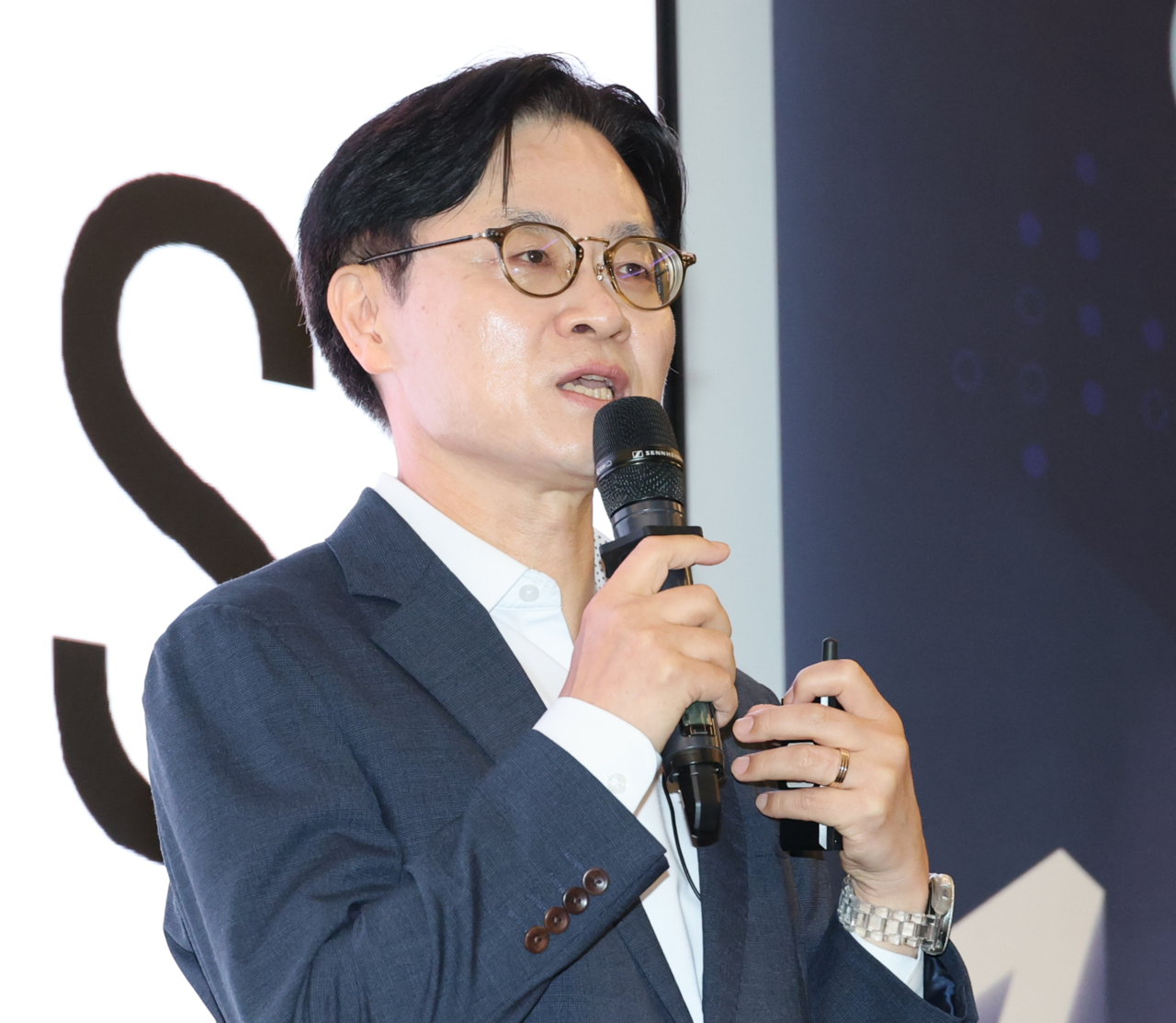
"Public procurement is a market that pursues not only fair pricing but also a range of public values, including the protection of small and vulnerable businesses and the promotion of technology development," Public Procurement Service Commissioner Baek Seung-bo said. "We will manage procurement prices more meticulously through the AI-based price management system and operate in a way that meets the public's expectations."
kwonhl@heraldcorp.com