[Warmth: Recording moments of human connection]
Lee Gwang-ja, a first-generation counselor at Korea Life Line
Nearly five decades of dedication to survivors of suicide loss
"You have to let the stories out before the guilt can go"
"My son can no longer eat, yet I still get hungry when mealtime comes — and that torments me. I should be going over to do his laundry and clean his place, but my son won't pick up the phone."
For Kim Su-jin (a pseudonym), August is the cruelest month. Four years ago, in the summer, she lost her second son. Faced with a death she could not bring herself to accept, Kim tormented herself relentlessly with guilt over her failure to prevent it.
Her son, who was in his early twenties at the time, had fallen deep into a gaming addiction and kept asking her for money. She refused, believing it would only pull him further into the addiction. Then he died by suicide. She could never shake the thought — "if only I had given him the money that day, he would still be alive" — and it left her consumed by guilt.
Lee Gwang-ja, 78, known as a specialist in suicide prevention, heard about the case about a week after Kim's son died. The moment she learned what had happened, she thought of Kim's older son. She tracked down his contact information and called him. "Please stay by your mother's side for exactly one and a half months," she asked.
Lee also began meeting with Kim for weekly counseling sessions. When they first met, Kim was in a precarious state — she frequently said she wanted to follow her son in death.
"According to crisis theory, bereaved family members who have lost someone to suicide go through an intense psychological crisis in the first six weeks," Lee said. "You cannot foresee or stop the waves of grief as they come, but what matters is how you live through that grief and share it with others. If someone around you has lost a family member or close friend to suicide, it is important to stay by their side, at least during that period."
Kim is, fortunately, slowly recovering. Korea Life Line runs a peer support group for survivors of suicide loss called "Saeum" — meaning "a new hope takes root." Kim has been meeting there with others who share her pain, sharing their stories and rebuilding their daily lives together.
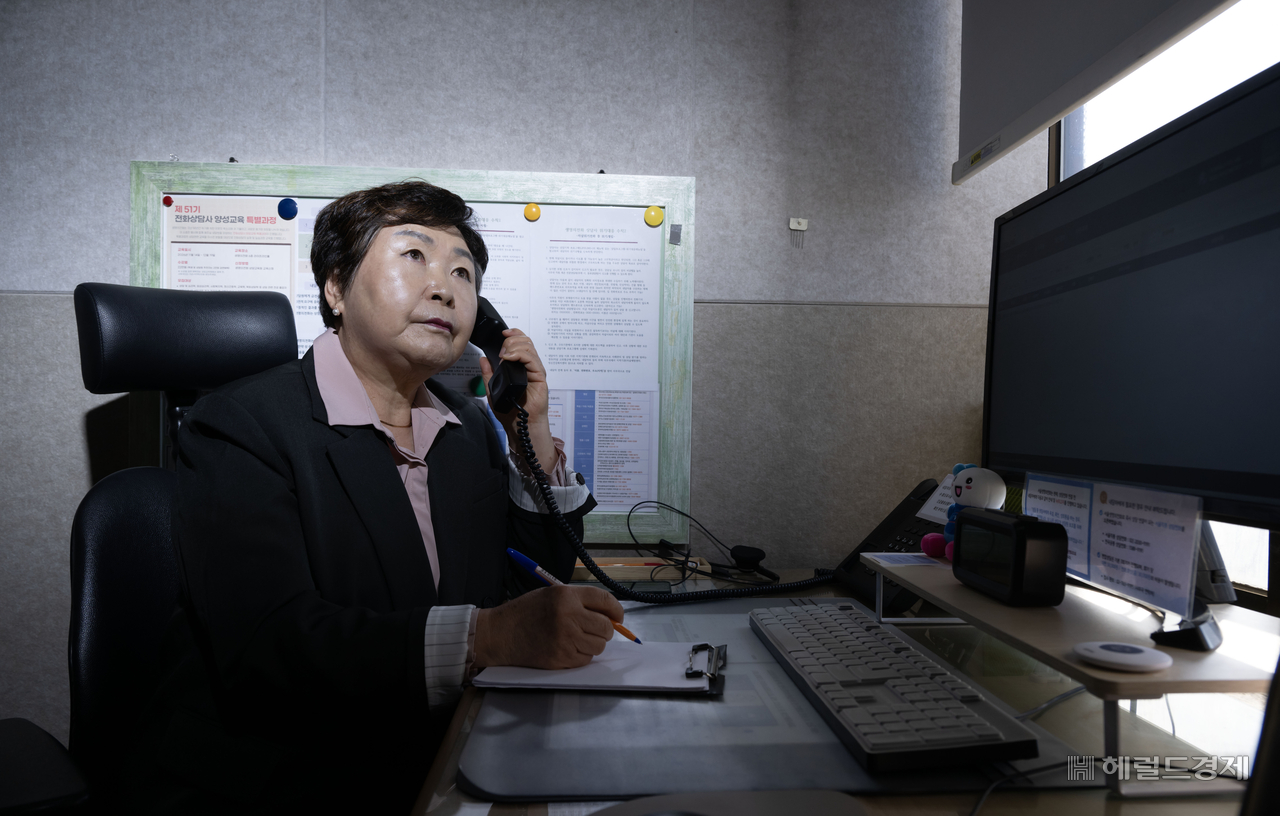
"Korea Life Line. What is it that's weighing on you today?"
Lee joined Korea Life Line as a first-generation counselor in the year it was founded, while she was teaching psychiatric nursing at Ewha Womans University. What drew her to the organization was the memory of a close friend's suicide attempt during high school. That friend — one of the brightest people she knew — had tried to take her own life one early morning. It happened the very day after Lee had gone home from an overnight study session at her friend's house, unable to stay awake.
Lee only learned later that her friend had been struggling with family problems. Guilt took hold — she had failed to notice the pain of her closest friend. A conviction followed: that simply listening to someone's story could save a life. That conviction led her to specialize in psychiatric nursing and to dedicate herself to crisis counseling.
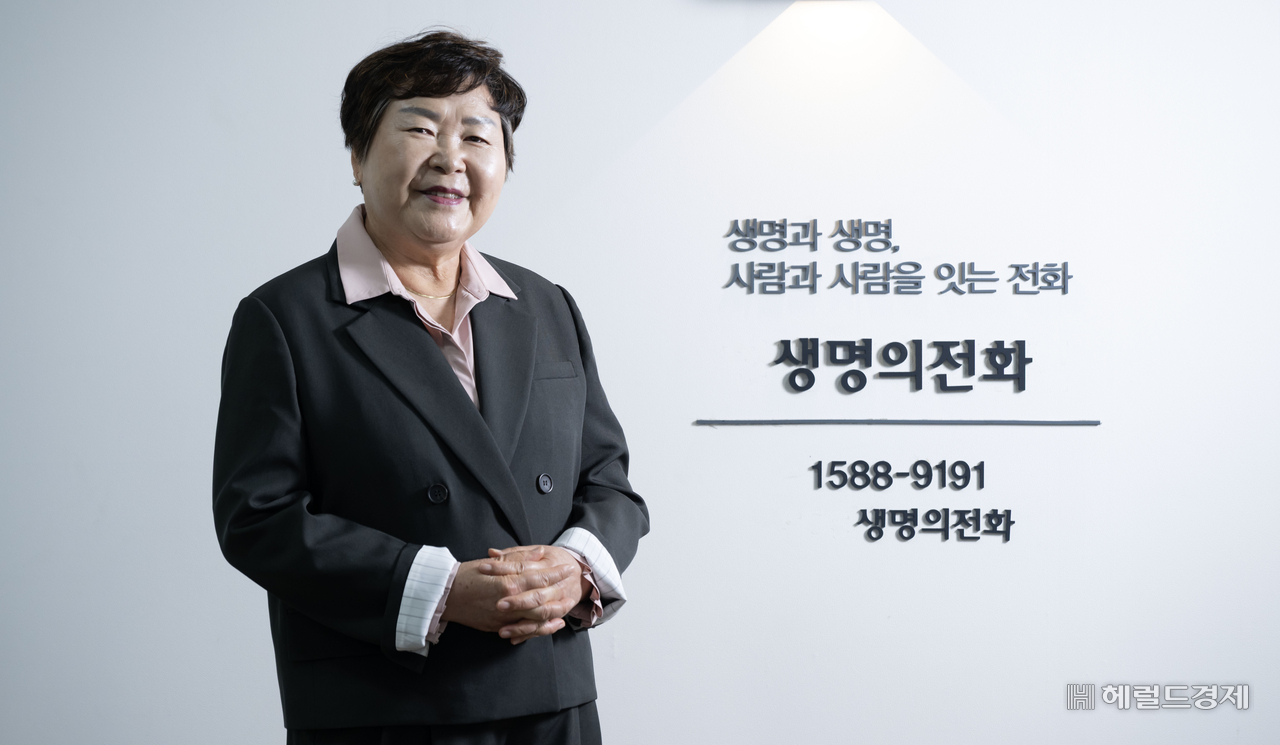
Korea Life Line (1588-9191), the country's first telephone counseling social welfare organization, was founded in September 1976 on the belief that simply listening can prevent suicide. What began in a roughly 6.6-square-meter room with a single desk and telephone has, over 50 years, taken in about 4 million crisis calls. Today, around 230 volunteer counselors take turns staffing the line around the clock. The organization also runs counseling through social media channels for young people, and operates a coordinated referral system with the government's suicide prevention hotline at 109, run by the Ministry of Health and Welfare.
"To grieve is to cry fully, to revisit memories of the person you lost, and to bring out the stories that have built up inside you," Lee said. "If there is nowhere to tell those stories and no one to hear them, you end up carrying that sorrow for the rest of your life. What these people need is not hasty comfort or advice — it is someone who will stay beside them as they slowly come to accept that it was not their fault, and set down the heavy burden of guilt."
Lee taught at Ewha Womans University for 37 years while volunteering as a telephone counselor at Korea Life Line, retiring from the university in 2013. She now serves as chair of the organization's education committee, overseeing the training of new counselors, and still carries out counseling work with survivors of suicide loss and inmates at correctional facilities.
Suicide remains a persistent crisis in South Korea. According to the Ministry of Statistics, the country's suicide rate — measured as deaths per 100,000 people — fell from 31.7 in 2011 to the mid-20s in subsequent years, but it remains the highest among OECD member nations. Last year, 14,144 people in South Korea died by suicide, an average of 38.8 people every day. The need for counseling services like Korea Life Line has not diminished.
Lee said that even people contemplating suicide carry within them a deep desire to live well. When the will to die and the will to live teeter back and forth, what tips the balance, she said, is ultimately a small gesture of attention and conversation from another person. Lee doubled down on her conviction: "If there is someone who will listen, a person will never die."
"If the desire to die is at 51 percent, the desire to live is still at 49 percent," she said. "If someone acknowledges your feelings and listens to your story long enough, those numbers can flip. That small 2 percent difference can become the strength to go on living. A brief, everyday check-in — 'Did you sleep well?', 'Have you eaten?', 'How's work going?' — can be the first step in preventing a death by suicide." The advice she offered at the close of the interview is becoming sustenance for a new life for someone else struggling at the edge of their own.
If you're thinking about self-harm or suicide, dial the Suicide Prevention Hotline at 109, available 24 hours a day, seven days a week. Please request a translator for English-language services.
If you are struggling with depression or other difficulties that are hard to talk about, or if someone close to you is going through such hardship, you can reach a specialist 24 hours a day through the suicide prevention hotline at 109 or via the social media counseling service Madeulen (a friend online who listens to your heart).
kido@heraldcorp.com